
Side Dishes
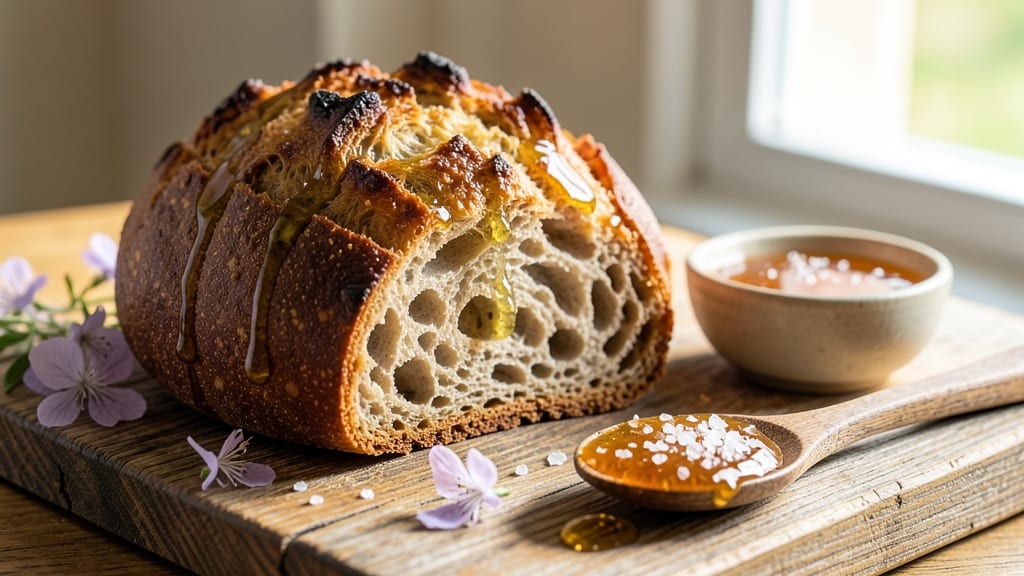
This acacia bread recipe brings the golden traditions of ancient Greece to your kitchen with just one simple bake. 🌟 The secret lies in the perfect balance of acacia honey, rich olive oil, and warm spices that create a bread with a tender crumb and irresistible aroma.
I developed this version after years of experimenting with traditional recipes, ensuring it delivers that authentic taste without requiring special equipment.
The beauty of this bread is in its simplicity—just a few high-quality ingredients come together to create something extraordinary. You'll work with active yeast, warm water, and a touch of salt to build a dough that's easy to handle yet packed with flavor.
The acacia honey adds natural sweetness and a subtle floral note, while the olive oil keeps every bite moist and rich.
By the time it emerges from the oven, you'll have a loaf with a crisp golden crust and a soft, airy interior that practically melts in your mouth. The aroma alone will have everyone gathering around the table, and the flavor—sweet yet savory, with hints of Mediterranean sunshine—is truly unforgettable.
Perfect for serving with meals or enjoying on its own with a smear of butter.
This recipe works beautifully for both beginners and experienced bakers, with clear instructions that guide you through every step. Whether you're recreating an ancient tradition or simply craving something special, this acacia bread delivers restaurant-quality results with minimal effort. Let's get started!
Ingredients for acacia bread
Just ten ingredients transform your kitchen into ancient Greece with golden, honey-kissed bread.
| Ingredient | Amount | Notes |
|---|---|---|
| Active Dry Yeast 🍞 | ¼ oz | Or 2 1/4 tsp (1 packet) |
| Warm Water 💧 | 1 ¼ cups | 110°F (43°C) for activation |
| Acacia Honey 🍯 | ½ cup | Pure, unprocessed preferred |
| Extra-Virgin Olive Oil 🫒 | ⅓ cup | Lightly fruity variety |
| All-Purpose Flour 🌾 | 4 ½ cups | White or bread flour |
| Fine Sea Salt 🧂 | 1 ½ tsp | Diamond Crystal preferred |
| Ground Cinnamon 🌿 | ½ tsp | Freshly ground preferred |
| Ground Nutmeg 🌿 | ¼ tsp | Freshly grated nutmeg |
| Sesame Seeds 🌰 | 2 tbsp | Toasted for extra flavor |
| Cornmeal 🌽 | ¼ cup | For dusting baking sheet |
The acacia honey is non-negotiable here—look for pure, unprocessed jars at specialty markets or online. Whole Foods or Trader Joe's often carry it, but if you can't find it, regular honey works in a pinch. The olive oil should be extra-virgin with fruity notes—none of that cheap cooking oil. For the yeast, check the expiration date and make sure it's active by dropping it in warm water with a pinch of sugar (it should foam within 5 minutes). The spices? Freshly ground makes all the difference—pre-ground spices lose flavor fast.
No acacia honey? Orange blossom honey is the closest substitute, but regular honey works if you reduce it by 1 tbsp. Short on sesame seeds? Poppy seeds or sunflower seeds add a nice crunch. The cinnamon and nutmeg can be swapped for cardamom or allspice if you're feeling adventurous. For the flour, bread flour gives a slightly chewier texture if you prefer that. And if you're baking in a dry climate, add an extra tablespoon of olive oil to keep the bread moist—trust me on this.
This dough is best used fresh, but you can shape and refrigerate it overnight for an even better rise. Once baked, let it cool completely before slicing—at least 2 hours. Store wrapped at room temperature for 3 days or freeze for 3 months. I always make a double batch and freeze half—nothing beats pulling a loaf straight from the freezer and warming it in the oven. The crust stays crisp, and the interior stays soft. Perfect for breakfast or as a side with soups.
Why You'll Love This Recipe
- No-Knead Magic: I swear by this dough—just mix, let it rise, and bake. No stand mixer, no fancy tools, just you, a bowl, and 10 minutes of hands-off time. That acacia honey does all the work, making the crust golden and the crumb impossibly tender.
- Honeyed Crunch: The moment you pull it from the oven, that caramelized honey crust gives way to a soft, pillowy interior. It’s like eating liquid gold with every bite—rich, floral, and just sweet enough to make you reach for seconds.
- Breakfast to Brunch: Toast it for breakfast with butter and jam, or tear it into chunks for brunch with charcuterie. It’s my go-to for feeding a crowd without stress—no one ever leaves a slice behind.
- Budget-Friendly Staple: A single loaf costs pennies to make but feels like a gourmet treat. The olive oil keeps it moist for days, so you’ll have fresh bread for sandwiches or soup without extra trips to the store. My wallet and my dinner guests thank me.
Step-by-step instructions for acacia bread recipe
Let's create this ancient-inspired loaf with rich olive oil and floral honey notes.
👨🍳 Step 1: Activate the Yeast with Honey and Warm Water
In a small bowl, combine the 0.25 oz active dry yeast with the 1.25 cups warm water (tested at 110°F). Stir gently until fully dissolved, then add the 0.5 cup acacia honey and 0.33 cup extra-virgin olive oil. Let this mixture sit for 5-10 minutes until it becomes frothy and bubbly—this confirms your yeast is alive and ready to work.
Here's the thing—honey's natural sweetness helps activate the yeast while adding subtle floral complexity. I always use a thermometer to check the water temperature because yeast dies in water hotter than 120°F. If you don't see bubbles after 10 minutes, your yeast might be expired—start over with fresh yeast.
🍳 Step 2: Mix the Dough with Wet and Dry Ingredients
In a large mixing bowl, combine the 4.5 cups all-purpose flour, 1.5 tsp fine sea salt, 0.5 tsp ground cinnamon, and 0.25 tsp ground nutmeg. Make a well in the center and pour in the yeast mixture. Using a wooden spoon or dough whisk, stir until you have a shaggy mass that comes together when you press it.
Now for the fun part—kneading! Turn the dough onto a lightly floured surface and knead for 8-10 minutes until smooth and elastic. You'll know it's ready when it springs back slowly when poked. The olive oil gives this dough extra richness, so don't overwork it—just until it's cohesive. If it feels too sticky, add flour 1 tablespoon at a time until it's manageable.
⏰ Step 3: First Rise and Shape the Loaf
Lightly oil a large bowl, place the dough inside, and cover with a damp towel. Let it rise in a warm place for 1-1.5 hours or until doubled in size. I like to use my oven with the light on for consistent warmth—this creates the perfect environment for fermentation without requiring a proofing box.
After rising, punch down the dough to release air, then shape it into a round loaf. For that classic Greek look, form it slightly taller than wide. Place it on a parchment-lined baking sheet dusted with 0.25 cup cornmeal—this prevents sticking and adds a lovely crunchy texture to the bottom crust.
🔥 Step 4: Second Rise and Bake to Golden Perfection
Cover the shaped loaf and let it rise for another 30-45 minutes until puffy. Preheat your oven to 375°F while the bread rises. This second rise develops more flavor and gives you that beautiful oven-spring when it bakes.
Bake for 30-35 minutes until the top is deep golden brown and sounds hollow when tapped on the bottom. Here's my pro tip: Sprinkle the 2 tbsp toasted sesame seeds on top during the last 5 minutes of baking for that authentic Middle Eastern touch. The bread should register 190-200°F internally when done.
🍽️ Step 5: Cool and Enjoy Your Ancient-Inspired Loaf
Remove the bread from the oven and let it cool on a wire rack for at least 20 minutes—this prevents a gummy interior. The aroma alone will make your kitchen smell like a Greek bakery! Serve warm with olive oil for dipping or use it for sandwiches—this bread's rich texture holds up beautifully.
Real talk: The first slice reveals why this recipe works. You'll get that perfect balance of crispy crust, tender crumb, and subtle honey-nutmeg flavor that makes every bite special. Store leftovers wrapped at room temperature for up to 3 days, or freeze for longer storage.
Pro Tips For Making Acacia Bread
- TEST THE YEAST FIRST: Skip straight to mixing only if you’re lucky—or impatient. Sprinkle that active dry yeast into a small bowl with ¼ cup of the warm water and 1 teaspoon of acacia honey first. If it doesn’t foam within 5–10 minutes, your yeast is dead, and you’ll save yourself a sad, flat loaf. (Yes, I’ve done this twice—learned the hard way.)
- DILUTE THE HONEY: Acacia honey is thick, and dumping it straight into the dough can make it sticky chaos. Mix it with the warm water first—about 2 tablespoons honey to ½ cup water—so it dissolves completely. This also helps the yeast activate faster, and your dough will handle shaping like a dream instead of sticking to everything.
- KNEAD JUST ENOUGH: Overworked dough gets tough, and acacia bread isn’t meant to be dense. After the initial 5 minutes of kneading by hand (or 3–4 minutes in a mixer), stop when the dough springs back slowly when poked. It should be smooth but still slightly tacky—like playdough, not rubber. (I used to knead until my arms ached; now I stop at "almost there.")
- PROOF IN A WARMER SPOT: Your kitchen counter is probably too cool for the dough to rise properly. Place the bowl near the back of the oven with the light on (about 35°C/95°F) or on top of the fridge with the motor running. The warmth speeds up fermentation, cutting proofing time by nearly half—no sad, slow-rising dough here. (I timed it: 1.5 hours in a warm spot vs. 3+ hours on the counter.)
Wine and beer pairings for this acacia bread
Greek White Wine
This honey-infused bread pairs beautifully with crisp Assyrtiko from Santorini—its bright acidity and citrus notes cut through the richness while complementing the floral acacia honey. I love Gaia Assyrtiko from the Venetsanos vineyard; its mineral finish balances the bread's sweetness perfectly. 🍷
Medium-Bodied Reds
For a red wine option, try a Greek Agiorgitiko like Domaine Skouras from Nemea. The wine's dark fruit and earthy undertones mirror the bread's nutmeg and sesame notes. Serve slightly chilled (60-62°F) to enhance the honey's floral aroma without overwhelming the spices.
Beer Pairings
A Greek lager like Fix (with its subtle citrus and malt sweetness) works surprisingly well, especially if you prefer beer over wine.
For craft options, look for Greek-style lagers with a touch of honey or citrus—Dogfish Head's Honey Brown Ale is a great American alternative that echoes the bread's flavor profile.
Non-Alcoholic Options
Skip the alcohol and try sparkling pomegranate juice chilled to 40°F—the tartness contrasts the bread's sweetness beautifully. Or serve with iced mint tea (common in Greek tavernas) to cleanse the palate between bites. The mint's freshness highlights the bread's nutmeg warmth. ✨
Dessert Wine Harmony
Save a slice for dessert by pairing with Vinsanto, a sweet Greek dessert wine. The caramelized honey and raisin notes in the wine mirror the acacia's floral depth. Serve at 55°F to preserve its delicate aromas—this combo feels like a taste of Greek islands.
Local Market Tip
If you're in a Greek market, ask for "krasí me melí" (wine with honey)—many local shops blend honey into wine specifically for pairing with honey bread. The natural sweetness creates a seamless bridge between bread and beverage. 🌿
Nutrition facts
Frequently asked questions
Can I substitute acacia honey with regular honey?
Yes, but reduce the amount by 1 tablespoon since acacia honey is sweeter. Regular honey works in a pinch, though it lacks the delicate floral notes that make acacia special. For best results, use orange blossom honey—it has a similar mild sweetness and pairs beautifully with the spices in this recipe.
Why did my dough rise but not bake properly?
This usually happens from one of three issues: overproofing (leaving it too long), underproofing (not enough rise time), or oven temperature (too low or uneven heat). Preheat your oven thoroughly and use an oven thermometer to confirm it reaches 375°F. Also, make sure your dough doubles in size during the first rise—if not, give it more time in a warm spot.
How do I store acacia bread to keep it fresh?
Wrap cooled bread tightly in plastic wrap or place it in an airtight container to prevent drying. Store at room temperature for up to 3 days. For longer storage, freeze slices wrapped individually—they'll stay fresh for 3 months. To revive, warm frozen slices in a 350°F oven for 5-7 minutes until crispy again.
Can I make this bread without yeast?
Not traditionally, but you could try a quick version using baking powder (1 tsp) instead of yeast. Replace the yeast activation step with mixing dry ingredients first, then combining with wet ingredients. The texture will be denser and less airy, but it'll still be delicious. For best results, stick with yeast for that authentic rise and flavor.
What's the best way to serve this bread?
Warm slices make perfect toast for breakfast, or serve with olive oil and balsamic vinegar for dipping. The nutmeg and sesame seeds add great texture to sandwiches, while the honey sweetness balances savory toppings like feta cheese or roasted vegetables. For dessert, drizzle with extra honey or serve with Greek yogurt.