
Side Dishes
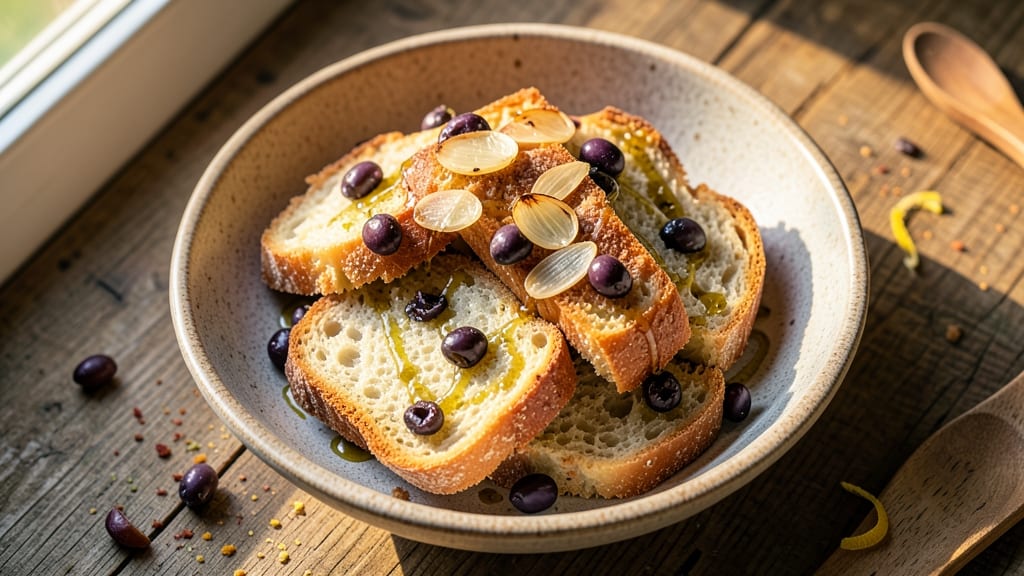
This Acme olive bread recipe transforms ordinary bread into a savory Mediterranean masterpiece with briny olives baked right into the crust. The olives lend a salty depth that pairs perfectly with soups, charcuterie, or as a hearty side dish.
I've perfected this recipe over years of baking, ensuring the olives stay tender while creating a golden, crispy exterior that's impossible to resist.
The secret lies in the dough's balance—olive oil keeps it rich and moist, while the olives add texture and flavor that no store-bought bread can match. This recipe uses Kalamata olives for their robust taste, but green olives work too.
The herbs, like rosemary or garlic, elevate the Mediterranean profile, making every bite feel like a taste of the coast.
What you'll achieve is a loaf with a fragrant, herbed crust and a tender crumb infused with olive goodness. The olives soften just enough to melt in your mouth, while the crust remains perfectly crisp.
This bread isn't just a side—it's the star of the meal, bringing a savory, umami-rich dimension to any table.
Whether you serve it warm with olive oil drizzled on top or pair it with roasted vegetables, this olive bread will become a staple. The recipe is designed for adaptability, so you can adjust the olive-to-flour ratio or swap herbs to suit your taste.
Let's get started on creating your own savory masterpiece.
Ingredients for acme olive bread
Eight simple ingredients transform into a fragrant, herbed loaf with briny olives baked right into the crust.
| Ingredient | Amount | Notes |
|---|---|---|
| All-Purpose Flour 🌾 | 5 cups | Spooned and leveled, not packed |
| Extra-Virgin Olive Oil 🫒 | ½ cup | High quality, fruity variety |
| Warm Water 💧 | 1 ½ cups | 110°F for optimal activation |
| Active Dry Yeast 🍞 | 2 ¼ tsp | Or 1 packet instant yeast |
| Kalamata Olives 🫒 | 1 cup | Pitted and roughly chopped |
| Garlic Cloves 🧄 | 3 cloves | Minced for infusion |
| Fresh Rosemary 🌿 | ¼ cup | Finely chopped leaves only |
| Diamond Crystal Kosher Salt 🧂 | 1 ½ tsp | Adjust to taste |
| Granulated Sugar 🍚 | 1 tbsp | Feeds the yeast |
| Coarse Sea Salt 🧂 | 1 tbsp | For sprinkling on crust |
| Cornmeal 🌽 | ¼ cup | For dusting baking sheet |
| Sesame Seeds 🌻 | 1 tbsp | Optional for topping |
The olives make this bread special—Kalamata olives from Trader Joe's or any Mediterranean market have the best flavor, but green olives work too. Chop them roughly so they stay tender but still add texture. Fresh rosemary is ideal, but dried works at half the amount if you're in a pinch. The extra-virgin olive oil should be fruity and peppery—skip the light, bland stuff. For yeast, Bob's Red Mill active dry yeast is my go-to, but any brand works if it's fresh (test it in warm water first).
No Kalamata olives? Green olives or sun-dried tomatoes add a similar briny punch. Short on rosemary? Thyme or oregano work too. The olive oil can be swapped for avocado oil if you prefer a milder flavor. For the sugar, honey or maple syrup works in a pinch, though it'll give a different depth. If you can't find coarse sea salt, crushed black pepper adds a nice contrast. The cornmeal is just for dusting—any flour will do if you're out.
This dough is sticky—don't fight it. Let it rest at room temp for 1 hour before shaping, which makes handling much easier. The bread keeps well for 3-4 days at room temperature wrapped in a towel, or 1 week in the fridge. For longer storage, freeze the cooled loaf for up to 3 months. Warm slices in a 350°F oven for 5 minutes to restore crispness. The olives soften as the bread ages, so enjoy it fresh when possible.
Why You'll Love This Recipe
- No-Knead Magic: I swear by this dough—just mix, wait, and bake. The yeast does all the work while I sip coffee, and that olive oil keeps it tender without fuss. Honestly, it’s the kind of bread that makes me feel like a baker, even when I’m not.
- Salty, Briny Bite: Those Kalamata olives? They’re the star—bursting with flavor in every chewy bite. The extra-virgin olive oil adds richness, so you don’t even need butter. I’ll be real: I’ve been known to eat this straight from the pan, crust and all.
- Weeknight Workhorse: This bread is my go-to for sandwiches, dipping in soup, or even toasted with garlic. It freezes like a dream, so I bake a loaf on Sundays and pull it out all week. (Yes, even on a Tuesday night when I’m too tired to think.)
- Pantry-Friendly Staple: Flour, oil, water, yeast—ingredients you already have. The olives add personality for pennies, and one batch stretches to feed my whole family. Between us, this is the kind of recipe that saves me money and makes me look like a hero.
Step-by-step instructions for Acme olive bread
Here's how to craft this savory, herbed loaf with a crisp crust and briny, aromatic heart.
Activate the Yeast and Infuse the Olive Oil
In a small bowl, whisk together the 1.5 cups warm water (about 110°F), 1 tbsp granulated sugar, and 2.25 tsp active dry yeast. Let it sit for 5-10 minutes until it becomes frothy and bubbles vigorously—this confirms your yeast is alive and ready to work. While that foams, heat the 0.5 cup extra-virgin olive oil in a small saucepan over low heat for 2 minutes with the 3 minced garlic cloves and 0.25 cup chopped fresh rosemary. Remove from heat and let steep for 10 minutes to infuse the oil with those aromatic flavors.
This infusion transforms ordinary olive oil into the soul of your bread. The garlic and rosemary will mellow slightly during steeping, creating a balanced, fragrant base that carries through the entire loaf. If your yeast doesn't activate, try warming the water slightly more—it should feel like bathwater, not scalding.
Mix the Dough and Incorporate Olives
In the bowl of a stand mixer fitted with the dough hook, combine the 5 cups all-purpose flour and 1.5 tsp diamond crystal kosher salt. Mix on low speed until evenly distributed. With the mixer running on low, gradually pour in the yeast mixture and infused olive oil. Let the dough come together for 2 minutes, then add the 1 cup chopped Kalamata olives and mix until just combined.
Switch to medium speed and knead for 5-7 minutes until the dough is smooth and elastic, pulling away from the sides of the bowl. You'll know it's ready when it forms a windowpane—press your finger into the dough and gently pull; if it stretches without tearing, you're good to go. If it feels too sticky, add 1 tablespoon flour at a time until it reaches the perfect consistency.
First Rise and Shape the Loaf
Lightly oil a large bowl, place the dough inside, and cover with a damp towel. Let it rise in a warm place for 1-1.5 hours, or until it has doubled in size. You'll see the dough puff up and develop small bubbles across the surface—this tells you the yeast is happily fermenting. While it rises, line a baking sheet with parchment paper and sprinkle evenly with 0.25 cup cornmeal. This creates a barrier that prevents sticking and adds a subtle crunch.
Once the dough has risen, punch it down gently to release air, then turn it out onto a lightly floured surface. Shape it into a 9x5-inch loaf by folding the sides inward and rolling it tightly. Place the shaped loaf seam-side down on the prepared baking sheet, cover with the damp towel, and let it rise for another 30-45 minutes until it puffs noticeably again. This second rise ensures a light, airy crumb.
Bake to Golden Perfection
Preheat your oven to 375°F with a baking stone or inverted baking sheet on the middle rack—this creates steam for a crisp crust. Brush the loaf with a little extra olive oil and sprinkle generously with 1 tbsp coarse sea salt. For that final touch, scatter 1 tbsp sesame seeds over the top if you like. Bake for 30-35 minutes until the crust is deep golden brown and sounds hollow when tapped on the bottom.
Here's the thing—don't open the oven during baking. The steam is crucial for that crackly crust, and every time you peek, you lose heat and moisture. When it's done, transfer the loaf to a wire rack and let it cool for at least 20 minutes before slicing. The interior will continue to set as it cools, giving you that perfect balance of crisp exterior and tender crumb.
Pro Tips For Making Acme Olive Bread
- CHOP OLIVES SMALL: I learned this the hard way—whole Kalamata olives sink unevenly and make lumpy bread. Roughly chop them into ¼-inch pieces so they distribute evenly and cook through. (Yes, even if you’re impatient like me, take the extra 2 minutes.)
- USE ROOM-TEMP OIL: Cold extra-virgin olive oil slows yeast activation. Let your oil sit out for 30 minutes before mixing—just enough to warm it slightly. Your dough will rise faster without overworking the gluten.
- SKIP THE OVER-KNEAD: Olive bread dough is sticky and wants to fight you. Stop when it’s just combined—no need for 10 minutes of punching. Overworking it makes the bread dense, and this dough needs its airy structure to shine.
- PROOF IN A COOL SPACE: Warm kitchens make yeast go wild, leading to dense bread. Let your dough rise in the fridge overnight (yes, even if you’re making it the same day). The slow rise deepens the olive flavor and keeps the crumb light. (Your future self will thank you.)
Essential equipment for great acme olive bread
Stand Mixer Essentials
Your stand mixer is the workhorse of this recipe—I swear by my KitchenAid Artisan Series with the dough hook attachment. The dough hook's spiral design ensures even kneading without overworking the gluten, which keeps your olive bread tender.
If you don’t have a stand mixer, use a wooden spoon for mixing and knead by hand for 8-10 minutes on a floured surface. The key is patience—don’t rush the kneading, or your loaf will turn out dense. 💪
Baking Stone or Steel
A baking stone or steel is non-negotiable for that perfect crust. I use a 12x16-inch baking stone from Lodge, which distributes heat evenly and mimics a professional oven’s steam. Place it on the middle rack while preheating—this creates the ideal environment for a crisp, golden crust.
No baking stone? Use an inverted baking sheet as a poor man’s substitute, but expect slightly less crispiness. Preheat it alongside your oven for 30 minutes to ensure even heat distribution.
Dutch Oven for Crispy Edges
For an extra-crispy exterior with deep flavor, bake your olive bread in a preheated Dutch oven. I use my Le Creuset 5.5-quart because it retains heat like a dream. Place the shaped loaf in the Dutch oven, cover with the lid, and bake for 20 minutes at 375°F.
Then, remove the lid and bake for another 10-15 minutes until golden. This method traps steam, creating a crackly crust that’s hard to resist. If you don’t own a Dutch oven, a heavy cast-iron skillet works in a pinch.
Digital Thermometer
A digital instant-read thermometer is your best friend for ensuring the dough and oven are at the perfect temperature. I rely on my Thermoworks Thermapen ONE to check the yeast water (110°F) and confirm the oven’s accuracy.
For bread, aim for an internal temperature of 190-200°F—this ensures the center is fully baked without drying out. Without one, use the finger test: tap the bottom of the loaf—it should sound hollow.
A toothpick inserted should come out clean or with a few crumbs, but no wet dough. ✨
Olive Oil Infusion Tools
Infusing olive oil with garlic and rosemary is where the magic happens, and a few simple tools make it easier. Use a small saucepan (I prefer Calphalon stainless steel) for gentle heating, and a fine-mesh strainer to remove the herbs after steeping.
For mincing garlic, a microplane or garlic press works best—it releases more flavor than chopping. If you’re short on time, a food processor can chop the rosemary quickly, but avoid over-processing, or it’ll turn to paste.
The infused oil should smell like a Mediterranean sunset—trust me, it’s worth the effort. 🌿
Cornmeal and Parchment Paper
These two tools are simple but essential for preventing sticking and adding texture. Use fine cornmeal (not coarse) to dust your baking sheet—it creates a subtle crunch that contrasts with the soft bread. For shaping, a large sheet of parchment paper makes transferring the dough a breeze.
I also line my baking stone with parchment to catch any drips from the olive oil. Pro tip: Keep a roll of parchment nearby—it’s your best friend when dealing with sticky dough. The 12x16-inch size from Reynolds is my go-to. 🌾
Nutrition facts
Frequently asked questions
Can I substitute green olives for Kalamata in this recipe?
Green olives work perfectly—they're milder and slightly fruitier than Kalamata. Use the same amount (1 cup), but chop them slightly smaller to ensure even distribution in the dough. For extra flavor, try a mix of both types or add sun-dried tomatoes for a Mediterranean twist.
Why did my olive bread turn out dense instead of light? Most likely, your dough wasn't kneaded enough or didn't rise properly.
How can I make this bread without a stand mixer?
No problem! Mix the dough by hand with a wooden spoon, then knead on a floured surface for 8-10 minutes until smooth and elastic. Work the dough vigorously—this builds the gluten needed for a light texture. For extra flavor, work in the olives by hand after the initial kneading to prevent overmixing.
What's the best way to store olive bread?
Wrap the cooled loaf in a clean kitchen towel and store at room temperature for 3-4 days. For longer storage, freeze the bread (up to 3 months) in a sealed bag. To revive, warm slices in a 350°F oven for 5 minutes until crispy. The olives soften over time, so enjoy fresh when possible!
Can I add other herbs or spices to this recipe?
Try adding 1 tsp dried oregano or ½ tsp red pepper flakes for warmth. For a citrus twist, zest 1 lemon into the dough. Just don't exceed 1 tbsp total additional herbs—too much can overpower the olives. Always taste the dough before final shaping to balance flavors.