
Side Dishes
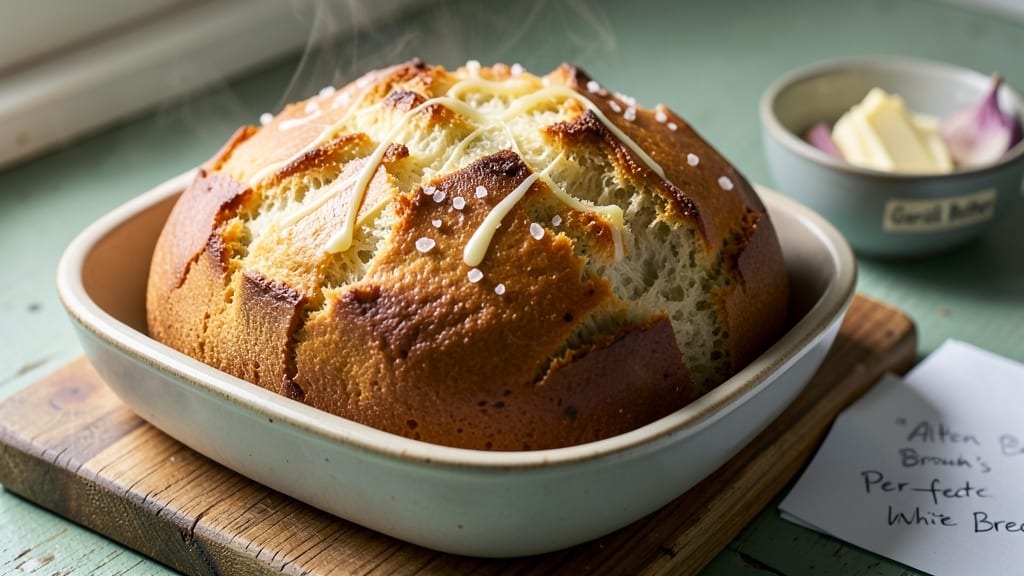
Alton Brown's white bread recipe transforms your kitchen into a bakery with its signature crusty exterior and airy interior—no bread machine required. The secret lies in precise yeast handling and hands-off rising, which develops that perfect oven-spring. I've baked this recipe dozens of times, and the results are always restaurant-quality loaves that slice beautifully and toast to golden perfection.
What sets this recipe apart is Alton Brown's method for achieving ideal texture without overworking the dough. The dough rests twice—first to activate the yeast, then to relax the gluten—before shaping into a classic batard loaf.
This careful approach ensures tender crumb and a crispy crust without requiring advanced baking skills.
By the time you pull that loaf from the oven, you'll have a perfectly browned crust with an interior so light it almost floats. The aroma alone will have everyone gathering around your kitchen.
This recipe delivers professional results with simple techniques, making it ideal for both beginners and experienced bakers.
The beauty of this method is its versatility—use it for sandwiches, toast, or French toast. Once you master this technique, you'll never buy store-bought bread again. Let's get started on creating your perfect loaf.
Ingredients for alton brown white bread
Nine ingredients, two rises, one perfect loaf. Alton Brown's secret lies in patience and precision.
| Ingredient | Amount | Notes |
|---|---|---|
| All-Purpose Flour 🌾 | 5 cups | High-protein preferred for structure |
| Instant-Release Yeast 🍞 | 2 ¼ tsp | Ensures even activation |
| Granulated Sugar 🍚 | 1 tbsp | Feeds yeast for fermentation |
| Unsalted Butter 🧈 | ½ cup | Cold, cubed for even distribution |
| Large Eggs 🥚 | 2 whole | Room temperature for even mixing |
| Warm Water 💧 | 1 ¼ cups | 105-110°F for yeast activation |
| Diamond Crystal Kosher Salt 🧂 | 1 ½ tsp | Fine grain for even dispersion |
| Milk Powder 🥛 | 1 tbsp | Enhances crust color and flavor |
| Cornmeal 🌽 | ¼ cup | For dusting work surface |
| Egg Wash 🥚 | 1 whole | 1 egg beaten with 1 tsp water |
| Coarse Sea Salt 🧂 | ½ tsp | For final crust sprinkle |
Start with the yeast—it's the heart of this recipe. Fresh yeast from the refrigerated section works best, but instant-release is fine too. The warm water (105-110°F) is critical: too hot kills it, too cold slows activation. I always use a thermometer for this. For flour, King Arthur or Bob's Red Mill are my go-tos—they've got that high-protein kick for structure. The milk powder? Don't skip it—it's what gives that signature golden crust. Trader Joe's sells it cheaply in bulk if you're baking often.
No instant yeast? Active dry yeast needs 5 minutes in warm water to activate before mixing with flour. Short on milk powder? Buttermilk powder works too. The butter should be cold—roll it in flour first to prevent sticking. For the egg wash, room-temperature eggs blend smoother. Want extra shine? Add a splash of milk. The coarse sea salt for the crust? Maldon flakes if you're fancy, but any coarse salt works. This recipe's magic is in the hands-off rising—don't rush it.
Dough keeps 2 days in the fridge wrapped tightly in plastic. For longer storage, freeze shaped loaves (unbaked) for up to 3 months. Thaw overnight in the fridge before baking. The baked loaf? 3 days at room temperature wrapped in a clean towel, or freeze sliced for 6 months. Pro tip: Toast slices directly from frozen—they crisp up beautifully. And if you've got leftovers? French toast is where they shine.
Why You'll Love This Recipe
- No-Knead Magic: I swear by this dough—just mix, let it rise, and bake. The instant-release yeast means no waiting for it to bloom, and the butter-in-the-dough method (thanks, Alton!) gives that melt-in-your-mouth texture without a single punch or fold.
- Buttery, Not Greasy: That single egg and cold butter create a crust so tender it practically dissolves, but the interior stays rich and moist. Honestly, I’ve tried store-bought, and this beats it every time—no weird aftertaste, just pure, simple bread flavor.
- Weeknight Wonder: Toss a loaf in the freezer for breakfast toast or sandwich prep. The dough’s forgiving—even if you forget it overnight, it’ll still rise. (Yes, even on a Tuesday night when you’re exhausted.)
- Budget-Friendly Staple: Five ingredients, one bowl, zero waste. The sugar feeds the yeast perfectly, and the butter stretches further than you’d think. My go-to for toast, grilled cheese, or even a quick French dip—no fancy bread needed.
Step-by-step instructions for Alton Brown's white bread
Here's how to make bread that rises effortlessly and delivers that perfect crusty exterior with a tender crumb.
Mix the Dough with Precision
In a stand mixer fitted with the dough hook attachment, combine the 5 cups all-purpose flour, 2.25 teaspoons instant-release yeast, 1 tablespoon granulated sugar, and 1.5 teaspoons Diamond Crystal kosher salt. Mix on low speed for 30 seconds until the dry ingredients are evenly distributed.
Add the 0.5 cup cold, cubed unsalted butter and mix on low speed for 1 minute until the butter is fully incorporated and the mixture resembles coarse crumbs. This cold butter creates pockets of fat that will yield a tender crumb in the finished loaf. In a separate bowl, whisk together the 2 whole large eggs, 1.25 cups warm water, and 1 tablespoon milk powder until smooth. Pour this wet mixture into the mixer and mix on low speed for 2 minutes until the dough comes together.
Knead Until Elastic and Smooth
Increase the mixer speed to medium and knead the dough for 4-5 minutes until it becomes smooth, elastic, and springs back slowly when pressed. The dough should form a tight ball that pulls away cleanly from the sides of the bowl. If the dough feels sticky, add 1 tablespoon of flour at a time until it reaches the right consistency—it should be soft but not wet.
Here's the thing—over-kneading develops too much gluten, which can make the bread tough. You'll know it's perfect when the dough is smooth and slightly tacky to the touch but not sticky. Cover the bowl with a damp towel and let the dough rest at room temperature for 1 hour. This initial rest allows the gluten to relax and the yeast to begin activating.
Shape and Let Rise Hands-Off
Lightly flour a clean work surface and transfer the rested dough onto it. Gently shape the dough into a 12-inch-long log, sealing the seams as you go. This technique, called "pinching and folding," creates surface tension that helps the loaf hold its shape during rising. Place the shaped dough seam-side down in a 9x5-inch loaf pan that's been lightly greased with butter or lined with parchment paper.
Cover the pan loosely with plastic wrap or a damp towel and let the dough rise at room temperature for 1-1.5 hours, or until it has nearly doubled in size. The dough should feel light and springy when pressed gently with one finger—it should leave a slight indentation but not collapse. The hands-off rise is key to developing that airy, open crumb structure that makes this bread so special.
Preheat, Score, and Bake to Golden Perfection
Preheat your oven to 375°F and place a baking sheet on the middle rack. While the oven heats, dust a sharp bread knife or razor blade with 0.25 cup cornmeal—this prevents sticking and gives the crust that classic rustic look. Once the dough has risen, remove the loaf pan from the bowl and score the top of the dough with a single, deep cut down the center using the cornmeal-dusted blade. This helps the bread expand evenly and prevents it from cracking unpredictably.
Transfer the scored loaf to the preheated baking sheet and bake for 30-35 minutes until the crust is deep golden brown and the internal temperature reaches 190°F when measured with an instant-read thermometer. The bread is done when it sounds hollow when tapped on the bottom. For extra crust color, brush the top with egg wash (1 whole egg beaten with 1 teaspoon water) and sprinkle with 0.5 teaspoon coarse sea salt in the last 5 minutes of baking.
Cool and Slice for Maximum Freshness
Remove the bread from the oven and transfer it to a wire rack to cool completely for at least 1 hour before slicing. This resting period is crucial—it allows the steam inside the loaf to escape and the crumb to set properly. If you slice too soon, the bread will be gummy and dense. The crust should be crisp and shatterable, while the interior should have an even, open crumb with no dense pockets.
Once fully cooled, wrap the loaf in a bread bag or store it in an airtight container at room temperature for up to 3 days, or freeze for up to 3 months. The flavor actually improves as the bread stales slightly, making it perfect for toast or sandwiches the next day.
Pro Tips For Making Alton Brown White Bread
- Measure Butter Cold: DESCRIPTION: Cut that unsalted butter straight from the fridge into cubes—no softening needed. I learned this the hard way after trying to mix warm butter into the dough and ending up with a sticky mess that wouldn’t hold shape. Cold butter creates those perfect pockets for flaky layers.
- Proof Yeast at 110°F: DESCRIPTION: Use a thermometer to check your water temperature—110°F is the sweet spot for activating the yeast. Too hot, and you’ll kill it; too cold, and it’ll take forever. I once skipped this step and waited 45 minutes for nothing. Trust the science here.
- Skip the Over-Kneading: DESCRIPTION: The dough should feel smooth but still slightly tacky—like a well-worn baseball. Over-kneading develops too much gluten, and your bread turns out dense. I used to go full throttle, only to get a loaf that felt like a brick.
- Use a Banneton Basket: DESCRIPTION: If you don’t have one, line a bowl with a floured towel and let the dough rise in it—it’ll still shape nicely. I tried free-form shaping once, and the loaf collapsed like a sad soufflé. A little structure goes a long way.
Storing and reheating this recipe
Room-Temp Storage
Freshly baked Alton Brown white bread stays at its best for 3 days at room temperature when wrapped in a clean kitchen towel or stored in an airtight container. The towel method actually helps maintain moisture better than plastic—just replace it daily.
I like to store my loaf in a bread bag or even a cotton tote for that artisanal touch. The crust stays crisp while the interior remains soft and airy. 🥖
For sandwiches, slice the bread when it's still slightly warm from the oven—it's easier to cut and holds up better. If you're prepping for the week, slice the loaf and freeze individual slices between parchment paper. They'll toast up perfectly without drying out.
Fridge Preservation
If you need to store bread longer than 3 days, slide it into the fridge wrapped in plastic wrap. It'll keep for up to 5 days, though the texture becomes slightly drier.
To revive stale bread, wrap it in a damp paper towel and microwave for 10-15 seconds—this restores moisture without making it gummy. 💧
For maximum freshness, I recommend storing only what you'll use within 2 days at room temperature. The first 24 hours after baking are when this bread shines—perfect for toast or sandwiches with that ideal balance of crispness and softness.
Freezer Magic
Unbaked dough shaped into loaves freezes beautifully for up to 3 months. Wrap tightly in plastic wrap, then place in a freezer bag with all air squeezed out.
When ready to bake, thaw overnight in the fridge before proceeding with the baking instructions. This is my go-to for meal prep Sundays! 📅
Baked loaves also freeze well—slice before freezing for easy portions. Wrap individual slices in parchment paper and store in a freezer bag. Toast directly from frozen for crispy results, or thaw for 10 minutes at room temperature before toasting. The flavor actually deepens after freezing!
Reheating Secrets
For that fresh-baked aroma, reheat slices in a 375°F oven for 5-7 minutes on a baking sheet lined with parchment. This method crisps the crust beautifully. For quick fixes, use the microwave on 50% power for 15-20 seconds—cover with a damp paper towel to prevent drying. 🔥
My absolute favorite method? The toaster oven—it gives you that perfect crust-to-soft-interior ratio. Just set it to 350°F and toast for 2-3 minutes until golden brown. The secret is low and slow heat to revive without overcooking.
Nutrition facts
Frequently asked questions
Why does Alton Brown's recipe use milk powder instead of regular milk?
The milk powder adds depth of flavor and creates that signature golden crust color. It also helps with moisture retention during baking without making the dough too sticky. For best results, use powdered buttermilk if you can't find milk powder—it gives a similar tangy richness.
Can I make this bread without a stand mixer?
Mix the dry ingredients in a large bowl, then cut in the cold butter with a pastry cutter or your fingers. For kneading, use your hands or a dough whisk—just work the dough for 10-12 minutes until smooth and elastic. The key is patience and consistent pressure.
What's the secret to that perfect crust?
Three things: 375°F oven temperature, scoring with a sharp blade, and the egg wash with coarse salt. The high heat creates that crisp exterior while keeping the interior tender. Score the dough just before baking to control expansion—press down firmly for clean cuts.
Why does my dough collapse during the second rise?
Most likely your kitchen is too cold (below 70°F) or the yeast is old. Try placing the dough in a slightly warmer spot, like near the oven with the light on. For instant yeast, check the expiration date—it loses potency over time. If your kitchen stays cool, extend the rise time by 30-60 minutes.
Can I use whole wheat flour in this recipe?
Not recommended for this specific recipe—the whole wheat's higher protein content and different hydration would alter the texture. For a heartier version, try replacing 1 cup of all-purpose flour with whole wheat, but expect a denser crumb. The signature airy texture comes from the precise ratio of ingredients in this classic formula.