
Side Dishes
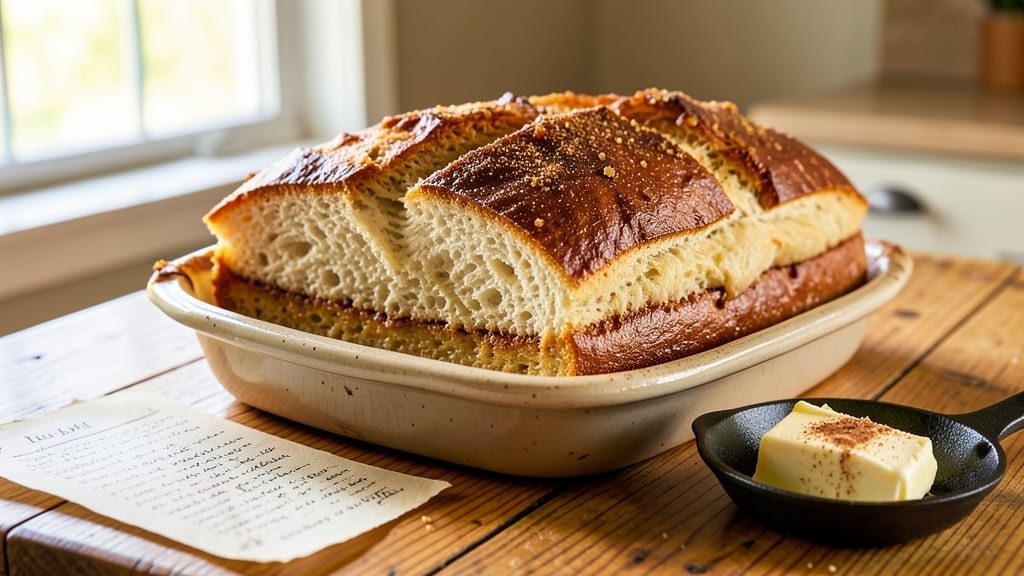
This Amish friendship bread no-starter recipe brings the warmth of tradition to your kitchen without requiring yeast or starter. 💛 The secret lies in its simple, foolproof method—just flour, butter, and spices that create tender, swirled layers baked to golden perfection.
Unlike traditional sourdough, this version relies on baking powder for rise, making it accessible yet rich in cultural heritage.
The beauty of this recipe is its simplicity: no kneading, no waiting for starter to ferment, and no risk of failure. The dough comes together in minutes, and the vanilla-spiced swirls create a fragrant, melt-in-your-mouth texture that stays fresh for days.
Perfect for holiday gatherings or everyday comfort, this bread is as much about tradition as it is about taste.
What sets this apart is its no-starter approach, a nod to Amish baking traditions that prioritize simplicity and reliability. The result is a loaf with a tender crumb and a subtle sweetness from vanilla and cinnamon, all held together by a buttery richness.
Each slice carries the essence of homestyle baking, proving that tradition doesn’t have to be complicated.
Baked to a golden brown, this bread is best enjoyed warm but stays delicious for days when wrapped in foil. Whether served with butter, jam, or as a side to soups, it’s a recipe that honors heritage while fitting seamlessly into modern life. Let’s get baking!
Ingredients for amish friendship bread no starter
Eight simple ingredients transform into tender vanilla-spiced swirls—no yeast, no starter, just tradition.
| Ingredient | Amount | Notes |
|---|---|---|
| All-Purpose Flour 🌾 | 4 cups | Sifted for light texture |
| Unsalted Butter 🧈 | 1 cup | Cold, cubed for even distribution |
| Granulated Sugar 🍚 | ½ cup | Light brown preferred for depth |
| Baking Powder 🧂 | 2 tsp | Diamond Crystal preferred |
| Salt 🧂 | ½ tsp | Fine sea salt preferred |
| Ground Cinnamon 🌿 | 1 ½ tsp | Freshly ground for aroma |
| Ground Vanilla Bean 🍦 | 1 tsp | Pure extract, not imitation |
| Vanilla Extract 🍦 | 1 tsp | High-quality Madagascar preferred |
| Large Eggs 🥚 | 2 whole | Room temperature for blending |
| Whole Milk 🥛 | ½ cup | Warmed for better incorporation |
| Vanilla Bean Seeds 🍦 | 1 whole | Scraped from 1 pod for garnish |
The flour is the foundation—King Arthur or Gold Medal for best results, but any all-purpose works. Butter should be cold and cubed (not melted) to create those signature flaky layers. Wegmans or Whole Foods carry European-style butter with higher fat content, ideal for this recipe. The vanilla is non-negotiable: Madagascar Bourbon extract delivers the richest flavor, while imitation will taste artificial. For the vanilla bean seeds, Trader Joe's sells affordable pods—scrape just one for the garnish, saving the rest for future recipes.
No baking powder? Baking soda plus cream of tartar works in a 3:1 ratio, but Diamond Crystal performs best. Substituting milk? Oat or whole milk adds richness, while almond milk works but may alter texture slightly. Short on vanilla? Double the cinnamon and add 0.25 tsp almond extract for depth. The eggs must be room temperature—cold eggs create dense dough. For a gluten-free version, swap flour for a 1:1 baking blend, but expect a slightly denser crumb. Always sift the flour to avoid lumps in the final product.
This bread stays fresh for 5-7 days when wrapped in foil at room temperature. For longer storage, freeze portions for up to 3 months—wrap individually in plastic and thaw at room temperature. The vanilla swirls intensify overnight, so many bakers prefer to bake it the night before for serving the next day. To reheat, wrap in foil and warm in a 350°F oven for 10 minutes. Each slice is best enjoyed with unsalted butter or homemade jam, making it perfect for holiday gifting.
Why You'll Love This Recipe
- No-Yeast Hassle: I’ll admit, I used to dread the wait for sourdough starters—but this? Just mix, shape, and bake. The butter and sugar work their magic while you sip your coffee, no patience required.
- Sweet Buttery Magic: That first pull-apart bite? Warm, buttery layers with just enough sugar to make it feel special, not cloying. The baking powder gives it a lightness that surprises—like a hug from your grandma’s kitchen.
- Weeknight Crowd-Pleaser: Between us, this is my go-to for potlucks or when my book club shows up unannounced. Slice it thick for sandwiches, tear it for dipping in soup—it handles everything without falling apart.
- Pantry Goldmine: Honestly, you’re probably already stocked. Flour, butter, sugar? Basic stuff that lasts forever. And the leftovers? They stay fresh for days, perfect for quick toast or crumbs to sprinkle on oatmeal. Budget-friendly doesn’t get much better.
Step-by-step instructions for vanilla-spiced swirl bread
Transform simple pantry staples into tender, moist loaves with signature vanilla swirls.
👨🍳 Step 1: Prepare the Dry Ingredients and Vanilla Swirl
In a medium bowl, whisk together the 4 cups all-purpose flour, 2 teaspoons baking powder, 0.5 teaspoon salt, and 1.5 teaspoons ground cinnamon. Sift the mixture once to aerate the flour and ensure even distribution of the leavening agents. This creates a light, tender crumb essential for that classic Amish texture.
In a separate small bowl, combine the 0.5 cup granulated sugar with the 1 teaspoon ground vanilla bean and 1 teaspoon vanilla extract. This sugar mixture will form the signature swirls, so keep it finely blended. Set aside until needed.
🍳 Step 2: Cream Butter and Sweeteners for Light Texture
In a stand mixer fitted with the paddle attachment, beat the 1 cup cold unsalted butter (cut into cubes) on medium speed for 3-4 minutes until light and fluffy. This process incorporates air, which prevents dense bread. Gradually add the 0.5 cup granulated sugar and continue mixing until the combination is pale and creamy.
Add the 2 whole large eggs, one at a time, mixing well after each addition. Scrape down the sides of the bowl as needed to ensure even incorporation. The mixture should be smooth and thick—this is your base dough. Warm the 0.5 cup whole milk slightly (about 10 seconds in the microwave) to help it blend seamlessly into the butter mixture.
🥘 Step 3: Combine Wet and Dry Ingredients
With the mixer on low speed, gradually add the dry ingredients to the butter mixture, alternating with the warmed milk. Begin and end with the dry ingredients to ensure proper hydration. Mix just until combined—overmixing develops gluten, which can make the bread tough. The dough should be soft and slightly sticky but manageable.
Divide the dough into two equal portions. On a lightly floured surface, roll each portion into a 12-inch circle about ½-inch thick. Using a pastry brush, spread about ¼ of the sugar-vanilla mixture evenly over one circle, leaving a ½-inch border uncovered. Fold the circle in half and roll it tightly into a log, pinching the seam to seal.
🔥 Step 4: Shape and Bake for Golden Perfection
Place each log seam-side down in two 9-inch round cake pans (greased and lined with parchment paper for easy removal). Brush the tops with additional milk and sprinkle with the vanilla bean seeds for decoration and extra flavor. Bake in a preheated 350°F oven for 40-45 minutes, until a toothpick inserted into the center comes out clean and the tops are golden brown.
Real talk: Your oven might run hot, so start checking at the 35-minute mark. The bread is done when it pulls away from the pan edges and has a subtle crackle on top. Let the loaves cool in the pans for 10 minutes before transferring to a wire rack to cool completely. This resting period prevents crumbling when slicing.
Pro Tips For Making Amish Friendship Bread No Starter
- MEASURE BUTTER COLD: I learned this the hard way—soft butter makes the dough greasy and the bread dense. Scoop the butter straight from the fridge (no thawing) and cut it into ½-inch cubes. The dough should look shaggy but hold together when pressed; if it’s sticky, you’ve gone too far.
- SIFT THE DRY INGREDIENTS: Baking powder loses its lift when clumped. Sift the flour, sugar, baking powder, and salt together before mixing—this guarantees even distribution and prevents pockets of dry spots in the bread. (Yes, even if you’re impatient like me, the extra 30 seconds makes a real difference.)
- DON’T OVERMIX THE DOUGH: The moment the flour disappears into the butter, stop stirring. Overworking the dough develops gluten, which turns your tender, crumbly bread into a tough brick. Use a fork or your hands to gently fold just until combined—uneven? That’s fine. Perfect? Overdone.
- BAKE UNTIL GOLDEN, NOT JUST SET: Pull the bread out when the top is deep golden brown, not pale yellow. I used to check at 30 minutes and end up with a sad, cakey loaf. Wait for the edges to pull away from the pan and the internal temp to hit 190–200°F—crispy outside, soft inside. (Your future self will thank you.)
Perfect pairings for this amish friendship bread no starter
Buttery Spreads
This bread practically begs for a slab of European-style butter—I reach for Plugrá or Kerrygold for their rich, creamy texture. Spread a thin layer on warm slices and top with a sprinkle of flaky sea salt (like Maldon) for a simple yet sophisticated pairing.
For a sweeter twist, mix softened butter with ½ cup powdered sugar and a pinch of cinnamon, then spread generously. 🧈
Fruit Compotes
Amish communities often pair this bread with homemade fruit preserves, and you can too. A blueberry compote made with 1 cup frozen blueberries, 2 tbsp lemon juice, and 1 tbsp honey simmered for 10 minutes creates a perfect balance of tart and sweet.
Strawberry or peach preserves work equally well—just heat gently with a splash of water to loosen. Serve warm for an extra comforting touch.
Cheese Platter Pairings
For a savory contrast, serve slices alongside a sharp cheddar (like Cabot Clothbound) and a mild brie. The bread’s tender crumb soaks up the creamy cheese beautifully.
Add apple slices and walnuts for a classic Amish-inspired platter. I like to include a small bowl of honey for drizzling—it enhances both the bread and cheese.
Coffee or Tea
This bread’s vanilla-spiced warmth pairs beautifully with a hot cup of coffee or chamomile tea. For coffee lovers, a medium-roast (like Peet’s Major Dickason’s Blend) complements the bread’s sweetness without overpowering it.
If you prefer tea, an Earl Grey with its bergamot notes creates a sophisticated flavor bridge. Serve the bread warm alongside for the ultimate cozy pairing. ☕
Holiday Gift Version
Wrap slices in parchment paper tied with twine and include a small jar of homemade jam or a butter packet for a thoughtful gift. The bread’s long shelf life makes it perfect for holiday exchanges—just bake a batch ahead and assemble the gifts.
Add a sprig of fresh rosemary or a cinnamon stick for a rustic touch that ties back to Amish traditions. 🎁
Nutrition facts
Frequently asked questions
Why does this recipe call for cold butter instead of softened?
The cold butter creates those signature flaky layers in Amish friendship bread. When baked, the cold fat melts slowly, creating steam pockets that give the bread its tender, cake-like texture. If you use softened butter, you'll end up with a denser, more cake-like result rather than the classic bread texture.
Can I make this bread in a loaf pan instead of round cake pans?
Yes, but you'll need to adjust the shaping technique. Instead of rolling and folding, spread half the dough in the loaf pan, top with the vanilla swirl, then add the remaining dough. Press gently to combine. The baking time will be similar (40-45 minutes at 350°F), but check for doneness at 35 minutes since loaves can bake faster.
What's the best way to store leftover bread?
Wrap the cooled loaves tightly in plastic wrap or foil and store at room temperature for up to 5-7 days. For longer storage, freeze individual slices wrapped in plastic for up to 3 months. To revive stale bread, wrap it in a damp towel and microwave for 10-15 seconds—it'll taste fresh again!
Can I substitute vanilla extract with something else?
For the best flavor, use Madagascar Bourbon vanilla extract. If you're out, you can substitute with 1 teaspoon vanilla bean paste (scraped from 1 pod) or ½ teaspoon almond extract plus 0.25 teaspoon cinnamon. However, these alternatives won't capture the same depth of flavor as pure vanilla. The vanilla is what gives this bread its signature aroma!
Why does my bread turn out dense instead of tender?
Overmixing the dough develops gluten, which makes bread tough. Mix just until combined—stop when the ingredients are evenly distributed. Also, ensure your butter is cold (not softened) and don't skip the resting time after baking. Another common mistake is using old baking powder—always check the expiration date. For extra tenderness, sift your flour thoroughly before mixing.