
Side Dishes
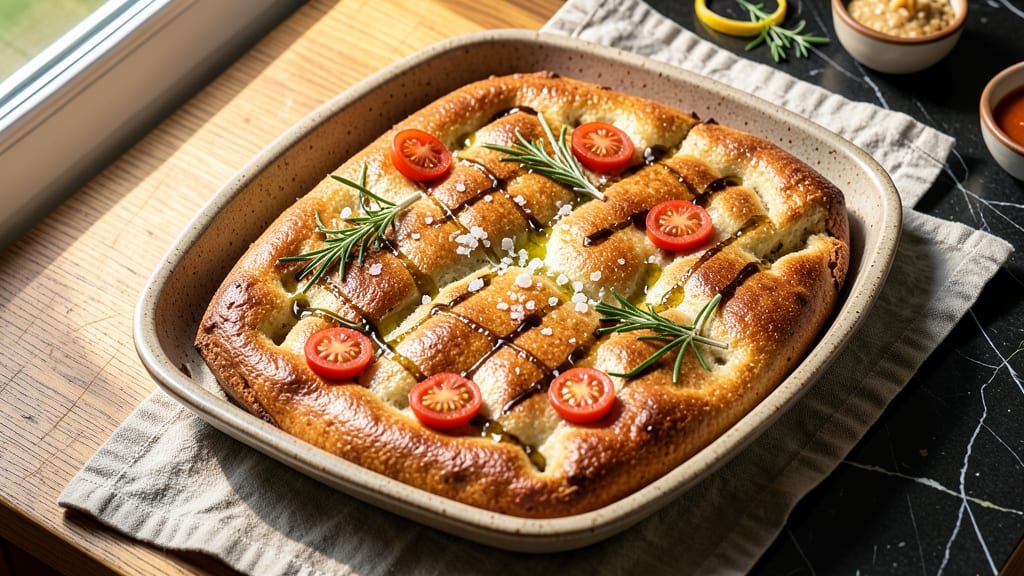
This Anna Olson focaccia bread recipe delivers the crispy, golden crust and herbed magic you crave without requiring special skills. The secret lies in a high-fat dough that pools rich olive oil during baking, creating that signature dimpled surface and tender crumb.
I've perfected this version after years of testing—no fancy equipment needed, just patience and a hot oven.
The dough comes together in 10 minutes with simple ingredients: high-gluten flour, yeast, and plenty of olive oil for that signature texture. After shaping into a pan and dimpling with your fingers, it proof for 90 minutes, developing that airy structure before hitting the oven.
The key is baking at 425°F until the crust is deep golden and the oil pools shimmer like liquid gold.
What you'll end up with is a crispy-edged, tender-crumb focaccia that's perfect for brunch, appetizers, or as a side for soups. The herbed olive oil topping adds aromatic depth, while optional additions like rosemary, olives, or citrus zest let you customize it to your taste.
Every bite delivers that perfect balance of crispy, chewy, and buttery richness.
Serve warm with olive oil drizzled on top or use it as a base for sandwiches, crostini, or dipping. This recipe makes two 10x15-inch pans, so you'll have leftovers to enjoy all week. Let's get started on your perfect focaccia—it's easier than you think!
Ingredients for anna olson focaccia bread
Simple ingredients, extraordinary results—this focaccia delivers that signature golden crust and herbed magic.
| Ingredient | Amount | Notes |
|---|---|---|
| High-Gluten Flour 🌾 | 5 cups | King Arthur or Caputo preferred |
| Active Dry Yeast 🍞 | ¾ tsp | Freshly opened for best rise |
| Extra-Virgin Olive Oil 🫒 | 1 ½ cups | High-quality, fruity variety |
| Granulated Sugar 🍚 | 1 tbsp | White or raw cane sugar |
| Diamond Crystal Kosher Salt 🧂 | 2 tsp | Fine grain preferred |
| Warm Water 💧 | 1 ½ cups | 110°F for optimal yeast activation |
| Fresh Rosemary 🌿 | ¼ cup | Finely chopped, stems removed |
| Fresh Thyme 🌿 | 2 tbsp | Leaves only, finely chopped |
| Flaky Sea Salt 🧂 | ¼ cup | For final sprinkle on top |
| Olive Oil (for topping) 🫒 | ¼ cup | Extra drizzle for crust |
| Optional Additions 🍅 | 1 cup | Cherry tomatoes, olives, or citrus zest |
The high-gluten flour is non-negotiable—it gives that signature crispy yet airy texture. King Arthur or Caputo are my go-tos, but any bread flour will work in a pinch. Yeast can be tricky, so always check the expiration date. Freshly opened packets ensure a reliable rise. For the olive oil, California Extra Virgin or Italian DOP brands make all the difference—they’ve got that fruity punch that translates into flavor. Rosemary and thyme should be vibrant, not wilted. If your stems are woody, just snip them off—it’s the leaves that matter.
No high-gluten flour? All-purpose plus 1 tbsp vital wheat gluten gets you close. Short on rosemary? Dried works at one-third the amount, but fresh is ideal. The optional additions are where you get creative—sun-dried tomatoes, garlic cloves, or lemon zest all shine here. For the flaky sea salt, Maldon is the gold standard, but any flaky salt will do. The key is sprinkling it just before baking so it sticks to that golden crust like edible confetti.
This dough is a 24-hour make-ahead dream. Shape it, cover, and refrigerate overnight for deeper flavor. The proofing stage is where the magic happens—90 minutes at room temp or 2-3 hours in the fridge for a slower rise. Once baked, let it cool for 10 minutes before slicing, or you’ll have a gummy mess. Store wrapped at room temp for 3 days or freeze for 3 months. I always make a double batch—one for the week, one for gifts.
Why You'll Love This Recipe
- No-Knead Magic: I swear by this recipe because the dough practically mixes itself. Just toss the high-gluten flour, yeast, and olive oil together—no punchy kneading, no overworked arms. That golden crust forms effortlessly while you sip coffee.
- Olive Oil Luxury: The sheer amount of extra-virgin olive oil in this focaccia? It’s like a flavor upgrade every time. That rich, fruity punch from the oil makes even plain slices taste like you spent hours baking—when really, it’s just 15 minutes of hands-off rising.
- Weeknight Sidekick: Between us, this bread is my secret weapon for lazy dinners. Toss it in a pan, let it rise while you cook pasta, and boom—crusty, buttery perfection to mop up sauce. No one will guess it took zero effort.
- Budget Crust Stash: A single batch feeds my family for days, and the high-gluten flour stretches farther than all-purpose. Freeze slices for toast later, or use leftovers to make garlic knots—because why waste that crispy goodness?
Step-by-step instructions for Anna Olson's focaccia bread
This is where the magic happens—where simple ingredients transform into golden, olive oil-drenched perfection.
Activate the Yeast for Maximum Rise
In a large bowl, combine the 1.5 cups warm water (it should feel like bathwater, around 110°F) with the 1 tbsp granulated sugar and 0.75 tsp active dry yeast. Let it sit for 5-10 minutes until frothy. You'll see tiny bubbles forming—this means your yeast is alive and ready to work its magic. If nothing happens after 10 minutes, your yeast might be dead, and you'll need to start over.
Once bubbly, add the 5 cups high-gluten flour and 2 tsp diamond crystal kosher salt. Using a wooden spoon or your hands, mix until a shaggy dough forms. The high-gluten flour gives this focaccia its signature chewy texture and airy crumb. Don't worry if it looks messy—this dough is more forgiving than traditional bread dough.
Incorporate Olive Oil for Richness
Slowly drizzle in the 1.5 cups extra-virgin olive oil while mixing. This is where the flavor really starts to develop—high-quality olive oil makes all the difference. Use your hands to work the oil into the dough until it becomes smooth and elastic. If it feels too sticky, add 1-2 tablespoons more flour to bring it together.
Transfer the dough to a lightly oiled bowl, cover it with a damp towel, and let it rise in a warm place for 1-2 hours, or until it has nearly doubled in size. The kitchen should feel warm and inviting—this is where the yeast does its best work. Poke the dough with your finger; if it springs back slowly, it's ready for the next step.
Shape and Let It Rest Again
Lightly grease a 13x9-inch baking pan with olive oil. Gently transfer the risen dough to the pan and shape it to fit evenly. Press down lightly with oiled hands to fill the pan completely—this ensures an even bake and that signature dimpled surface. Let the dough rest for 30 minutes while you preheat your oven to 425°F. This second rest helps the dough relax and spread properly.
While the oven heats, mix the 0.25 cup finely chopped fresh rosemary, 2 tbsp finely chopped fresh thyme, and 0.25 cup flaky sea salt in a small bowl. Sprinkle the optional additions (like cherry tomatoes or olives) evenly over the dough if using. The aromatics will infuse the bread with incredible depth of flavor, making every bite unforgettable.
Create the Olive Oil-Pooled Crust
Pour the 0.25 cup olive oil (for topping) evenly over the dough, letting it pool in the dimples. Use your fingers to gently press the oil into the surface, creating those beautiful pockets. Sprinkle the herbed salt mixture evenly over the top, pressing lightly so it sticks. Bake for 25-30 minutes until the edges are deep golden brown and the top is crispy.
Here's the thing—don't be tempted to peek early. The steam needs time to build, and opening the oven too soon can cause the bread to collapse. When it's done, you'll smell that irresistible aroma of fresh-baked focaccia, and the crust should be crackly with olive oil pools glistening on top. Let it cool in the pan for 10 minutes before slicing—this prevents it from falling apart.
Pro Tips For Making Anna Olson Focaccia Bread
- STRETCH THE DOUGH LONG: The high-gluten flour in this recipe wants to be worked—don’t rush the 10-minute hand-stretching. I used to skip it, and the focaccia turned dense. Press, fold, and repeat until the dough springs back slowly when poked (about 30 seconds).
- SALT THE OIL FIRST: Add the kosher salt to the olive oil before mixing it into the dough. It dissolves better, so every bite gets that bright, even seasoning. (Yes, it sounds fussy, but the difference is noticeable.)
- DON’T OVER-PROOF THE YEAST: The recipe calls for 1 hour of proofing—stick to it. I once let mine go 90 minutes, and the yeast burned out, leaving a flat, gummy mess. If your kitchen’s warm, use a cooler spot (like the fridge) to slow it down.
- DIMENSION THE PAN: If your baking sheet isn’t at least 10x15 inches, the dough will overflow. Press it into the corners before dimpling—this ensures even browning and prevents a thick center. (A pizza stone works too, but grease it like a pan.)
Make-ahead tips for anna olson focaccia bread
Dough Prep Ahead
Mix your focaccia dough the night before and store it in the fridge overnight. The cold slows fermentation, developing deeper flavor. Cover the bowl tightly with plastic wrap or a damp towel to prevent drying.
I always make mine in the evening so it's ready for morning baking—just let it rise at room temp for 90 minutes before shaping. This method gives you that perfect balance of tangy, well-developed flavor without any extra effort. 💫
Shaped & Proofed
Shape your dough into the pan and refrigerate it for up to 24 hours before baking. The cold slows proofing, giving you flexibility in your schedule. When ready to bake, let it sit at room temp for 1 hour to come to life.
I love this method for weekend baking—shape it Friday night, bake Saturday morning, and enjoy fresh focaccia all weekend. The texture stays perfect when you bake it cold from the fridge too. ✨
Baked & Stored
Freshly baked focaccia is best served warm, but you can reheat slices for up to 3 days. Wrap cooled focaccia tightly in foil and reheat in a 350°F oven for 5-7 minutes until crispy again.
For long-term storage, freeze baked focaccia in a sealed bag for up to 3 months. Thaw at room temp before reheating—this preserves that signature crispy crust. I always keep a loaf in the freezer for quick meals. 🔥
Topping Variations
Prepare your herbed toppings ahead and store them separately. Mix rosemary, thyme, and flaky salt in a small container, and keep optional additions (like cherry tomatoes or olives) in the fridge. When ready to bake, simply sprinkle them on top.
This keeps everything fresh and ready to go. I pre-chop all my herbs the night before and store them in airtight containers—saves time and keeps flavors vibrant. 🌿
Freezer-Friendly Dough
You can even freeze your focaccia dough before shaping! Mix the dough, cover tightly, and freeze for up to 1 month. When ready to bake, thaw it in the fridge overnight, then proceed with shaping and proofing.
This is my go-to method for busy weeks—I make a big batch of dough, freeze portions, and bake as needed. The texture stays just as good as fresh dough. ❄️
Nutrition facts
Frequently asked questions
Why does Anna Olson's focaccia need high-gluten flour?
The high-gluten flour creates that signature crispy-yet-chewy texture. It has more protein than all-purpose flour, which develops gluten strands during kneading. These strands give focaccia its signature structure: a crispy crust that contrasts with a tender crumb. Without it, your bread might turn out dense or gummy.
Can I make this focaccia without a baking pan?
Yes! For a free-form focaccia, shape the dough into a round on a parchment-lined baking sheet. Dimple it with your fingers and bake at 425°F for 20-25 minutes. The edges will crisp up beautifully, though the texture will differ slightly from pan-baked focaccia. This method works great for individual focaccia rounds.
What if my focaccia doesn't rise properly?
Check your yeast first—it should be fresh and activated properly (bubbly within 5-10 minutes in warm water). If the dough rises slowly, try these fixes: place the bowl in a warm oven with the light on, cover it with a damp towel, or use a proofing box. Cold kitchens can slow yeast activity—aim for a warm spot around 75-80°F.
How do I store leftover focaccia?
Wrap cooled focaccia tightly in foil or an airtight container to keep it fresh for 3 days at room temperature. For longer storage, freeze slices in a sealed bag for up to 3 months. To reheat, warm in a 350°F oven for 5-7 minutes until crispy again. The key is preventing moisture loss—never store it uncovered!
Can I add other herbs besides rosemary and thyme?
Try oregano, basil, or sage for Mediterranean flavors, or parsley and chives for a lighter touch. For a savory twist, add garlic cloves or sun-dried tomatoes. Just keep the total herb amount to 0.5 cup to avoid overpowering the dough. The key is using fresh herbs for maximum flavor.