
Side Dishes
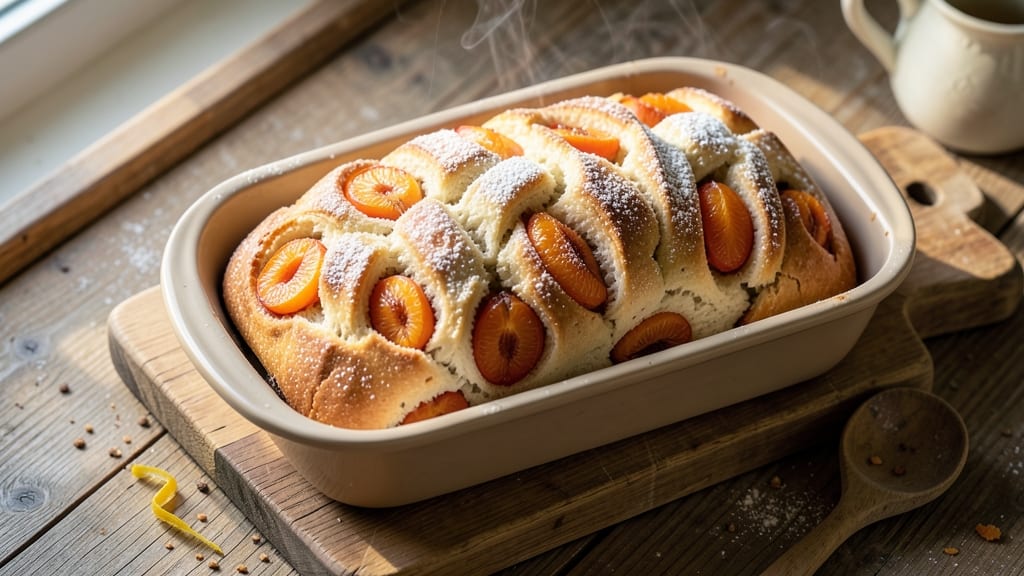
This apricot loaf bread recipe delivers a perfect balance of sweet-tart fruit swirls and a golden, buttery crust that makes every slice irresistible.
The secret lies in a yeast-based dough that develops rich flavor during proofing, while the apricot filling adds just the right amount of natural sweetness without overpowering the bread's rustic charm.
I've perfected this recipe over years of baking, ensuring it rises beautifully and bakes to a tender crumb with crisp edges.
The process combines traditional techniques with modern convenience, starting with a simple yeast dough that proofing transforms into something extraordinary. You'll create a luscious apricot filling using fresh or dried fruit, then layer it into the shaped loaf before baking to create those signature swirls.
The result is a bread with a crisp, golden crust that gives way to a soft, slightly sweet interior punctuated by bursts of apricot flavor in every bite.
What sets this recipe apart is how well it handles variations—whether you prefer a classic yeast loaf or a quicker version using baking powder. The buttery crust develops perfectly in a home oven, while the fruit filling caramelizes slightly during baking, intensifying its natural sweetness.
This loaf is ideal for breakfast, brunch, or as a sweet accompaniment to meals, and it freezes beautifully for future enjoyment.
With just a few simple ingredients and basic baking techniques, you'll achieve restaurant-quality results that taste even better the next day. The aroma alone will have everyone gathering around your kitchen, and the first bite delivers that perfect combination of tender bread and sweet-tart fruit.
Let's get started on creating this crowd-pleasing loaf.
Ingredients for apricot loaf bread
Eight simple ingredients plus a few pantry staples create this golden, swirled loaf.
| Ingredient | Amount | Notes |
|---|---|---|
| All-Purpose Flour 🌾 | 4 cups | Spooned and leveled, not scooped |
| Active Dry Yeast 🍞 | 2 ¼ tsp | Or 1 packet (7g) |
| Granulated Sugar 🍬 | ¼ cup | For yeast activation |
| Unsalted Butter 🧈 | ½ cup | Cold, cubed for dough |
| Large Eggs 🥚 | 1 whole | Room temperature |
| Whole Milk 🥛 | ½ cup | Warmed to room temp |
| Salt 🧂 | 1 tsp | Diamond Crystal preferred |
| Dried Apricots 🍑 | 1 ½ cups | Chopped, not sweetened |
| Orange Zest 🍊 | 1 tbsp | From 1 large orange |
| Orange Juice 🍊 | ¼ cup | Freshly squeezed |
| Brown Sugar 🍯 | ¼ cup | Packed firmly |
| Ground Cinnamon 🌿 | 1 tsp | Freshly ground preferred |
| Vanilla Extract 🥄 | 1 tsp | Pure vanilla preferred |
| Egg Wash 🥚 | 1 whole | 1 egg beaten with 1 tbsp milk |
| Coarse Sugar 🍬 | ¼ cup | For topping crust |
The yeast is non-negotiable here—Bob's Red Mill or King Arthur brands work best for consistent rising. If your dried apricots taste overly sweet, soak them in warm water for 10 minutes then drain well. The orange zest should be vibrant—navel oranges give the brightest flavor. For the flour, I always grab the King Arthur brand because it's high-protein and gives that perfect chewy texture. Store your yeast in the freezer for freshness—it lasts 6-12 months that way.
No dried apricots? Fresh apricots work too—just peel, pit, and chop them (about 2 cups). Short on orange juice? Substitute apple juice at half the amount. The vanilla extract can be swapped for vanilla bean paste if you're feeling fancy, but it'll be pricier. For a quicker version, replace the yeast with 2 tsp baking powder—just know the texture will be denser. The brown sugar can be swapped for white sugar, but it'll be less flavorful. If you're making this ahead, prep the filling first and store it separately for up to 1 week in the fridge.
The dough needs 1-2 hours to rise at room temp—don't rush it. For the filling, mix everything together and let it sit for 10 minutes so the flavors meld. This bread keeps well for 3 days at room temp wrapped in a towel, or 1 week in the fridge. To reheat, wrap in foil and warm in a 350°F oven for 10 minutes. It freezes beautifully too—slice before freezing, then toast straight from frozen. The crust gets crispier the next day, so make a double batch if you can.
Why You'll Love This Recipe
- No-Knead Magic: I swear by this—just mix the yeast with warm water, flour, and a pinch of sugar, then let it rise while I fold laundry. The butter and eggs work their magic while I’m distracted, and by the time the apricots are folded in, I’m already imagining that first slice.
- Apricot Bliss: That jammy, caramelized sweetness from the apricots? It’s like a hug in bread form. The sugar in the dough caramelizes just enough to make every bite taste like a bakery secret, and the butter keeps it rich without being heavy.
- Breakfast to Brunch: This loaf is my go-to for lazy mornings—slice it warm with butter, or pack it for lunch. Honestly, I’ve even used the leftovers to make French toast that had my kids fighting over the last piece. (Yes, even on a Tuesday night.)
- Budget-Friendly Staple: Flour, yeast, sugar, butter, eggs—these are all pantry basics that won’t break the bank. A single loaf feeds my family for days, and the leftovers? Perfect for toast, sandwiches, or even crumbs for meatballs. Minimal cost, maximum payoff.
Step-by-step instructions for apricot loaf bread
Here's how to make a tender loaf with perfect swirls and a golden crust.
Activate the Yeast and Mix the Dough
In a small bowl, combine the 0.25 cup granulated sugar, 0.5 cup warm whole milk, and 2.25 teaspoons active dry yeast. Let it sit for 5-10 minutes until foamy—this means your yeast is alive and ready to work. If it doesn't bubble, your yeast might be old, and you'll need to start over.
In a large mixing bowl, whisk together the 4 cups all-purpose flour, 1 teaspoon salt, 1 teaspoon ground cinnamon, and 1 tablespoon orange zest. The orange zest will add a bright citrus note that pairs perfectly with the apricots. Make a well in the center and pour in the yeast mixture, 1 whole egg, 1 teaspoon vanilla extract, and 0.5 cup cold cubed unsalted butter.
Knead Until Smooth and Elastic
Mix with a wooden spoon first, then switch to your hands. Knead the dough on a lightly floured surface for 8-10 minutes until it becomes smooth and elastic. You'll know it's ready when it springs back slowly when poked. If it feels sticky, add a little more flour, but don't overdo it—too much flour makes the bread dense.
Place the dough in a lightly greased bowl, cover it with a damp towel, and let it rise in a warm spot for 1-2 hours or until doubled in size. I like to put my oven on low heat with a bowl of hot water inside to create a warm, cozy environment for the dough to rise properly.
Prepare the Apricot Filling
While the dough rises, chop the 1.5 cups dried apricots into small pieces—about ¼-inch chunks. In a small bowl, mix the chopped apricots with 0.25 cup orange juice and 0.25 cup packed brown sugar. Let this mixture sit for 10 minutes so the apricots soften slightly and absorb the liquid. This ensures they stay juicy and flavorful in the bread.
Once the dough has risen, punch it down gently to release any air bubbles. Roll it out on a floured surface into a 12x18-inch rectangle. Spread the apricot mixture evenly over the dough, leaving a ½-inch border around the edges. This prevents the filling from leaking out during baking.
Shape and Second Rise
Carefully roll the dough into a log, starting from the long side. Seal the seam by pinching the edges together. Place the loaf seam-side down in a greased 9x5-inch loaf pan. Cover it with a damp towel and let it rise for another 30-45 minutes until it puffs up slightly above the pan. This second rise ensures a light, airy texture.
Preheat your oven to 375°F. Brush the top of the loaf with the egg wash (1 egg beaten with 1 tablespoon milk) and sprinkle evenly with the 0.25 cup coarse sugar. This gives the bread a beautiful golden crust and adds a touch of sweetness that caramelizes beautifully.
Bake to Golden Perfection
Bake the loaf for 45-50 minutes until it's golden brown and sounds hollow when tapped on the bottom. If the top browns too quickly, tent it loosely with foil to prevent over-browning. The internal temperature should reach 190-200°F—this ensures it's fully baked but still tender.
Remove the loaf from the oven and let it cool in the pan for 10 minutes before transferring it to a wire rack. This resting period helps the bread set properly and makes slicing easier. Once cooled, slice it into 8 even pieces and serve warm with a pat of butter or a drizzle of honey. The contrast of the sweet, tangy apricots with the buttery crust is pure comfort food at its best.
Pro Tips For Making Apricot Loaf Bread
- Mix Yeast with Warm Water First: I learned this the hard way—yeast and sugar don’t play nice if you toss them in dry. Dissolve the yeast in warm (not hot) water with a pinch of sugar first, then let it foam for 5 minutes before adding anything else. This guarantees your bread rises properly instead of sitting flat like a sad pancake.
- Soften Butter Properly: Skip the microwave—it turns butter greasy and uneven. Cut the cold butter into small cubes and let it sit at room temperature for 30-45 minutes until it’s soft but not melted. This way, it mixes smoothly into the dough without leaving oily lumps that ruin the texture.
- Don’t Overwork the Dough: Once you add the flour, stop mixing as soon as it comes together. Over-kneading develops too much gluten, making the bread dense instead of light and tender. A few minutes by hand or 3-4 minutes in a mixer is enough—this isn’t pizza dough.
- Use Room-Temp Eggs: Cold eggs from the fridge can shock the dough, slowing fermentation and weakening the rise. Take them out 15-20 minutes before mixing, or even better, let them sit in warm water for a few minutes. Your loaf will thank you with a better crumb and height.
Regional styles of these flavors
Southern Apricot Bread
In the American South, this loaf gets a special touch with pecans—about ½ cup toasted and chopped—folded into the apricot filling. The pecans add a buttery crunch that complements the tender bread perfectly.
I like to use honey instead of brown sugar in the filling for a deeper Southern sweetness, and a sprinkle of flaky sea salt on top after baking balances the flavors beautifully. 🌶️
German Apfelstrudel Twist
German bakers often incorporate apples alongside apricots for a mixed-fruit loaf. Use 1 cup diced apples (like Granny Smith) with the apricots, and add ½ tsp ground cardamom to the dough for a warm, aromatic note.
The Germans also prefer a thinner dough—about 14x20 inches when rolled out—to create more delicate layers. Serve with powdered sugar dusted on top for a light, sweet finish.
French Brioche Variation
For a richer, more luxurious version, French bakers replace half the flour with brioche dough or add 1 extra egg yolk to the basic dough. The filling gets a touch of rum—about 1 tsp—and 1 tbsp apricot jam mixed in for extra depth.
The crust is brushed with melted butter instead of egg wash, giving it a golden, almost caramelized finish. This version is perfect for holiday gatherings and pairs wonderfully with champagne. 🥖
Italian Dolce Style
In Italy, this loaf becomes a Dolce al Cucchiaio—a sweet bread often served with coffee. The dough includes 1 tbsp orange liqueur (like Cointreau) and ½ cup candied citrus peel mixed into the filling.
The loaf is baked in a round pan for a more rustic shape, and topped with powdered sugar and whole almonds for texture. Serve warm with a cup of espresso for the ultimate Italian breakfast.
Scandinavian Cardamom Bread
Nordic bakers love this loaf with cardamom as the star spice—1 tbsp ground cardamom in the dough and ½ tsp in the filling. They also add 1 tbsp sour cream to the dough for a lighter texture.
The filling includes 1 tbsp apricot jam for extra moisture, and the loaf is brushed with melted butter and sprinkled with poppy seeds before baking. This version is slightly denser but packed with warming spices, perfect for cold mornings. ❄️
Nutrition facts
Frequently asked questions
Can I use fresh apricots instead of dried?
Fresh apricots work beautifully—just peel, pit, and chop them into ¼-inch chunks (about 2 cups total). Toss them with 2 tablespoons lemon juice to prevent browning while you prep the dough. The texture will be slightly juicier than dried apricots, so you may want to reduce the orange juice in the filling by 1 tablespoon to balance moisture.
Why did my bread not rise properly?
This usually happens if the yeast was old, the dough wasn't given enough time, or the environment was too cold. Always check your yeast by making sure it bubbles in the warm milk mixture. Keep your dough in a warm spot (like a turned-off oven with a bowl of hot water) for 1-2 hours—it should double in size. If it's still flat, try adding ½ teaspoon more yeast and letting it rise another 30 minutes.
How do I prevent the filling from leaking out?
Leave a ½-inch border of dough around the edges when spreading the filling, and roll the dough tightly from the long side to seal the seam. For extra insurance, place the shaped loaf on a parchment-lined pan—this makes transferring easier without breaking the seal. If you notice filling oozing during baking, tent the loaf with foil after 20 minutes to slow the process.
Can I make this without a loaf pan?
Yes! Shape the dough into a free-form loaf on a parchment-lined baking sheet and bake for 35-40 minutes at 375°F. For a rustic look, brush the sides with egg wash before baking. The texture will be slightly denser, but the flavor remains rich. This method works well for holiday gatherings where presentation matters less than taste.
How should I store leftovers?
Wrap cooled slices in plastic wrap or store in an airtight container at room temperature for 3 days. For longer storage, freeze slices (without wrapping) on a tray for 1 hour, then transfer to a freezer bag. Toast straight from frozen for 10-15 seconds—the crust will crisp up beautifully. The bread actually tastes better the next day as the flavors meld!