
Side Dishes
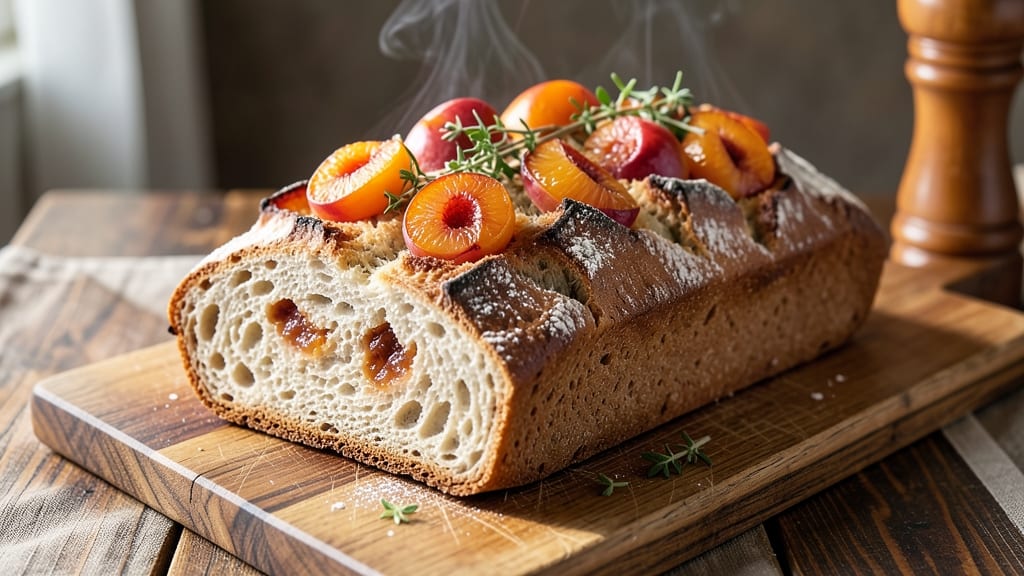
This apricot sourdough bread recipe transforms classic artisan loaves into a sweet-tart masterpiece with golden crust and jammy swirls. 🌟 Mastering sourdough means patience pays off—each rise develops deep flavor, while the apricot swirl adds bright, fruity contrast that cuts through the crusty exterior.
The secret lies in balancing fermentation time and fruit incorporation, ensuring every bite delivers both tangy crust and jammy sweetness.
What sets this recipe apart is the foolproof technique for infusing apricot flavor without soggy dough. Whether you use homemade jam or store-bought, the key is folding it into the dough at the right moment—just before shaping—to preserve texture while maximizing flavor.
A 375°F oven creates that perfect crust, crisp on the outside and tender within, with apricot pockets bursting in every slice.
The result is a loaf that looks as impressive as it tastes: crusty, airy, and studded with sweet-tart apricot bursts. Perfect for breakfast, charcuterie boards, or gifting, this bread proves sourdough can be both rustic and refined. Ready to bake?
For best results, prepare your sourdough starter 24 hours ahead and let the dough ferment overnight—this slow rise develops the complex flavors that make homemade bread unforgettable. The apricot swirl adds a touch of elegance without sacrificing the rustic charm of artisanal sourdough.
Ingredients for apricot sourdough bread
Golden crust meets jammy apricot swirls—this sourdough transforms ordinary loaves into showstopping fruit-infused artistry.
| Ingredient | Amount | Notes |
|---|---|---|
| Active Sourdough Starter 🍞 | ½ cup | 100% hydration, bubbly and active |
| All-Purpose Flour 🌾 | 4 ½ cups | King Arthur or similar high-protein |
| Unsalted Butter 🧈 | ½ cup | Cold, cubed, full-fat preferred |
| Granulated Sugar 🍚 | ¼ cup | For dough sweetness balance |
| Large Eggs 🥚 | 2 whole | Room temperature, organic preferred |
| Whole Milk 🥛 | ½ cup | Warmed for optimal dough hydration |
| Salt 🧂 | 1 ½ tsp | Diamond Crystal kosher preferred |
| Apricot Jam 🍑 | ½ cup | Unsweetened, chunky preferred |
| Dried Apricots 🍇 | ½ cup | Chopped, organic preferred |
| Cornmeal 🌽 | ¼ cup | For dusting bread pan |
| Coarse Sea Salt 🧂 | 1 tbsp | For crust sprinkling |
| Water 💧 | ½ cup | Room temperature, filtered preferred |
The sourdough starter is your flavor foundation—look for that bubbly, jiggly texture before using. King Arthur Flour or Bobs Red Mill are my go-tos for consistency, but any high-protein flour works. For the apricot elements, Trader Joe's unsweetened jam or homemade preserves add the perfect balance of sweet-tart. If using dried apricots, soak them briefly in warm water to soften—this prevents dry pockets in your bread. The butter should be cold and cubed when mixed in, creating pockets that develop into those signature airy holes. Pro tip: weigh your flour for precision—4.5 cups by weight is more accurate than volume.
No apricot jam? Mango or peach preserves work beautifully, though the flavor profile shifts slightly. Short on dried fruit? Fresh apricots, halved and pitted, can be folded in during the final shaping—just pat them dry first. The milk can be swapped for plant-based milk if needed, though whole milk creates the richest crumb. For a gluten-free version, use a 1:1 gluten-free flour blend and increase the jam by 2 tbsp to compensate for reduced structure. The eggs can be replaced with flax eggs (2 tbsp ground flax + 6 tbsp water) for vegan adaptation, though texture may differ slightly. If your jam is particularly runny, mix it with 1 tsp cornstarch to thicken before incorporating.
This dough needs 24 hours of cold fermentation—don't rush it! Shape the loaf, cover tightly with plastic wrap, and refrigerate overnight. The next morning, let it come to room temperature before baking. The bread keeps well for 3-4 days at room temperature, wrapped in a cotton towel. For longer storage, freeze slices wrapped in parchment—2-3 months is standard. The crust stays crisp for 2 days if stored properly, but the interior stays soft for 5 days. To revive stale slices, warm them in a 200°F oven for 5-10 minutes—they'll taste fresh again.
Why You'll Love This Recipe
- No-Fuss Dough: I swear by this recipe because it’s the kind of bread you can mix in one bowl—no kneading, no fuss—while your starter does the heavy lifting. The apricot swirl keeps it interesting without extra steps.
- Sweet & Tangy Magic: That caramelized sugar and butter combo with the jammy apricot? It’s like dessert for breakfast, but still feels like real bread. Honestly, the first slice makes me forget it’s not a pastry.
- Weekday Hero: This bread is my secret weapon for lazy mornings—toss a slice in the toaster for toast, tear it for sandwiches, or pack it for lunch. (Yes, even on a Tuesday night.)
- Leftover Goldmine: The crust stays crisp for days, and the soft interior turns into perfect French toast or bread pudding. I bake a loaf on Sundays and still have pieces by Friday—no waste, all flavor.
Step-by-step instructions for apricot sourdough bread
This method delivers a perfectly balanced loaf with a golden crust, tender crumb, and bursts of apricot flavor throughout.
👨🍳 Step 1: Mix the Dough Base
In a large mixing bowl, combine the 0.5 cup active sourdough starter, 0.5 cup whole milk, 0.25 cup granulated sugar, and 0.5 cup unsalted butter (cold, cubed). Let this sit for 5 minutes to allow the butter to soften slightly and begin emulsifying with the milk.
Next, add the 4.5 cups all-purpose flour and 1.5 tsp salt to the bowl. Using a dough whisk or your hands, mix until a shaggy dough forms. This stage is crucial—you want to develop just enough gluten to create structure without overworking the dough, which can make it tough.
Add the 2 whole large eggs one at a time, mixing gently after each addition. The dough will become stickier as the eggs incorporate. Here's the thing—don't be tempted to add more flour at this stage. The dough should be soft and slightly tacky, not dry. Cover the bowl with a damp towel and let it rest for 30 minutes at room temperature.
🍳 Step 2: Fold in Apricot Filling
While the dough rests, prepare the apricot filling by combining the 0.5 cup apricot jam and 0.5 cup chopped dried apricots in a small bowl. This mixture should be thick but spreadable—if it's too stiff, warm it gently in the microwave for 10-15 seconds to loosen it.
After the 30-minute rest, perform three sets of stretch-and-folds. Wet your hands slightly with water to prevent sticking, then grab one side of the dough, stretch it upward, and fold it over itself. Rotate the bowl and repeat this process three times in each direction. This builds strength into the dough without overworking it.
Once the dough has been folded, divide it into two equal portions. Roll one portion into a rectangle about 8x12 inches, then spread half of the apricot filling evenly over the surface. Roll it up tightly like a jelly roll, pinching the seam to seal. Repeat with the remaining dough and filling.
🥘 Step 3: Shape and Proof the Loaves
Place each filled log seam-side down in a greased 9x5-inch loaf pan. Cover loosely with plastic wrap and let them proof at room temperature for 1-1.5 hours until they've risen to just above the top of the pans. You'll know they're ready when the dough springs back slowly when gently pressed.
While the dough proofs, preheat your oven to 375°F and position a rack in the lower third. Sprinkle 0.25 cup cornmeal evenly on a baking sheet—this prevents sticking and adds texture to the bottom of the bread. Once the dough has proofed, carefully invert each loaf onto the prepared baking sheet.
Brush the tops of the loaves with a little water, then sprinkle generously with 1 tbsp coarse sea salt. The salt will create those beautiful crusty pockets and enhance the overall flavor. This is where the magic happens—don't skip the salting step!
🔥 Step 4: Bake to Golden Perfection
Bake the loaves for 35-40 minutes until they're deep golden brown and sound hollow when tapped on the bottom. The internal temperature should reach 190-195°F when measured with an instant-read thermometer. If the tops brown too quickly, tent loosely with foil to prevent over-browning while ensuring the interior cooks through.
Real talk: Your oven might run hot, so start checking at the 30-minute mark. You want a beautiful crust that's crispy on the outside but still soft and pillowy underneath. The apricot filling should be warm but not boiling—this indicates even baking throughout.
⏰ Step 5: Cool and Slice for Maximum Enjoyment
Remove the loaves from the oven and transfer them to a wire rack to cool completely for at least 1 hour. I know it's tempting to slice into that warm, fragrant bread immediately, but patience here is key. Cooling allows the crumb to set properly and prevents the bread from becoming gummy.
Once cooled, slice the loaves with a sharp serrated knife. Each slice should reveal a tender crumb with pockets of apricot jam and dried fruit throughout. The crust should be shatteringly crisp, with a beautiful golden hue that contrasts perfectly with the soft interior. Store any leftovers in an airtight container at room temperature for up to 3 days, or freeze for up to 3 months for freshness.
Pro Tips For Making Apricot Sourdough Bread
- Score the Dough: Use a sharp lame or razor to cut a cross into the top of your shaped apricot sourdough—about 1/4-inch deep. I learned this the hard way by skipping it; the bread still rises, but the crust turns into a sad, uneven mess instead of that perfect golden grid. (And yes, even if you're impatient like me, resist the urge to do this too early—the dough needs to rest first.)
- Chill the Butter: Take your unsalted butter out of the fridge 10 minutes before mixing it into the dough, but don’t let it get soft. Cold butter creates flaky layers, but if it’s too warm, your bread will turn greasy and dense. I used to just grab it straight from the fridge, and the texture suffered—now I swear by this tiny window of time.
- Weigh the Apricots: If you’re using fresh apricots (or dried), weigh them before adding them to the dough—aim for about 1 cup chopped fresh or 3/4 cup dried per loaf. Too many, and your bread gets gummy; too few, and you miss the jammy sweetness. I once eyeballed it and ended up with a brick instead of a loaf. (A kitchen scale is your friend here.)
- Egg Wash Last: Brush the egg wash on the shaped loaf right before baking—not while you’re prepping the dough. The eggs dry out quickly, and if you do it too early, the crust will toughen instead of staying tender and glossy. I was skeptical until I tried it: the difference in texture is night and day. (Save a little egg wash for after baking to keep the crust soft for days.)
Regional styles of these flavors
French Brioche Twist
In France, apricot sourdough often takes on the texture of brioche—rich, buttery, and slightly sweet. Replace 0.5 cup whole milk with 0.5 cup heavy cream and add 2 tbsp melted butter to the dough for extra richness.
Fold in 1 tbsp orange zest with the apricot jam for a bright, floral note that pairs beautifully with the fruit. Proof the dough at 75°F for 4-5 hours to enhance the brioche's airy crumb. 🍞
Italian Panettone Style
Northern Italy transforms sweet sourdough into panettone-inspired loaves by incorporating candied fruit and citrus. Mix 0.5 cup chopped candied citrus peel (orange or lemon) with the apricot jam before rolling into the dough.
Shape the loaves into round forms rather than logs, and bake in a 350°F oven for 45-50 minutes until the crust is golden and crisp. Serve with a dusting of powdered sugar for a festive touch.
German Stollen Adaptation
For a dense, fruit-studded loaf like German stollen, increase the butter to 1 cup and add 0.5 cup chopped almonds to the dough. Replace half the dried apricots with 0.25 cup raisins for extra sweetness.
Shape the dough into an oval loaf and bake at 325°F for 50-60 minutes, brushing with egg wash> and sprinkling with powdered sugar after baking. This version is perfect for holiday gifting.
Spanish Pan de Fruta
In Spain, sweet sourdough loaves often feature dried fruit and spices. Add 1 tsp ground cinnamon and 0.5 tsp ground cardamom to the dough, and fold in 0.5 cup chopped dates alongside the apricots.
Shape the dough into a round loaf and bake at 350°F for 40-45 minutes. Brush the warm loaf with honey> and sprinkle with crushed pistachios for a Middle Eastern-inspired twist.
Scandinavian Cardamom Swirl
Nordic bakers often infuse sweet breads with cardamom and a touch of spice. Replace the apricot jam with 0.5 cup lingonberry jam (or apricot jam mixed with 1 tsp cardamom powder) and add 0.5 tsp ground ginger to the dough.
Shape into a round loaf and bake at 375°F for 35-40 minutes. The cardamom enhances the apricot's natural sweetness while adding a warm, aromatic depth. 🌟
American Apricot Cornbread
For a Southern-inspired twist, replace 1 cup flour with 1 cup fine cornmeal and add 0.5 cup corn kernels to the dough. Swirl in 0.5 cup apricot preserves> and bake in a cast-iron skillet at 400°F for 25-30 minutes.
The cornmeal adds a subtle sweetness and texture that pairs perfectly with the jammy filling. Serve warm with butter for a comforting breakfast loaf.
Nutrition facts
Frequently asked questions
Can I substitute apricot jam with another fruit preserve?
For a similar texture, use peach, mango, or plum jam—these work beautifully in the same ratio. If you prefer dried fruit, try chopped dates or figs (soaked first to prevent dryness). For a tangier twist, swap in raspberry or blackberry jam, though the flavor profile will shift slightly.
Why does my apricot sourdough dough smell so strong?
The intense aroma comes from the active sourdough starter and fermenting sugars in the apricot filling. This is normal and indicates healthy fermentation! For a milder scent, reduce the jam to 0.3 cups or use a less sweet preserve. The flavor will mellow as the bread bakes.
How do I fix a dough that's too sticky after adding jam?
Add 1-2 tbsp flour gradually while mixing, but don't overdo it—the dough should remain slightly tacky. For extra help, chill the dough for 30 minutes before shaping, which firms it up. If the jam is too runny, mix it with 1 tsp cornstarch before incorporating to thicken it.
Can I make this bread without a loaf pan?
Yes! Shape the filled dough into a round boule or batard instead. Proof on parchment paper, then bake at 425°F for 20-25 minutes with steam (place a tray of boiling water in the oven). The crust will be extra crispy, and the apricot filling will caramelize beautifully.
How long can I keep this bread fresh?
The crust stays crisp for 2 days at room temperature, while the interior remains soft for 3-4 days when wrapped in a cotton towel. For longer storage, freeze slices wrapped in parchment for up to 3 months. To revive stale slices, warm them in a 200°F oven for 5-10 minutes.