
Side Dishes
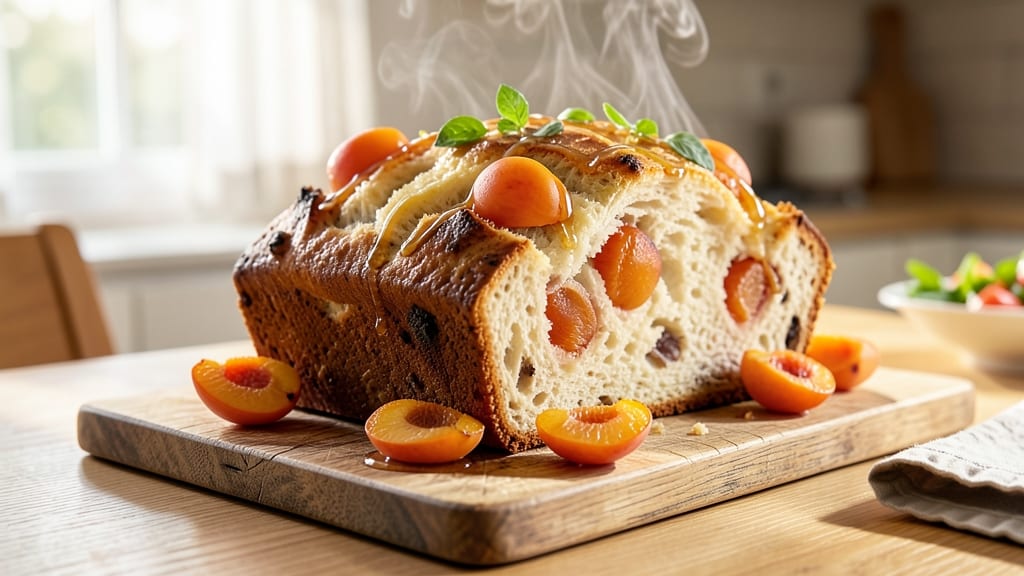
This apricot yeast bread recipe delivers a fragrant, spice-infused loaf with a golden crust that smells like autumn in your kitchen. 🌟 The secret lies in balancing sweet dried apricots with warm cinnamon and cardamom, creating a dough that rises perfectly while developing deep, caramelized flavors during baking.
Unlike dense fruit breads, this version stays tender yet sturdy enough to slice cleanly—ideal for breakfast toast or elegant charcuterie boards.
Professional bakers know the difference between good bread and great bread comes down to technique: activating yeast properly, kneading just enough to develop gluten without overworking, and proofing at the right temperature.
I’ve refined this recipe to eliminate guesswork—whether you’re using dried apricots for texture or apricot jam for moisture, the result is consistently crusty on the outside, soft and fragrant on the inside, with pockets of sweet fruit in every bite.
The dough comes together in under 20 minutes of active work, then does the heavy lifting during a 2-hour rise (or overnight in the fridge for deeper flavor). Baking at 375°F for 30–35 minutes ensures a crisp crust while keeping the interior moist.
The optional honey glaze adds a glossy finish, but the bread is delicious even without it—proof that simple ingredients can create something extraordinary.
Perfect for holiday gatherings, brunch spreads, or gifting, this apricot bread freezes beautifully for up to 3 months. Pair it with sharp cheeses, smoky salami, or a dollop of whipped cream for a dessert twist. Let’s get baking—your kitchen will thank you for the aroma alone.
Ingredients for apricot yeast bread
Gather these simple yet transformative ingredients for a fragrant, golden-crusted apricot bread that smells like autumn.
| Ingredient | Amount | Notes |
|---|---|---|
| Active Dry Yeast 🍞 | ¼ tsp | Ensure yeast is fresh and active |
| Warm Water 💧 | 1 cup | 110°F for optimal yeast activation |
| All-Purpose Flour 🌾 | 5 cups | King Arthur or similar preferred |
| Granulated Sugar 🍚 | ¼ cup | For yeast activation and flavor |
| Unsalted Butter 🧈 | ½ cup | Cold, cubed for texture |
| Large Eggs 🥚 | 2 whole | Room temperature for even mixing |
| Dried Apricots 🍑 | 1 cup | Chopped, unsulfured preferred |
| Ground Cinnamon 🌿 | 1 tsp | Freshly ground for best flavor |
| Ground Cardamom 🌿 | ½ tsp | Lightly toasted for depth |
| Diamond Crystal Kosher Salt 🧂 | 1 ½ tsp | Adjust to taste |
| Extra-Virgin Olive Oil 🫒 | 2 tbsp | For dough and glaze |
| Honey 🍯 | 2 tbsp | Optional for glaze |
| Coarse Sugar 🍚 | 1 tbsp | For bread topping |
The yeast is the foundation—King Arthur or Bob’s Red Mill brands activate reliably. If your yeast isn’t fresh, test it in warm water with sugar first (it should foam within 5 minutes). The dried apricots should be plump and unsulfured for the best flavor, which you’ll find in the baking aisle or bulk bins at Whole Foods. For the spices, Penzeys or McCormick ground cinnamon and cardamom add depth, but don’t stress if you’re using what’s in your pantry. The butter should be cold—Land O’Lakes or Plugrá work perfectly for this recipe.
No dried apricots? Dried plums or chopped dates work in a pinch, but the texture won’t be the same. Running short on cardamom? Nutmeg at half the amount gives a similar warmth, though it’s not identical. The honey glaze is optional, but if you skip it, brush the bread with extra olive oil for shine. For the flour, King Arthur or Caputo Tipo 00 (if you’re feeling fancy) give the best results, but all-purpose will work fine. If your dough feels too sticky, add flour 1 tbsp at a time—it’s better to have it slightly stiff than too wet.
This dough is best made fresh but can be refrigerated overnight for deeper flavor—just let it sit at room temperature for 1 hour before shaping. The baked loaf keeps well at room temperature for 2 days, wrapped in a clean kitchen towel. For longer storage, freeze slices wrapped in plastic for up to 3 months. To revive, warm in a 350°F oven for 5-10 minutes until toasty. The crust is best within the first day, so enjoy it fresh if possible.
Why You'll Love This Recipe
- You’re using pantry basics: flour, sugar, yeast, and butter. That jar of apricot jam you already own? Now it’s the star. Plus, it keeps for days, so I’m not scrambling to bake something fresh every morning.
- No-Knead Magic: I swear, the dough comes together in five minutes—just mix the yeast, warm water, and flour, then let it rise while you sip coffee. That butter swirled into the apricot jam? Pure lazy-day brilliance.
- Sweet But Not Cloying: The apricot jam adds just the right amount of fruity depth without overpowering, while the sugar and butter keep it rich and tender. Honestly, the first slice out of the oven has me reaching for seconds before I even cool it.
- Breakfast to Brunch: Toast it for a quick breakfast with jam and cream cheese, or serve it warm with butter for a weekend brunch. My college-aged kids grab it for lunch when they’re running late—no judgment, just delicious.
Step-by-step instructions for apricot yeast bread
Here's how to craft a fragrant, moist loaf with perfect spice balance and a crackly crust.
👨🍳 Step 1: Activate the Yeast and Mix the Dough Base
In a small bowl, combine the 1 cup warm water (around 110°F) with the 0.25 cup granulated sugar and 0.25 tsp active dry yeast. Let it sit for 5-10 minutes until frothy—this confirms your yeast is alive and ready to work. If it doesn't bubble, your yeast might be dead or your water too hot.
In a large bowl, whisk together the 5 cups all-purpose flour, 1.5 tsp kosher salt, 1 tsp ground cinnamon, and 0.5 tsp ground cardamom. Add the yeast mixture and mix until a shaggy dough forms. Then add the 2 whole eggs and 0.5 cup cold cubed butter—the butter should stay mostly intact at this stage. Mix until just combined, then gradually incorporate the 2 tbsp extra-virgin olive oil.
🥘 Step 2: Knead and Incorporate Apricots
Turn the dough onto a lightly floured surface and knead for 8-10 minutes until smooth and elastic. You'll know it's ready when it springs back slowly when poked. The dough should feel slightly tacky but not sticky—add a little more flour if needed, but don't overdo it or the bread will be dense.
Once kneaded, press the dough into a rectangle and fold in the 1 cup chopped dried apricots. Gently fold the dough over itself a few times to distribute the fruit evenly. This prevents large pockets of apricots that might burn during baking. Shape the dough into a ball, place it back in the bowl, and cover with a damp towel.
⏰ Step 3: First Rise and Shaping
Let the dough rise in a warm place for 1-1.5 hours or until doubled in size. I like to place it near the oven with the light on for consistent warmth. Poke the dough gently—if it springs back slowly, it's ready. If it springs back quickly, give it more time.
Once risen, punch down the dough to release air, then shape it into a round loaf. For extra flavor, brush the top with a mixture of 2 tbsp honey and 1 tbsp water. This creates a beautiful sheen and adds subtle sweetness. Place the loaf in a greased 9x5-inch loaf pan and let it rise for another 30-45 minutes until it's just above the pan rim.
🔥 Step 4: Bake to Golden Perfection
Preheat your oven to 375°F. Before baking, sprinkle the 1 tbsp coarse sugar evenly over the top of the loaf—this creates that gorgeous caramelized crust we all love. Bake for 35-40 minutes until the bread is deep golden brown and sounds hollow when tapped on the bottom.
For the final touch, brush the warm loaf with a little more olive oil while it's still in the pan. This keeps it moist and adds a subtle richness. Let it cool in the pan for 10 minutes before transferring to a wire rack. The internal temperature should reach 190-200°F for perfect doneness.
🍽️ Step 5: Rest and Serve
Allow the bread to cool completely before slicing—this ensures clean cuts and prevents a gummy texture. The apricots should be tender but still hold their shape, and the crust should be crisp enough to shatter slightly. Each slice should reveal a tender crumb with pockets of sweet, spiced fruit throughout.
For best results, serve within 2 days or freeze slices for up to 3 months. The flavor actually improves as it sits, with the spices mellowing and the apricots softening further. Pair with butter or jam for the ultimate breakfast experience.
Pro Tips For Making Apricot Yeast Bread
- Bloom the Yeast Properly: Mix your yeast with warm water (110°F) and a pinch of sugar first—wait 5-10 minutes until it’s frothy and active before adding anything else. I learned this the hard way after kneading dough with sluggish yeast and wondering why my bread never rose right.
- Soften Butter First: Use softened (not melted) butter for the dough—press it into the flour mixture until it’s pea-sized chunks, not a greasy puddle. My grandmother swore by this, and it keeps the bread tender without making it dense.
- Avoid Over-Kneading: Stop kneading once the dough springs back when poked—overworking it makes apricot yeast bread tough. I used to go until it looked "perfect," but now I check for elasticity instead.
- Proof in a Warm Spot: Place your dough in a lightly oiled bowl, cover it, and let it rise in a warm spot (like the oven with the light on) for 1-2 hours—until it doubles. Skipping this step means your bread will turn out flat, no matter how good the apricot filling is.
Serving suggestions for this dish
Breakfast Pairings
This apricot bread shines at breakfast with a smear of cultured butter—I love Plugrá European-style butter for its rich flavor. For a sweet twist, spread local honey or fig jam on warm slices.
The spiced apricots balance the sweetness beautifully. If you're feeling indulgent, top with whipped cream and a sprinkle of toasted almonds for crunch. 🍯
Charcuterie Board Star
Slice the bread into ½-inch thick pieces and arrange on a board with sharp aged cheddar, smoked gouda, and provolone. Add salami, genoa salami, and prosciutto for a mix of textures.
The apricot's natural sweetness cuts through the saltiness of cured meats. I like to include marinated olives and cornichons for a tangy contrast. 🧀
Dessert Twist
Serve warm slices with vanilla ice cream or mascarpone cheese for a dessert-style pairing. The cardamom and cinnamon in the bread complement the creaminess perfectly. For a lighter option, drizzle with warm apricot compote or caramel sauce.
The crust stays crisp enough to hold up to toppings while the soft interior melts slightly. 🍦
Coffee and Tea Companion
Pair with dark roast coffee like Peet's Major Dickason's Blend or earl grey tea for a sophisticated pairing. The bread's warm spices echo the tea's bergamot notes, while the coffee's bitterness balances the sweetness. For a morning treat, serve with chai latte—the spices harmonize beautifully. ☕
Savory Applications
Use as a base for open-faced sandwiches with goat cheese, roasted red peppers, and balsamic glaze. The bread's mild sweetness works surprisingly well with savory toppings.
For a lunch option, layer with avocado, crispy prosciutto, and arugula. The texture holds up perfectly to both sweet and savory combinations. 🥗
Gift-Worthy Presentation
Wrap slices in parchment paper tied with twine for a beautiful gift. Include a small jar of honey or jam for an elegant touch. The bread's aroma makes it perfect for holiday gifts or hostess presents. For extra flair, dust with powdered sugar before wrapping. 🎁
Nutrition facts
Frequently asked questions
Can I substitute dried apricots with fresh?
Fresh apricots work but require adjustment—puree 1 cup fresh apricots with 1 tbsp lemon juice to prevent browning, then reduce by 2 tbsp to account for water content. The texture will be slightly softer than dried apricots. For best results, use unsulfured dried apricots as they hold their shape better during baking.
Why did my bread turn out dense?
Dense bread usually means over-kneading or under-proofing. Knead only until the dough springs back slowly (8-10 minutes max), and ensure it doubles in size during the 1-1.5 hour rise. Cold dough slows fermentation—keep your kitchen at 75°F+ for proper rising. Also check your yeast: it should foam within 5-10 minutes in warm water.
How do I store apricot bread?
Wrap cooled bread tightly in a kitchen towel or beeswax wrap to maintain freshness. Store at room temperature for 2 days, or freeze slices for up to 3 months. To revive frozen bread, warm at 350°F for 5-10 minutes until crisp. The crust stays freshest when eaten within the first day.
Can I make this gluten-free?
Yes, but texture will differ. Replace flour with a 1:1 gluten-free baking blend (like Bob's Red Mill) and add 1 tsp xanthan gum. Use 1 extra egg for structure, and expect a denser crumb. The rising time may need extending to 2 hours for proper gluten development. Test small batches first—results vary by brand.
What's the best way to reheat slices?
For crispy crust: Wrap slices in foil and warm at 350°F for 5 minutes. For soft interior: Toast in a toaster oven at 375°F for 3-4 minutes until golden. Microwave reheats quickly but makes the crust soggy—avoid if possible. The honey glaze also reheats beautifully when brushed on warm slices.