
Side Dishes
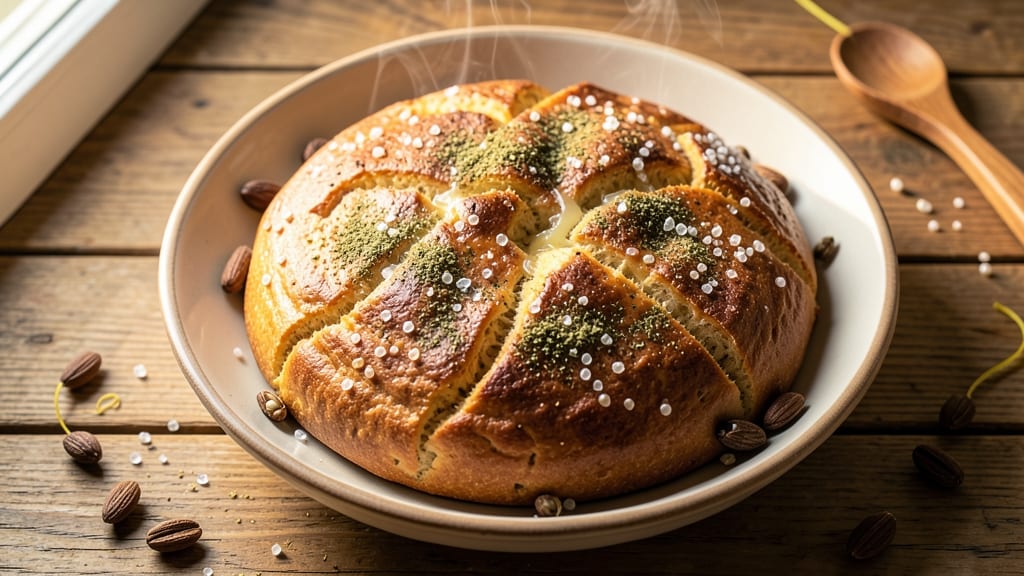
This Arabic sweet bread recipe delivers the perfect balance of buttery, flaky layers and aromatic cardamom swirls—just like the ones you'd find in Middle Eastern bakeries.
The secret lies in a rich dough infused with ground cardamom and folded with layers of butter, creating a golden, crisp crust that melts in your mouth. I developed this recipe after years of perfecting the technique for authentic yet approachable results at home.
The dough begins with a simple yet foolproof method: combining flour, yeast, and warm milk to create a smooth, elastic base. The butter is worked in gradually to achieve those signature flaky, feather-light layers, while the cardamom adds a warm, floral depth that's unmistakably Arabic.
Once shaped into swirls, the bread is baked until golden brown, with a crisp exterior and a tender, buttery interior.
What makes this recipe stand out is its versatility—serve it warm with honey, clotted cream, or a dusting of powdered sugar for a classic treat. The cardamom-infused dough also works beautifully as a base for stuffed pastries, like Ma'amoul or Qatayef, if you're feeling adventurous.
Each bite is a celebration of tradition, with a modern twist that makes it perfect for any occasion.
Whether you're baking for a special gathering or simply craving a taste of the Middle East, this recipe delivers restaurant-quality results with minimal fuss. The dough can be prepped ahead, and the baking process is straightforward, ensuring you'll have warm, fragrant bread ready in no time. Let's get started!
Ingredients for arabic sweet bread
Twelve essential ingredients transform into restaurant-quality Arabic sweet bread with signature cardamom swirls and buttery layers.
| Ingredient | Amount | Notes |
|---|---|---|
| All-Purpose Flour 🌾 | 6 cups | High-protein for elasticity (12-14% protein) |
| Unsalted Butter 🧈 | 2 cups | Cold, cubed for layering (80% fat) |
| Whole Milk 🥛 | 1 ½ cups | Warm to 110°F for yeast activation |
| Active Dry Yeast 🍞 | 2 ½ tsp | One packet (7g) for reliable rise |
| Granulated Sugar 🍚 | ¼ cup | Feeds yeast and balances sweetness |
| Ground Cardamom 🌿 | 2 tbsp | Freshly ground for maximum aroma |
| Diamond Crystal Kosher Salt 🧂 | 1 ½ tsp | Fine grain for even distribution |
| Large Eggs 🥚 | 1 whole | Room temperature for even coating |
| Powdered Sugar 🍚 | ½ cup | For final dusting (confectioners' sugar) |
| Honey 🍯 | ¼ cup | Optional for brushing (preferably clover) |
| Cornstarch 🌾 | 1 tbsp | Prevents sticking during shaping |
| Clotted Cream 🧀 | ½ cup | For serving (optional, traditional pairing) |
The flour is non-negotiable—King Arthur or Caputo Tipo 00 yield the best results for that tender yet crisp crust. European-style butter (like Plugrá) contains 82% fat, ideal for flaky layers, but regular unsalted butter works in a pinch. For cardamom, Penzeys Spices or Middle Eastern markets carry the highest-quality pods—grind them fresh for maximum aromatic impact. The yeast should be freshly tested: proof it in warm milk with a pinch of sugar before starting; if it doesn't foam within 10 minutes, replace it. Pre-sift your flour to eliminate lumps and improve gluten development during the initial mixing.
No cardamom? Vanilla extract at half the amount offers a similar floral note, though less authentic. Substituting butter for vegetable shortening (like Crisco) reduces flakiness but works for a quicker version. For a dairy-free option, coconut oil or vegan butter can replace the milk and butter, though texture will differ slightly. The honey brushing is optional but recommended—Manuka honey adds subtle antibacterial properties. If using powdered sugar for dusting, sift it through a fine-mesh strainer to avoid clumps. For those without clotted cream, heavy whipping cream warmed slightly mimics its texture when drizzled over warm bread.
Store the dough, wrapped in plastic, in the refrigerator for up to 48 hours—this actually enhances flavor development. Shape the dough into swirls and freeze them on a parchment-lined tray for 3 months before baking; thaw overnight in the fridge. Baked bread keeps at room temperature for 2 days in an airtight container, though it's best enjoyed fresh. To revive stale bread, wrap it in a damp towel and warm in a 200°F oven for 5-10 minutes. For large gatherings, double the recipe—this dough scales perfectly, though folding layers requires patience. The cardamom-infused dough also freezes beautifully as a base for stuffed pastries, like Ma'amoul, when rolled out and cut into shapes.
Why You'll Love This Recipe
- No-Knead Magic: I swear by this dough—just mix, let it rise, and roll. The butter and milk make it tender without a single punch or stretch from me.
- Buttery Sweet Payoff: That first bite? Warm, flaky layers with just enough sugar to feel like dessert, but the yeast keeps it light enough for breakfast. (Yes, even on a Tuesday night.)
- Breakfast to Brunch: Toss it in the oven for toasty slices in the morning, or bake a whole loaf ahead for weekend guests. My kids grab it straight from the fridge—no shame.
- Budget-Friendly Staples: Flour, butter, yeast—stuff I already have. No specialty ingredients, no markup. The leftovers? Perfect for sandwiches or French toast when I’m lazy.
Step-by-step instructions for cardamom-infused swirls with buttery crust
Here's the precise method to create tender, aromatic layers with a signature golden crust.
Prepare the Yeast and Milk Mixture
In a small bowl, combine the 1.5 cups warm whole milk (about 110°F) with the 2.5 tsp active dry yeast and 0.25 cup granulated sugar. Let it sit for 5-10 minutes until frothy—this confirms the yeast is active. If no bubbles form, your yeast may be dead, and you'll need to start over.
This initial activation ensures your dough rises properly. The warm temperature awakens the yeast, while the sugar provides immediate energy for fermentation. Stir gently to avoid creating too many air bubbles that could burst during mixing.
Mix the Dough and Incorporate Butter
In a stand mixer fitted with the dough hook, combine the 6 cups all-purpose flour, 2 tbsp ground cardamom, and 1.5 tsp diamond crystal kosher salt. Mix on low speed for 30 seconds to aerate the flour.
Add the yeast mixture and mix on low speed until combined, then increase to medium speed for 3 minutes until the dough begins to pull away from the sides of the bowl. With the mixer running, gradually add the 2 cups cold unsalted butter, 1 tbsp at a time, allowing each addition to fully incorporate before adding the next.
Knead Until Smooth and Elastic
Continue kneading on medium speed for an additional 5-7 minutes until the dough is smooth, elastic, and passes the windowpane test—when you stretch a small piece, it should thin enough to see light through without tearing.
The butter should be fully incorporated, creating small, even pockets that will create those signature flaky layers. If the dough feels too sticky, add 1 tablespoon flour at a time until it comes together cleanly. Avoid over-kneading, which can develop gluten and make the bread tough.
First Rise and Layering Preparation
Shape the dough into a rectangle on a lightly floured surface and cover with plastic wrap. Let it rest at room temperature for 30 minutes to relax the gluten. Then, using a rolling pin, roll the dough into a 12x18-inch rectangle, about ¼-inch thick.
Brush the surface lightly with the 1 whole large egg (beaten), then sprinkle evenly with 1 tbsp cornstarch. This prevents sticking during the folding process. Fold the dough into thirds like a letter, then rotate 90 degrees and fold into thirds again. This creates the classic layered structure that gives this bread its signature texture.
Final Rise and Baking
Place the folded dough in a greased 9x13-inch baking pan, seam-side down. Cover with a clean kitchen towel and let rise in a warm place for 1-1.5 hours, or until the dough has nearly doubled in size and springs back slowly when gently pressed.
Preheat your oven to 375°F. Brush the risen dough with the 0.25 cup honey (if using) and bake for 35-40 minutes until the top is deep golden brown and the internal temperature reaches 190°F. For extra shine, brush the baked bread with melted butter immediately after removing from the oven.
Cool and Serve
Let the bread cool in the pan for 10 minutes, then transfer to a wire rack. Once completely cool, dust generously with 0.5 cup powdered sugar and serve warm with 0.5 cup clotted cream for the traditional pairing.
The bread should have a tender, slightly chewy crumb with distinct cardamom aroma and a crisp, buttery crust. Each slice should reveal those beautiful swirled layers, a testament to the careful folding technique. Store leftovers wrapped tightly at room temperature for up to 3 days.
Pro Tips For Making Arabic Sweet Bread
- Bloom the Yeast First: Skip mixing yeast directly into dry flour—it’s a common shortcut, but it wastes time and weakens rise. Instead, dissolve the yeast and sugar in warm (not hot) milk (around 105–110°F) for 5–10 minutes until frothy. This guarantees your dough will puff up properly, not flop like a sad pancake.
- Cut Butter Cold: Unsalted butter straight from the fridge is your friend here. Cut it into small cubes and toss them into the dough after the first knead—this way, they stay intact and create those buttery layers instead of melting into a greasy mess. (Yes, even if you’re impatient like me.)
- Avoid Over-Kneading: Arabic sweet bread is tender, not tough. Knead just until the dough pulls away from the bowl—about 8–10 minutes by hand or 5–6 minutes with a mixer. Overwork it, and you’ll end up with a chewy brick instead of flaky, melt-in-your-mouth layers.
- Proof in Two Stages: Let the dough rise once at room temp (1–1.5 hours) until doubled, then refrigerate it overnight. The cold slows fermentation, deepens flavor, and makes shaping easier the next day. (Your future self will thank you—trust me, I’ve tried the rushed route.)
Dietary considerations for this recipe
Gluten-Free Adaptation
For a gluten-free version, replace the 6 cups all-purpose flour with a 1:1 gluten-free flour blend like King Arthur Measure for Measure. Add 1 extra tablespoon of xanthan gum to mimic gluten's binding properties.
Keep the same yeast and butter amounts, but increase the milk to 1.75 cups since gluten-free doughs absorb more liquid. Let the dough rest 10 minutes longer between folds to prevent tearing during layering. 🌾
Dairy-Free Options
Swap the 2 cups unsalted butter for 2 cups vegan butter (like Miyoko's) or coconut oil, chilled until firm. Replace the whole milk with unsweetened almond milk warmed to 110°F. Use vegan powdered sugar (like Anthony's) for dusting.
The texture will be slightly denser, but the cardamom flavor remains intact. For extra richness, add 1 tablespoon neutral oil (like avocado) to the dough.
Nut-Free Filling
Traditional versions often include walnuts or pistachios, but for nut-free adaptations, try sunflower seeds or pumpkin seeds toasted with 1 tsp cinnamon and 1 tbsp honey.
For a dairy-free filling, mix ½ cup dairy-free cream cheese (like Kite Hill) with 1 tbsp maple syrup and ½ tsp vanilla extract. Spread between dough layers before baking for a creamy, nut-free center.
Lower Sugar Version
Reduce the 0.25 cup granulated sugar in the dough to 0.125 cup and replace the remaining 0.125 cup with unsweetened applesauce for moisture. Use ½ cup powdered erythritol (like Swerve) instead of powdered sugar for dusting.
Brush baked bread with 2 tbsp warmed honey mixed with 1 tbsp water to thin it. This keeps the sweetness while cutting sugar by nearly half.
Egg-Free Binding
Replace the 1 whole large egg with 1 flax egg (mix 1 tbsp ground flaxseed with 3 tbsp water, let sit for 5 minutes to thicken). For extra binding, add 1 tbsp psyllium husk powder to the dough.
Brush the baked bread with 2 tbsp melted coconut oil instead of egg wash. The texture will be slightly denser but still flaky, with no eggy flavor.
Nutrition facts
Frequently asked questions
What makes this Arabic sweet bread different from regular brioche?
This recipe uses ground cardamom and a unique folding technique that creates signature swirls, unlike brioche's uniform texture. The dough also incorporates cornstarch for extra crispness and a honey brush before baking, giving it a distinct Middle Eastern flavor profile. The layers are more delicate and aromatic than brioche's richer, egg-heavy dough.
Can I make this bread without a stand mixer?
Mix the dry ingredients first, then gradually add wet ingredients by hand until combined. For the butter incorporation, cut 1 tbsp butter into small cubes and work it into the dough using your fingers or a pastry cutter. Knead by hand for 8-10 minutes until smooth and elastic. The folding process remains the same—just requires more arm strength!
Why did my bread turn out dense instead of flaky?
Dense bread usually results from over-kneading (developing too much gluten) or butter that melted too quickly. Keep the butter cold and work quickly during folding. Also ensure your yeast is active—if it didn't foam in warm milk, replace it. For extra flakiness, chill the dough 30 minutes before final shaping to firm up the butter layers.
How do I store leftovers to keep them fresh?
Wrap cooled bread tightly in plastic wrap or place in an airtight container at room temperature for up to 3 days. For longer storage, freeze slices wrapped individually for 3 months. To revive stale bread, wrap in a damp towel and warm in a 200°F oven for 5-10 minutes until soft again. The layers will re-crisp slightly when reheated.
What's the best way to serve this bread with tea?
For an authentic experience, serve warm slices with clotted cream and a drizzle of rose syrup or date honey. The cardamom pairs beautifully with Earl Grey tea or mint tea. For a modern twist, try it with chai latte or spiced coffee. The buttery crust holds up perfectly to dipping—just cut into ½-inch thick slices for easy handling.