
Side Dishes
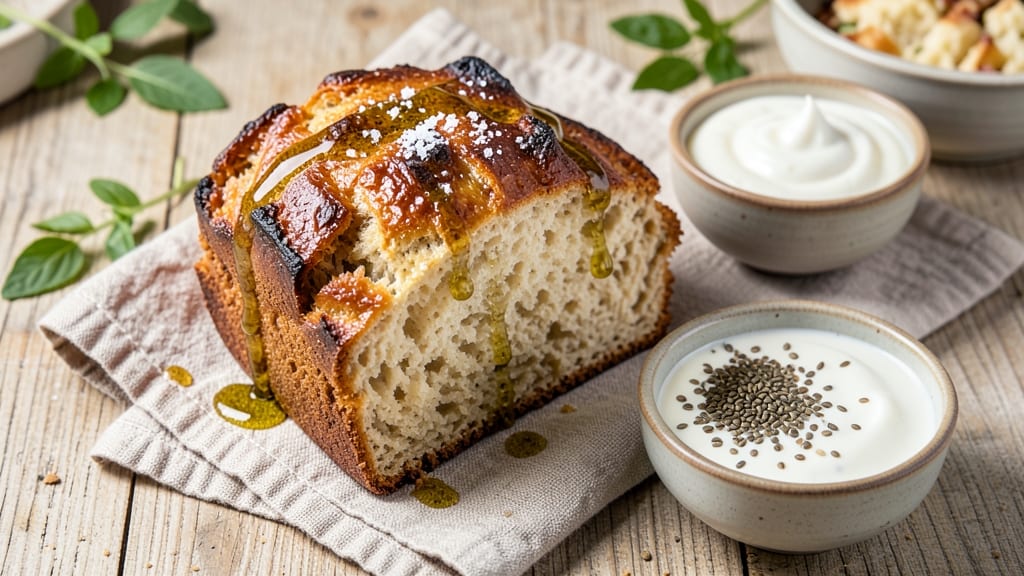
This gluten-free arrowroot flour bread delivers the perfect balance of a crispy crust and tender crumb without traditional flour. ✨ The secret lies in arrowroot’s unique properties—it creates a light, airy texture while binding the dough just enough for easy shaping and baking.
Unlike heavy gluten-free substitutes, this recipe yields a loaf that’s naturally soft yet sturdy, with a golden-brown exterior that cracks beautifully when sliced.
Arrowroot flour’s high starch content absorbs moisture differently than wheat flour, so hydration is key—this recipe uses a precise liquid-to-flour ratio to prevent gumminess while maintaining structure. The dough comes together in minutes with minimal handling, making it ideal for beginners or anyone craving a foolproof gluten-free loaf.
No special equipment is needed beyond a standard loaf pan and a little patience for proofing.
What sets this bread apart is its versatility: toast it for crispy breakfast slices, serve warm with soups, or use it as a base for sandwiches without fear of crumbling.
The crispy crust forms naturally from high-heat baking, while the interior stays soft and slightly chewy—exactly what gluten-free bread lovers have been searching for. With just a handful of pantry staples, you’ll achieve bakery-quality results at home.
For extra flavor, consider adding seeds or herbs to the dough before baking—sunflower seeds or rosemary work beautifully. The recipe scales easily for smaller rolls or larger loaves, making it adaptable to any occasion. Let’s get started on your first gluten-free, crispy-crusted loaf—no compromises, just perfect bread.
Ingredients for arrowroot flour bread
Arrowroot flour, almond milk, and flaxseed create a sturdy yet airy gluten-free loaf with crispy crust and soft interior.
| Ingredient | Amount | Notes |
|---|---|---|
| Arrowroot Flour 🌾 | 3 cups | Fine-milled, gluten-free, for structure |
| Unsweetened Almond Milk 🥛 | 1 ½ cups | Room temperature, unsweetened |
| Flaxseed Meal 🌰 | ½ cup | Ground flaxseeds for binding |
| Extra-Virgin Olive Oil 🫒 | ¼ cup | High-quality, fruity variety |
| Cane Sugar 🍯 | ¼ cup | Fine granulated, for subtle sweetness |
| Active Dry Yeast 🍞 | 2 ¼ tsp | Instant yeast preferred |
| Apple Cider Vinegar 🍎 | 1 tbsp | For yeast activation |
| Diamond Crystal Kosher Salt 🧂 | 1 ½ tsp | Fine grain for even distribution |
| Sunflower Seeds 🌻 | ¼ cup | Optional, for texture and flavor |
| Fresh Rosemary 🌿 | 1 tbsp | Finely chopped, optional herb |
| Water 💧 | ½ cup | Warm, for dough consistency |
Arrowroot flour is the backbone of this recipe—Bob’s Red Mill or Anthony’s Goods brands deliver the finest texture. Look for a vibrant white color and a smooth, silky consistency; anything grainy won’t yield that perfect crispy crust. The flaxseed meal binds the dough without gluten, so grind your own if possible for maximum freshness. Almond milk should be unsweetened and room temperature—cold milk slows yeast activation, while sweetened versions can alter the bread’s delicate balance. For extra flavor depth, Trader Joe’s or Whole Foods carry high-quality extra-virgin olive oil with robust fruity notes that elevate the crust.
No arrowroot flour? Tapioca starch or cassava flour can substitute at a 1:1 ratio, though texture may differ slightly. Swap almond milk for soy or oat milk if needed, but avoid dairy—it introduces gluten contamination. For yeast activation, apple cider vinegar is ideal, but lemon juice works too at the same amount. Sunflower seeds can be omitted or replaced with chia seeds or pumpkin seeds for a different crunch. Fresh rosemary? Dried works at one-third the amount, but fresh provides that bright, piney aroma. The cane sugar adds subtle sweetness, but maple syrup or agave can substitute in a pinch—just reduce by 10% to account for moisture differences.
Store the dough in an airtight container at room temperature for up to 24 hours before baking, or refrigerate for 48 hours for deeper flavor development. Baked loaves keep well wrapped at room temperature for 3 days, or freeze for 3 months in a sealed bag. For extra crispiness, toast slices in a 375°F oven for 2-3 minutes—the crust becomes irresistibly crunchy. Leftovers? Pulse dried bread in a food processor into crumbs for gluten-free breadcrumbs, perfect for coating proteins or thickening soups.
Why You'll Love This Recipe
- No-Fuss Mix-In: I swear by the flaxseed meal trick—just whisk it into almond milk and let it sit. No yeast, no kneading, no waiting around. The arrowroot flour handles the structure while I handle the rest of my day.
- Sweetly Simple Crust: That touch of cane sugar and olive oil? It’s what turns this into something ridiculously good—crispy edges that almost taste like a croissant, but with none of the fuss. Honestly, my kids think it’s store-bought.
- Meal Prep MVP: Slices perfectly for toast, sandwiches, or even French toast. I make a batch on Sundays, and it’s still fresh by Friday—no soggy bread here. The arrowroot stays firm, so it’s my go-to for lunchboxes or quick breakfasts.
- Budget-Friendly Staple: Arrowroot and almond milk might sound fancy, but they stretch further than wheat flour. Plus, no wasted dough—this recipe uses exactly what it needs. Between us, I’ve fed a houseful of hungry teens for under $5.
Step-by-step instructions for arrowroot flour bread
Mastering this gluten-free loaf requires precision—arrowroot behaves differently than wheat flour. Here's how to achieve that perfect crispy crust and tender crumb.
👨🍳 Step 1: Activate the Yeast and Prepare the Wet Ingredients
In a small bowl, whisk together the 0.5 cup warm water, 2.25 tsp active dry yeast, and 1 tbsp apple cider vinegar. Let this mixture sit for 5-10 minutes until it becomes frothy and bubbles form at the surface—this confirms the yeast is active. If it doesn't bubble, your yeast is likely dead and you'll need to start over.
In a separate large bowl, combine the 1.5 cups unsweetened almond milk, 0.25 cup extra-virgin olive oil, and 0.25 cup cane sugar. Whisk until fully emulsified—the sugar will help create a slightly sweet, tender crumb. Keep this mixture at room temperature to prevent the arrowroot from absorbing moisture too quickly.
👨🍳 Step 2: Mix the Dry Ingredients and Combine
In the same large bowl, sift in the 3 cups arrowroot flour and 1.5 tsp diamond crystal kosher salt to create a fine, aerated base. Gently fold in the 0.5 cup flaxseed meal—this acts as the gluten substitute, providing structure and binding. If using, add the 0.25 cup sunflower seeds and 1 tbsp finely chopped fresh rosemary now.
Gradually pour the yeast mixture and almond milk mixture into the dry ingredients while stirring with a wooden spoon. Mix until just combined—arrowroot absorbs liquid quickly, so avoid overmixing. The dough will be thicker than traditional bread dough, resembling a stiff batter. Let it rest for 10 minutes to allow the flaxseed meal to fully hydrate and bind.
🔥 Step 3: Shape and Proof the Loaf
Line a 9x5-inch loaf pan with parchment paper, leaving an overhang on the sides for easy removal. Transfer the dough to the prepared pan and smooth the top with a wet spatula. The dough should reach the top of the pan—arrowroot doesn't rise as much as wheat flour, so don't be tempted to underfill.
Cover the pan tightly with plastic wrap and let the dough proof in a warm, draft-free place for 1 hour to 1 hour 15 minutes, or until it has risen about 50%. You'll know it's ready when the dough springs back slowly when pressed gently with a fingertip. Avoid overproofing—arrowroot-based doughs can collapse if left too long.
🔥 Step 4: Bake for Crispy Crust and Soft Crumb
Preheat your oven to 375°F and place a small baking dish on the lower rack to create steam during baking. Once preheated, bake the loaf for 45-50 minutes, until the top is deep golden brown and the internal temperature reaches 205°F. Tap the loaf firmly—it should sound hollow when done.
For extra crispiness, brush the top with a mixture of 1 tbsp melted extra-virgin olive oil and 1 tsp cane sugar after 30 minutes of baking. This creates a beautiful caramelized crust while keeping the interior moist. Let the bread cool in the pan for 10 minutes before removing—this prevents crumbling due to the delicate gluten-free structure.
⏰ Step 5: Rest and Slice for Maximum Tenderness
Transfer the loaf to a wire rack and let it cool completely for at least 1 hour before slicing. Arrowroot bread continues to set as it cools, and slicing too soon will result in a gummy texture. The crust should be crisp and shatterable, while the crumb should be soft yet slightly dense—this is the signature texture of arrowroot bread.
Store wrapped at room temperature for up to 3 days, or freeze for up to 3 months. To revive, warm slices in a 350°F oven for 5-10 minutes to restore crispiness. This bread pairs beautifully with soups, butter, or as a base for gluten-free sandwiches.
Pro Tips For Making Arrowroot Flour Bread
- Whisk the Flaxseed: DESCRIPTION:
- Bake at 350°F: DESCRIPTION:
- Sift the Arrowroot: DESCRIPTION:
- Use Cold Olive Oil: DESCRIPTION:
Regional styles of this recipe
Caribbean-Inspired
Inspired by tropical flavors, add 1 tbsp grated lime zest and 1 tsp ground turmeric to the dough for a golden hue and citrusy aroma. Caribbean bakers often incorporate coconut milk instead of almond milk for a richer, slightly sweet flavor.
Toast 1 tbsp coconut flakes and sprinkle them on top before baking for a tropical twist. Serve with spicy jerk chicken or mango salsa for a bold flavor profile. 🌴
Japanese-Inspired
For a lighter, more delicate loaf, replace sunflower seeds with 1 tbsp toasted sesame seeds and add 1 tsp grated ginger to the dough. Japanese bakers often use rice vinegar instead of apple cider vinegar for a subtler tang.
Brush the baked loaf with a mix of 1 tbsp melted butter and 1 tsp honey for a sweet-savory finish. This version pairs beautifully with miso soup or teriyaki-glazed vegetables. 🍶
Southern U.S. Style
Give your loaf a Southern touch by adding 1 tbsp finely chopped pecans and ½ tsp smoked paprika to the dough. Use buttermilk instead of almond milk for a tangier flavor, though note this makes the bread non-vegan.
Brush the baked loaf with a mix of 1 tbsp melted butter and 1 tsp maple syrup for a classic Southern sweetness. Serve with chili or BBQ for a comforting meal. 🍖
Mediterranean Twist
Infuse the dough with 1 tbsp finely chopped fresh oregano and ½ tsp dried thyme for a fragrant Mediterranean flair. Add ¼ cup chopped Kalamata olives for a salty contrast. Brush the baked loaf with a mix of 1 tbsp olive oil and 1 tsp balsamic vinegar before serving.
This version is perfect with hummus, roasted vegetables, or grilled halloumi. 🍅
Mexican-Inspired
Transform your bread into a spicy, savory loaf by adding 1 tsp ground cumin and ½ tsp cayenne pepper to the dough. Mix in ¼ cup chopped cilantro and 2 tbsp corn kernels for texture.
Brush the baked loaf with a mix of 1 tbsp melted butter and 1 tsp lime juice for a zesty finish. Serve with black beans, salsa, or as a base for gluten-free tacos. 🌶️
Nutrition facts
Frequently asked questions
Why does arrowroot flour bread turn out gummy instead of crispy?
Arrowroot absorbs moisture differently than wheat flour, so overmixing or insufficient baking causes gumminess. Use the exact liquid measurements and bake until the internal temperature reaches 205°F. Let the bread cool completely before slicing—cutting too soon traps moisture. Also, avoid overproofing; arrowroot doughs rise less than wheat-based ones.
Can I make this bread without a loaf pan?
Shape the dough into a round or oval on a parchment-lined baking sheet. For extra crispiness, brush with olive oil before baking. Free-form shapes work well for 30-35 minutes at 375°F, rotating halfway. The crust will be slightly thicker, but the crumb remains soft when baked properly.
How do I substitute arrowroot flour if I only have tapioca starch?
Use a 1:1 replacement, but expect slightly denser texture. Tapioca starch lacks arrowroot's crispy crust potential, so add 1 extra tbsp olive oil to compensate. For best results, proof the dough 10-15 minutes longer—tapioca needs more time to set. The bread will still be delicious but with a slightly chewier bite.
Will this bread work for sandwiches without falling apart?
Yes! The flaxseed meal provides excellent binding. For extra sturdiness, add 1 tbsp ground psyllium husk to the dry ingredients. Toast slices lightly before assembling sandwiches—the crispy crust prevents sogginess. This bread holds up beautifully to wet fillings like hummus or avocado.
Can I make this bread rise overnight in the fridge?
Yes, cold fermentation enhances flavor! Shape the dough and refrigerate for 12-16 hours, then let it sit at room temperature for 30-45 minutes before baking. The slow rise develops deeper taste, but reduce proofing time by 20 minutes since cold dough rises slower. For best results, use a digital thermometer—ideal fridge temp is 38-40°F.