
Side Dishes
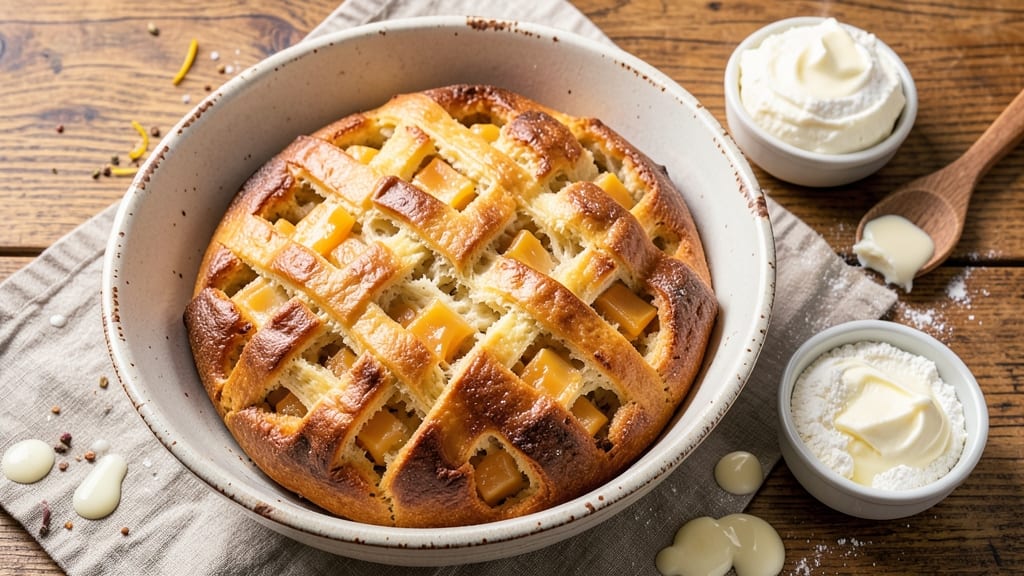
This artisan cheddar cheese bread recipe delivers the perfect balance of crisp golden crust and gooey, pull-apart cheddar pockets that vanish in one bite.
The secret lies in a high-hydration dough that develops gluten for structure while keeping the interior tender—ideal for feeding a crowd or enjoying as a hearty side. I’ve perfected this technique over years of baking, ensuring every slice offers that satisfying contrast between crisp edges and molten cheese.
The dough starts with a simple yet precise mix of bread flour, yeast, and milk, kneaded just enough to develop elasticity without overworking.
After a 1-hour rise, we fold in sharp cheddar cheese (the sharper, the better) and shape the dough into a loaf or rolls, scoring the top for that classic breadhouse look.
Baking at 375°F for 25-30 minutes creates a crust with just enough crunch to hold up to the cheesy goodness inside.
What makes this recipe stand out is the steam-infused baking method—a splash of water in the pan ensures a crisp exterior while keeping the cheese stretchy and gooey.
Brush the warm bread with melted butter and sprinkle with flaky sea salt for a restaurant-quality finish. The aroma alone will have everyone at the table asking for seconds.
Whether you’re serving this with soups, salads, or as a standalone appetizer, it’s a foolproof crowd-pleaser that transforms any meal into a comforting experience. Ready to bake? Here’s how to make it happen.
Ingredients for artisan cheddar cheese bread
High-hydration dough, sharp cheddar, and steam baking create that perfect pull-apart texture.
| Ingredient | Amount | Notes |
|---|---|---|
| Bread Flour 🌾 | 4 ½ cups | High-protein for elasticity |
| Active Dry Yeast 🍞 | ¼ oz | Or 2.25 tsp, ensure fresh |
| Whole Milk 🥛 | 1 ¼ cups | Warmed to 110°F |
| Granulated Sugar 🍚 | ¼ cup | Feeds yeast activation |
| Salt 🧂 | 1 ½ tsp | Diamond Crystal preferred |
| Unsalted Butter 🧈 | ½ cup | Cold, cubed for dough |
| Sharp Cheddar Cheese 🧀 | 2 cups | Shredded, 2+ year aged |
| Large Egg 🥚 | 1 whole | Room temperature |
| Water 💧 | ¼ cup | For steam baking |
| Flaky Sea Salt 🧂 | 1 tbsp | For finishing |
| All-Purpose Flour 🌾 | ¼ cup | For dusting |
| Melted Butter 🧈 | 2 tbsp | For brushing |
The bread flour is non-negotiable here—King Arthur or Caputo make all the difference for that high-rise crust. Yeast should be fresh and active—test it in warm milk with a pinch of sugar before mixing. For the cheddar, Cabot or Tillamook deliver that sharp, tangy punch. If your local store doesn’t carry aged cheddar, shred your own block—pre-shredded gets clumpy and doesn’t melt as beautifully. The milk needs to be warmed to 110°F to activate the yeast properly, but not hot enough to kill it. I always grab my butter from Whole Foods—it’s consistently higher quality than the generic brands.
No sharp cheddar? Pepper jack or Gouda work in a pinch, though the flavor won’t be as bold. Out of whole milk? Evaporated milk or buttermilk can substitute, but add an extra splash of water to maintain dough consistency. The egg adds structure, but if you’re avoiding it, 1 tbsp of melted butter plus 1 tbsp of water mimics the binding effect. For the steam method, any baking pan with sides works—just add water to the bottom before baking. Pro tip: Score the dough with a sharp knife before baking to direct the rise and create those classic breadhouse pockets. If you’re making this ahead, the dough can rest in the fridge overnight for deeper flavor development.
This bread is best served fresh, but leftovers reheat beautifully in a 350°F oven for 5-10 minutes to restore that crisp crust. Store wrapped at room temperature for 2 days or freeze the whole loaf for up to 3 months. To revive frozen bread, thaw at room temperature and warm in the oven. The melted butter and sea salt finishing? Do it right before serving—the contrast of warm, gooey cheese and buttery salt is what makes this recipe shine. Double the recipe if you’re feeding a crowd—it disappears faster than you can say 'pull-apart.'
Why You'll Love This Recipe
- No-Knead Magic: I swear by this dough—just mix, let it rise, and boom. No stand mixer, no arm workout, just bread flour and a little patience (which, honestly, is the hardest part).
- Sharp Cheese Love: That whole milk and sugar combo? It makes the cheddar melt into something dangerously good—crispy outside, gooey inside, like a hug for your taste buds.
- Weeknight Sidekick: Slice it warm with soup or throw it in a lunchbox cold. My kids beg for it at school, and my husband steals slices before dinner—versatile enough for every day.
- Budget Stretch: A single batch feeds us for days. Freeze the extras, toast them later, and watch your grocery bill shrink while your fridge stays full. Win-win.
Step-by-step instructions for artisan cheddar cheese bread
This method delivers a golden crust with irresistible cheddar pockets—every bite pulls apart perfectly.
Activate the Yeast and Mix the Dough
In a small bowl, combine the 1.25 cups whole milk (warmed to 110°F) with the 0.25 cup granulated sugar and 0.25 oz active dry yeast. Let sit for 5-10 minutes until frothy—this confirms the yeast is active. If it doesn't bubble, your yeast may be stale.
In a stand mixer fitted with the dough hook, combine the 4.5 cups bread flour, 1.5 tsp salt, and the 1 whole large egg. Mix on low speed for 1 minute to distribute the flour evenly. With the mixer running, gradually add the yeast mixture and mix until a shaggy dough forms. Add the 0.5 cup cold cubed unsalted butter and mix until fully incorporated. The dough should be tacky but not sticky.
Knead Until Elastic and Smooth
Knead the dough on medium speed for 5-7 minutes until it becomes smooth, elastic, and springs back when pressed. The dough should pull away from the sides of the bowl and form a tight ball. If it feels too sticky, add 1 tablespoon of the 0.25 cup all-purpose flour at a time until just combined.
Shape the dough into a ball and place it in a lightly greased bowl. Cover with a damp towel and let rise in a warm place for 1-1.5 hours, or until doubled in size. The dough should feel light and airy when pressed gently—this indicates proper fermentation. If it doesn't rise, your yeast may need refreshing or the environment may be too cold.
Incorporate Cheese and Shape the Loaf
Punch down the risen dough and transfer it to a lightly floured surface. Divide the dough into 6 equal pieces (about 6 oz each). On a floured surface, roll each piece into a 12-inch rope. Fold each rope in half and twist gently to create a 2-strand braid. Arrange the braids in a greased 9x5-inch loaf pan, leaving space between them.
In a small bowl, mix the 2 cups shredded sharp cheddar cheese with 1 tablespoon of the 0.25 cup all-purpose flour. Sprinkle half of the cheese mixture evenly over the braids in the pan. Gently press the cheese into the dough to create pockets. Cover the pan loosely with a towel and let rise for 30-45 minutes until the dough has expanded to fill the pan.
Bake with Steam for Maximum Crisp
Preheat your oven to 375°F. Place a baking sheet on the lower rack and fill it with 0.25 cup water. This creates steam, which helps develop a crisp crust. Brush the tops of the braids with the 2 tablespoons melted butter, then sprinkle evenly with the 1 tablespoon flaky sea salt. Bake for 25-30 minutes until the bread is deep golden brown and sounds hollow when tapped.
Remove the bread from the oven and let it cool in the pan for 5 minutes. Transfer to a wire rack and cool completely before slicing. The cheese should be gooey and stretchy, while the crust should be crisp enough to shatter. For best results, serve warm with extra flaky sea salt sprinkled on top.
Pro Tips For Making Artisan Cheddar Cheese Bread
- Warm the Milk First: Pour that whole milk into a small saucepan and heat it to about 110°F (43°C) before mixing with yeast and flour—lukewarm milk wakes up the yeast faster and cuts down on dough rise time. I used to skip this, and my dough would take forever to puff up, no matter how patient I was.
- Knead Until Silky: Stop when the dough pulls cleanly away from the bowl and springs back slowly—about 8-10 minutes by hand or 5-6 on a stand mixer. Over-kneading turns cheddar bread gummy, and under-kneading makes it dense. Feel for resistance, not exhaustion.
- Salt the Dough Twice: Sprinkle half the salt into the dry ingredients, then fold in the remaining salt with the shredded cheddar during the final knead. This balances flavor without overpowering the cheese’s sharpness—trust me, your first bite will prove it.
- Proof Until Domed: Let the dough rise until it’s just overflowing the bowl’s edge—about 1.5 to 2 hours, depending on your kitchen’s warmth. A flat-topped loaf means it’s overproofed; a domed, jiggly peak means it’s ready. Poke it gently: if it springs back slowly, it’s perfect.
Storing and reheating this artisan cheddar cheese bread
Room-Temp Revival
Store your cheddar cheese bread in an airtight container at room temperature for up to 2 days. To restore that irresistible crispness, preheat your oven to 350°F and warm slices for 5-7 minutes on a baking sheet.
The steam from the oven will revive the crust while keeping the cheese pockets gooey. For extra flavor, brush with melted butter before reheating. 🔥
Freezer Storage
Freeze the entire loaf in plastic wrap followed by aluminum foil for up to 3 months. Thaw overnight in the fridge, then warm in a 350°F oven for 10-15 minutes until golden.
For single slices, freeze them individually on a tray before transferring to a bag. Reheat directly from frozen in the oven for 8-10 minutes—no need to thaw first!
Steam Method
For the crispiest reheat, use the steam trick again. Place a small metal bowl of water on the oven rack below your baking sheet. Reheat slices at 375°F for 5 minutes—the steam mimics the original baking process, creating that perfect contrast between crisp crust and melty cheese.
This works especially well for serving with soups or salads. ✨
Microwave Hack
When you're in a hurry, the microwave can work—but it's not perfect. Place a slice on a plate with a damp paper towel, cover with another towel, and heat for 20-30 seconds. The moisture prevents drying while warming the cheese.
For best results, follow up with 10 seconds in the toaster to crisp the edges. Honestly, it won't be as good as oven methods, but it's better than cold bread!
Cheese Melting Tips
To prevent the cheese from turning rubbery when reheating, avoid high heat. Low and slow is key—350°F or below preserves that stretchy, gooey texture. If your bread seems dry after storage, sprinkle with a few drops of water before reheating to restore moisture.
For extra richness, brush with garlic-infused olive oil after warming. 🧀
Make-Ahead Dough
Did you know you can prep the dough a day ahead? After the first rise, shape the braids, cover tightly, and refrigerate overnight. The cold slows fermentation, developing deeper flavor.
Let it come to room temperature before the final rise and baking. This trick saves time on busy days while improving the final product. Pro move! 💡
Nutrition facts
Frequently asked questions
Can I substitute all-purpose flour for bread flour in this recipe?
While you can technically use all-purpose flour, the texture won't be as crisp or chewy. Bread flour has a higher protein content (12-14% vs 10-12% in all-purpose) that creates that perfect pull-apart structure. If you're short on bread flour, try a 3:1 ratio of bread flour to all-purpose flour for the best results. The cheddar pockets will still be gooey, but the crust might be slightly softer.
Why did my cheese bread turn out dense instead of light and airy? Dense bread usually means one of three things: over-kneading, under-proofed dough, or too much cheese.
How do I make this recipe without a stand mixer?
No problem! You can mix and knead by hand using a large bowl and a wooden spoon. After combining the wet and dry ingredients, turn the dough onto a lightly floured surface and knead for 8-10 minutes until smooth and elastic. Work in short bursts, letting the dough rest for 30 seconds every couple of minutes to prevent overheating. The dough should be tacky but not sticky—add flour 1 tablespoon at a time if needed.
Can I make individual cheese bread rolls instead of a loaf?
Divide the dough into 12 equal pieces (about 3 oz each) and shape into balls. Place them in a greased muffin tin or on a baking sheet, then press a 1-inch deep dimple in the center of each. Fill the dimples with cheese, cover, and let rise. Bake at 375°F for 15-18 minutes until golden. These bite-sized versions are perfect for appetizers or party platters!
What's the best way to reheat stale cheddar cheese bread?
For the perfect crispy crust with gooey cheese, use the steam method: Place slices on a baking sheet, add 0.25 cup water to a metal bowl on the lower oven rack, then bake at 375°F for 5-7 minutes. The steam recreates the original baking environment. Avoid microwaving—it makes the crust soggy. For extra flavor, brush with melted butter after reheating.