
Side Dishes
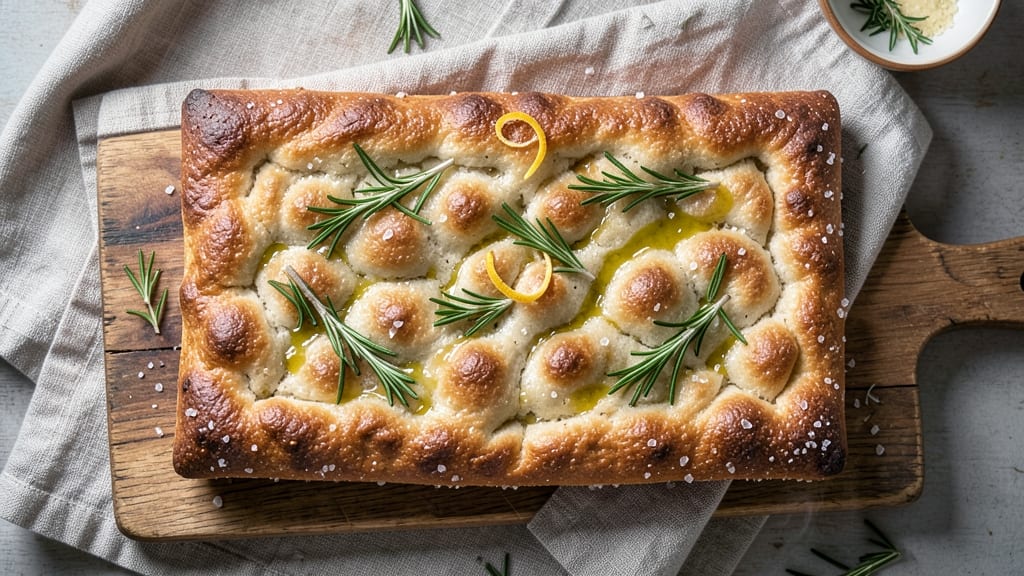
This artisan focaccia bread recipe transforms simple ingredients into golden, olive oil-drenched perfection with crispy crust and airy crumb. The secret lies in proper yeast activation, gentle kneading, and those signature herby dimples that create pockets of flavor.
I've perfected this technique over years of baking, and it delivers restaurant-quality results every time.
What sets this focaccia apart is the olive oil pool on top—generous enough to create that signature glossy crust while keeping the interior tender. Traditional methods like using a baking stone ensure even heat distribution, while modern variations allow for customizations like honey drizzle or grated parmesan.
The process is more forgiving than you might think, with clear steps for proofing and dimpling that guarantee impressive results.
By the time it emerges from the oven, you'll have a loaf with a crispy, caramelized crust that shatters at the touch and an interior so light it practically melts in your mouth.
The herby dimples release aromatic oils with every bite, making this focaccia perfect for serving alongside soups, salads, or as a standalone appetizer. The best part? It's simple enough for weeknight baking but impressive enough for entertaining.
Whether you're a seasoned baker or new to focaccia, this recipe delivers consistent results with professional techniques made approachable. The key is patience during proofing and attention to detail when creating those signature dimples. Let's get started on creating your perfect focaccia.
Ingredients for artisan focaccia bread
Golden crust, herby pockets, and that signature olive oil pool—here’s what makes this focaccia shine.
| Ingredient | Amount | Notes |
|---|---|---|
| Active Dry Yeast 🍞 | ¼ tsp | Single-use packet preferred |
| Warm Water 💧 | 1 cup | 110-115°F for yeast activation |
| All-Purpose Flour 🌾 | 3 ½ cups | Bread flour for extra chewiness |
| Fine Sea Salt 🧂 | 1 ½ tsp | Diamond Crystal preferred |
| Extra-Virgin Olive Oil 🫒 | ¾ cup | High-quality, fruity variety |
| Fresh Rosemary 🌿 | ¼ cup | Finely chopped, stems removed |
| Fresh Thyme 🌿 | 0.15 cup | Leaves only, finely chopped |
| Coarse Kosher Salt 🧂 | 1 ½ tbsp | For final crust sprinkle |
| Flaky Sea Salt 🧂 | 2 tbsp | For topping before baking |
| Honey (optional) 🍯 | 2 tbsp | Drizzled after baking |
| Baking Stone 🔥 | 1 whole | Or inverted baking sheet |
The yeast is your foundation, so check the expiration date—fresh is non-negotiable. King Arthur or Bob’s Red Mill flour gives that perfect chew, but all-purpose works in a pinch. For the olive oil, splurge on California Extra Virgin—the fruity notes shine through. Fresh herbs are key: Trader Joe’s has great pre-washed rosemary and thyme, but if you’re growing your own, snip just before use. The baking stone? Amazon has affordable options, but a thick steel pan works too—just preheat it alongside your oven.
No baking stone? Invert a rimmed baking sheet for even heat. Subbing flour? White whole wheat at half the amount adds nuttiness. Short on rosemary? Dried at one-third the amount works, but fresh is unbeatable. The honey’s optional, but local raw honey drizzled post-bake adds floral notes. For extra richness, add 1 tbsp melted butter to the olive oil pool—trust me, it’s worth it. And if you’re feeling fancy, grate a little parmesan into the dimples before baking for umami depth.
Proof your dough in a lightly oiled bowl—it rises faster and stays soft. Store flour in a cool, dark pantry for up to 6 months, while yeast lasts 3 months refrigerated. Fresh herbs? Wrap in damp paper towels and refrigerate for 5-7 days. The focaccia keeps at room temp for 2 days wrapped in a towel, or freeze 3 months for fresh-from-the-oven moments later. Pro tip: Reheat slices in a 350°F oven for 5 minutes to restore crispiness.
Why You'll Love This Recipe
- No-Knead Magic: I swear by this—just mix, let it rise, and bake. No standing at the counter, no dough fights. The yeast does all the work while you sip coffee.
- Oil-Packed Richness: That generous drizzle of extra-virgin olive oil? It’s what turns this from bread to indulgence. The salt cuts through the fat, and the crust gets irresistibly crisp—like a golden hug for your sandwich.
- Weeknight Swiss Army: Tear it for breakfast toast, slice it for dinner sides, or freeze leftovers for future lazy mornings. Honestly, I’ve used it as a pizza crust, a bruschetta base, and even as a makeshift bowl for soup.
- Budget-Friendly Luxury: Five ingredients, one pan, and it feeds a crowd for pennies. My grocery bill stays sane, but my kitchen smells like a Tuscan bakery. (Yes, even on a Tuesday night.)
Step-by-step instructions for artisan focaccia bread
Here's how to create a golden, olive oil-rich focaccia with herby dents that'll make you the star of any brunch.
Activate the Yeast for Maximum Rise
In a small bowl, combine the 1 cup warm water (between 110-115°F) with the 0.25 tsp active dry yeast. Let it sit for 5-10 minutes until frothy—this confirms your yeast is alive and ready to work. If it doesn't bubble, your yeast might be dead, and you'll need to start over.
While waiting, I like to prepare my workspace. Line a large bowl with plastic wrap and set it aside. This makes handling the sticky dough much easier later. The yeast activation is your first critical step—rushing it here means weaker flavor development later.
Mix the Dough with Olive Oil and Herbs
In a stand mixer fitted with the dough hook, combine the 3.5 cups all-purpose flour with the 1.5 tsp fine sea salt. Add the yeast mixture and mix on low speed until combined. With the mixer running on medium speed, slowly drizzle in the 0.75 cup extra-virgin olive oil—this is what makes focaccia so rich and moist.
Once the oil is incorporated, add the 0.25 cup finely chopped fresh rosemary and 0.15 cup fresh thyme leaves. Mix for another 2-3 minutes until the dough comes together into a shaggy mass. The dough should be soft but not sticky—if it's too dry, add 1 teaspoon warm water at a time until just combined.
Knead and Rest for Optimal Texture
Knead the dough on medium speed for 5-7 minutes until smooth and elastic. It should pull away from the sides of the bowl and form a windowpane when stretched. This kneading develops gluten, giving your focaccia that perfect chewy texture.
Transfer the dough to your prepared bowl, cover tightly with plastic wrap, and let it rise in a warm place for 1-2 hours or until doubled in size. I place mine near the oven with the light on for consistent warmth. The dough should feel springy when pressed—this indicates proper fermentation.
Shape and Create Herby Dents
Preheat your oven to 425°F with the baking stone inside for at least 45 minutes. This ensures even heat distribution for that perfect crust. On a lightly floured surface, gently press the risen dough into a 12x16-inch rectangle about 1-inch thick—don't overwork it or you'll deflate the bubbles.
Using your fingertips, press 1-inch deep dents all over the surface, about 2 inches apart. This creates those signature air pockets while allowing room for expansion. Drizzle generously with more extra-virgin olive oil (about 2 tablespoons) and sprinkle evenly with 1.5 tbsp coarse kosher salt and 2 tbsp flaky sea salt. The salt will melt into the crust during baking.
Bake to Golden Perfection
Carefully transfer the shaped dough onto the preheated baking stone. Bake for 20-25 minutes until the crust is deep golden brown and the internal temperature reaches 205°F when measured with an instant-read thermometer. The edges should be crispy while the center remains soft and pillowy.
For that final touch, drizzle with 2 tbsp honey (if using) while still hot. The honey will caramelize slightly, adding a beautiful sheen and subtle sweetness that balances the herby, salty crust. Let cool for 10 minutes before slicing—this prevents the crumb from falling apart.
Pro Tips For Making Artisan Focaccia Bread
- Bloom the Yeast: Mix your yeast with just warm water and a pinch of sugar first—let it sit for 5-10 minutes until frothy. I learned this the hard way: skipping this step means your dough will fight you later, rising sluggishly or unevenly. (Yes, even if you’re impatient like me.)
- Oil the Pan Generously: Use about 2 tablespoons of extra-virgin olive oil to coat the bottom of your baking dish—enough that it pools slightly. That golden, crispy bottom? It’s all about the oil. (And no, wiping off the excess doesn’t save you—it ruins the texture.)
- Dimple with Wet Hands: Wet your fingertips and press them into the dough to create deep dimples—don’t just poke it with a dry finger. The moisture keeps the oil from seeping out, and the dimples hold that luscious olive oil pool. (Your focaccia will thank you.)
- Preheat the Oven High: Crank your oven to 450°F (230°C) before baking—no waiting. The initial blast of heat shocks the dough just enough to create that signature crisp crust. I used to skip this, and my focaccia always came out soft instead of airy. (Trust the process.)
Health benefits of these flavors
Whole Grain Power
This focaccia delivers fiber-rich goodness when made with whole wheat flour—just replace 1.5 cups of all-purpose flour with white whole wheat for extra nutrients. A single serving provides 4-6 grams of fiber, supporting digestion and keeping you full longer.
The nuttier flavor also adds depth to the herby profile. 🌱
Healthy Fats Galore
The extra-virgin olive oil in focaccia isn’t just for flavor—it’s packed with heart-healthy monounsaturated fats that help reduce bad cholesterol. Using 0.75 cup provides 120 calories of pure goodness, with 14 grams of fat that your body craves for satiety and energy.
Opt for California-grown EVOO for maximum flavor and nutritional benefits.
Herb-Rich Antioxidants
Fresh rosemary and thyme aren’t just aromatic—they’re antioxidant powerhouses! These herbs contain rosmarinic acid and thymol, compounds that fight inflammation and oxidative stress. Using 0.25 cup rosemary and 0.15 cup thyme gives your focaccia a flavor boost while delivering vitamin K and iron—perfect for balancing meals.
Low-Calorie Crust
Despite its indulgent appearance, focaccia is surprisingly low in calories compared to other breads. A standard 12x16-inch loaf yields 8-10 slices, each with 180-220 calories—less than many sandwich rolls. The olive oil pool adds richness without excessive calories, making it a guilt-free indulgence when paired with veggie-heavy meals.
Blood Sugar Balance
Thanks to its low glycemic index (especially with whole wheat), focaccia won’t spike your blood sugar like white bread. The fiber and healthy fats slow digestion, preventing energy crashes. For extra balance, drizzle with 2 tbsp honey—its natural sweetness satisfies cravings while providing quick energy without the sugar rush.
Protein for Muscle Repair
While not a protein powerhouse, focaccia provides 4-5 grams per serving from flour and yeast. For a boost, add 1 tbsp melted butter to the olive oil pool or sprinkle 2 tbsp grated parmesan before baking.
These additions elevate protein content by 20-30% while enhancing flavor—ideal for post-workout recovery meals. 💪
Nutrition facts
Frequently asked questions
Can I make focaccia without a baking stone?
Use a thick steel baking sheet or even a cast-iron skillet for even heat distribution. Preheat it alongside your baking stone for 45 minutes to mimic the same effect. The key is getting that surface piping hot before baking to create that signature crispy crust.
Why did my focaccia turn out dense instead of airy?
Dense focaccia usually means one of three things: over-kneading (which deflates the gluten), underproofed dough (not enough time to rise), or too much flour when shaping. Try kneading for only 5-7 minutes, letting it rise until doubled (1-2 hours), and pressing the dough gently when shaping to preserve those air pockets.
How do I store focaccia to keep it fresh?
Wrap cooled focaccia in a clean kitchen towel and store at room temperature for 2 days—this preserves its crispiness. For longer storage, freeze slices wrapped in plastic for up to 3 months. To revive stale focaccia, warm slices in a 350°F oven for 5 minutes until crispy again.
Can I add cheese to this focaccia?
Yes! Sprinkle 2 tablespoons grated parmesan or feta crumbles into the dimples before baking for extra flavor. For a richer version, mix 1/4 cup shredded mozzarella into the dough before shaping. Just don't overdo it—too much cheese can make the crust soggy.
What's the best way to reheat focaccia?
For maximum crispiness, place slices on a baking sheet and warm in a 350°F oven for 5-7 minutes. You can also use a toaster or toaster oven, but watch closely to avoid burning. If you prefer microwave reheating, wrap slices in a damp paper towel for 10-15 seconds—this restores some moisture without making it gummy.