
Side Dishes
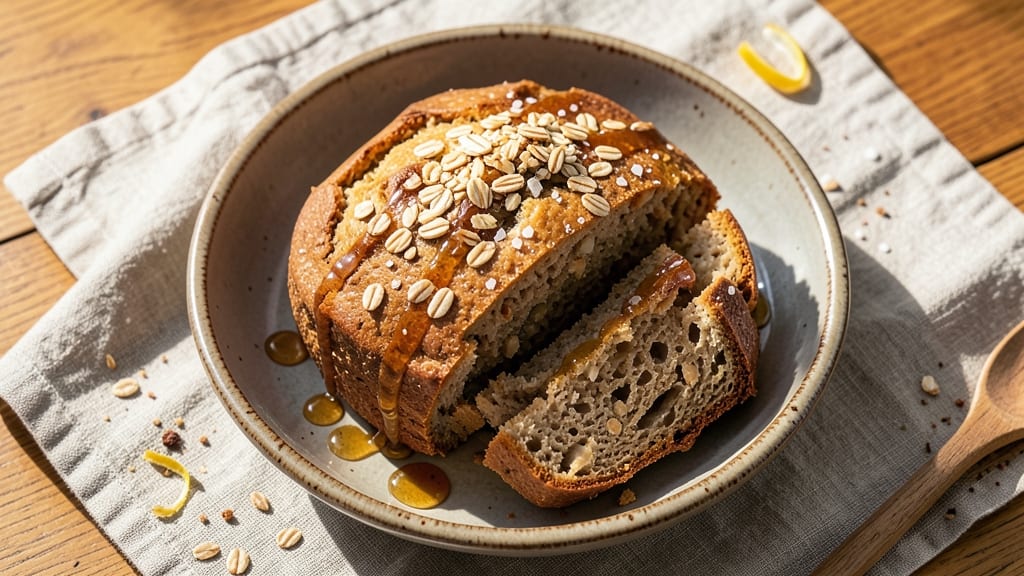
This artisan oatmeal bread recipe transforms simple ingredients into a rustic loaf with a crisp Dutch oven crust and a chewy, nutty heart. The secret lies in the slow fermentation and high-heat baking that creates that perfect texture contrast—crunchy exterior, tender interior.
I’ve perfected this method over years of baking, ensuring even home ovens deliver professional results.
The dough comes together with just five ingredients—flour, oats, yeast, salt, and water—but the magic happens during the proofing. Letting it rise overnight in the refrigerator develops deep flavor and a light, airy crumb.
The Dutch oven traps steam during baking, creating that coveted crisp crust while keeping the interior moist and chewy.
What you’ll end up with is a loaf that’s perfect for sandwiches, toast, or serving alongside soups. The oats add subtle sweetness and texture, while the crust has that satisfying snap. This recipe is designed to be adaptable—use steel-cut oats for extra heartiness or add seeds for crunch.
Ready in about 24 hours (including proofing), this bread is worth the wait. The process is straightforward, but the patience pays off with a loaf that tastes like it came from a bakery. Let’s get started on creating your own artisan masterpiece.
Ingredients for artisan oatmeal bread
Five core ingredients plus optional seeds transform into rustic artisan oatmeal bread with Dutch oven perfection.
| Ingredient | Amount | Notes |
|---|---|---|
| All-Purpose Flour 🌾 | 3 ½ cups | Unbleached preferred for flavor |
| Old-Fashioned Rolled Oats 🥣 | 1 ½ cups | Steel-cut for extra heartiness |
| Active Dry Yeast 🍞 | ¼ oz | Fresh yeast if available |
| Kosher Salt 🧂 | 1 ½ tsp | Diamond Crystal preferred |
| Water 💧 | 1 ¾ cups | Room temperature preferred |
| Honey 🍯 | 1 tbsp | Or maple syrup for vegan option |
| Unsalted Butter 🧈 | ½ cup | Cold, cubed for easier mixing |
| Sesame Seeds 🌻 | 2 tsp | Optional for topping |
| Poppy Seeds 🌼 | 1 tsp | Optional for topping |
The flour and oats form the heart of this bread. King Arthur or Bob’s Red Mill flour work best for their protein balance—look for labels that say 'unbleached' for better flavor. Rolled oats add chewiness, but steel-cut oats take it to another level if you want extra texture. Yeast quality matters here—Fresh yeast is ideal, but active dry works if stored properly (check expiration dates). The honey isn't just for sweetness—it feeds the yeast during fermentation. I always grab local honey from farmers markets when in season, but store-bought works fine too. The butter adds richness that you won't find in vegan substitutes, so if you're avoiding dairy, use coconut oil instead.
No honey? Maple syrup or agave works in a pinch, though the flavor will differ slightly. Running short on time? Instant yeast at half the amount speeds up fermentation, but you'll lose some of that deep flavor development. The seeds are purely decorative but add crunch—sesame and poppy seeds are classic, but sunflower or flax seeds work too. For a nutty twist, toast the oats in a dry pan for 5 minutes before mixing them in. This enhances their flavor significantly. If your flour is low-protein (<10%), add an extra tablespoon to improve structure. And if you're baking at high altitude, reduce the yeast by 25% to prevent over-rising.
Store the dough in an airtight container in the fridge for up to 48 hours before baking—this is where most of the flavor develops. Once baked, the bread stays fresh for 3-4 days at room temperature, wrapped tightly in a cotton towel. For longer storage, freeze slices wrapped in parchment paper for up to 3 months. The Dutch oven is non-negotiable for that crisp crust—if you don't have one, use a heavy oven-safe pot with a lid. The bread reheats beautifully: wrap in foil and warm in a 300°F oven for 10 minutes. Leftovers make incredible croutons or breadcrumbs for future recipes.
Why You'll Love This Recipe
- Five-Ingredient Magic: I swear by this list—flour, oats, yeast, salt, and water. That’s it. No fancy add-ins, no stress. The oats add chewiness without extra work, and the dough comes together faster than most store-bought loaves.
- Toasted Crunch Perfection: Here’s what sold me—the oats toast in the oven until they’re golden and crunchy on the outside, while the inside stays soft. Spread butter on that? Absolute crime if you don’t.
- Weeknight & Picnic Hero: Between us, this bread is my go-to for sandwiches and toast. Slice it for breakfast, pack it for lunch, or serve it warm with soup—it’s the one loaf that does it all without needing a sidekick.
- Budget Stretch Star: A single batch costs pennies and lasts forever. Freeze half the loaf, and you’ve got fresh bread for days. Honestly, I make this twice a month just to avoid buying overpriced bakery bread. Worth every cent.
Step-by-step instructions for artisan oatmeal bread
Here’s how to craft a rustic loaf with a crisp Dutch oven crust and a tender, nutty interior.
Activate the Yeast and Mix the Dough
In a small bowl, dissolve the 0.25 oz active dry yeast in 1.75 cups water with 1 tbsp honey and 1.5 tsp kosher salt. Let it sit for 5-10 minutes until frothy—this confirms the yeast is active. If it doesn’t bubble, start over with fresh yeast.
In a large bowl, whisk together 3.5 cups all-purpose flour and 1.5 cups old-fashioned rolled oats. Add the yeast mixture and mix until a shaggy dough forms. Then, cut in the 0.5 cup cold, cubed unsalted butter using a pastry cutter or your fingers until the butter is fully incorporated. The dough should be soft but not sticky.
Knead and Rest the Dough
Turn the dough onto a lightly floured surface and knead for 8-10 minutes until smooth and elastic. It should spring back when poked gently. If it feels too dry, add 1 tsp water at a time; if too sticky, add 1 tbsp flour. Shape into a round loaf and place it in a lightly greased bowl.
Cover the bowl with a damp towel and let the dough rise in a warm place for 1-2 hours, or until it has nearly doubled in size. The dough should feel light and airy when pressed gently. Punch it down to release air, then reshape into a round loaf for the second rise.
Shape and Proof the Loaf
Preheat your oven to 450°F and place a Dutch oven with its lid inside to heat for 30 minutes. Shape the dough into a round loaf and place it on a parchment-lined baking sheet. Cover loosely with plastic wrap and let it proof for 30-45 minutes until puffy and jiggly when shaken.
While the loaf proofs, prepare the Dutch oven by removing the lid and lining the bottom with parchment paper. Carefully transfer the loaf into the hot Dutch oven, cover, and bake for 30 minutes. This steaming step creates the signature crisp crust and tender crumb.
Bake to Golden Perfection
After 30 minutes, remove the lid and bake for an additional 15-20 minutes until the bread is deep golden brown and sounds hollow when tapped on the bottom. Brush the top with a little water if needed to encourage browning.
Transfer the loaf to a wire rack to cool completely before slicing. For extra flavor, sprinkle the top with 2 tsp sesame seeds and 1 tsp poppy seeds while still warm. The bread will be best served fresh but can be stored at room temperature for 2-3 days or frozen for up to 3 months.
Pro Tips For Making Artisan Oatmeal Bread
- Toast the Oats First: Skip the raw oats—they’ll turn your dough gluey. Lightly toast them in a dry pan over medium heat for 5-7 minutes until golden and fragrant. This deepens their flavor and prevents that gummy texture in your bread. (Yes, even if you’re impatient like me, don’t rush this.)
- Mix Yeast with Warm Water: Yeast hates surprises—cold water kills it, hot water cooks it. Bloom it in water that’s around 105–110°F (just warm to the touch, not hot). If your kitchen’s drafty, cover the bowl loosely with a towel while mixing. Lazy? Use a thermometer. (Your future self will notice the difference.)
- Knead Until Silky, Not Tough: This dough’s chewy texture comes from proper kneading, but don’t overdo it. Aim for 8–10 minutes by hand (or 5–6 minutes in a stand mixer with a dough hook) until the dough springs back when poked. If it’s sticky but holds together, it’s ready—no need to add more flour. (I learned this the hard way after making a brick.)
- Let the Dough Rise Twice: First rise (1–1.5 hours) builds flavor; second rise (30–45 minutes) makes it light. After shaping, let the dough sit covered in a warm spot (like a turned-off oven with a bowl of hot water inside). Cold kitchen? Use a proofing box or microwave a glass of water to create steam. (Cutting corners here = dense bread.)
Flavor customization for this dish
Sweet Variations
Add a touch of sweetness by swapping the 1 tbsp honey for 2 tbsp maple syrup or agave nectar—this enhances the oats' natural nuttiness.
For a caramelized twist, stir in ¼ cup brown sugar during the final knead, creating a subtle sweetness that pairs perfectly with savory toppings like jam or cheese. 🍯
Savory Additions
Transform this into a savory loaf by omitting the honey and adding 1 tsp onion powder and ½ tsp garlic powder to the dough. Top with 2 tbsp coarse sea salt and 1 tsp dried rosemary before baking for a rustic, herby flavor.
This version is ideal for serving with soups or charcuterie boards.
Seed and Nut Mix-Ins
Boost texture and nutrition by folding in ½ cup chopped walnuts or pecans during the final knead. For extra crunch, sprinkle 1 tbsp flaxseeds1 tbsp sunflower seeds on top before baking. These additions add depth and make every bite more satisfying. Toast the nuts first for enhanced flavor!
Herb Infusions
Brighten the dough with 1 tbsp fresh rosemary or thyme finely chopped, mixed into the flour before adding liquid. For a citrusy note, zest 1 lemon and fold it into the dough along with 1 tsp lemon juice.
The herbs infuse the bread with aromatic complexity, perfect for pairing with roasted meats or fresh salads.
Whole Grain Boost
Replace 1 cup all-purpose flour with 1 cup whole wheat flour or ½ cup spelt flour for added fiber and nuttier flavor. For a heartier texture, substitute ½ cup rolled oats with ½ cup steel-cut oats (soaked overnight for easier mixing).
These swaps keep the bread dense and satisfying while boosting nutritional value.
Nutrition facts
Frequently asked questions
Why does this recipe use rolled oats instead of instant oats?
Rolled oats provide a superior texture and flavor compared to instant oats. They maintain their shape during baking, creating a satisfying chewiness in each bite. Instant oats break down too quickly, resulting in a denser, less rustic crumb. For an even heartier texture, try steel-cut oats—just soak them overnight first.
Can I make this bread without a Dutch oven?
Yes, but you'll need to improvise for that signature crust. Use a heavy oven-safe pot with a lid or even a baking stone. For extra steam, place a metal bowl of boiling water on the lower oven rack during the first 20 minutes of baking. The bread won't be quite as crispy, but it'll still be delicious!
How do I know when the dough is properly kneaded?
The dough is ready when it's smooth, elastic, and springs back slowly when poked gently. Perform the "windowpane test"—stretch a small piece of dough until it's thin enough to see light through (about ¼-inch thick). If it doesn't tear, your dough is properly developed. Over-kneading can make the bread tough, so aim for 8-10 minutes total.
What's the best way to store leftover artisan oatmeal bread?
Wrap the cooled loaf tightly in a cotton towel or beeswax wrap to maintain freshness. Store at room temperature for up to 3-4 days. For longer storage, slice and freeze individual portions wrapped in parchment paper. Toast frozen slices directly from the freezer for crispy results—no thawing needed!
Can I substitute honey with something else?
Use 2 tbsp maple syrup or agave nectar for a vegan option, or 1 tbsp molasses for deeper flavor. If you prefer savory bread, simply omit the sweetener entirely. The honey primarily feeds the yeast and adds subtle sweetness—just adjust other flavors accordingly if substituting.