
Side Dishes
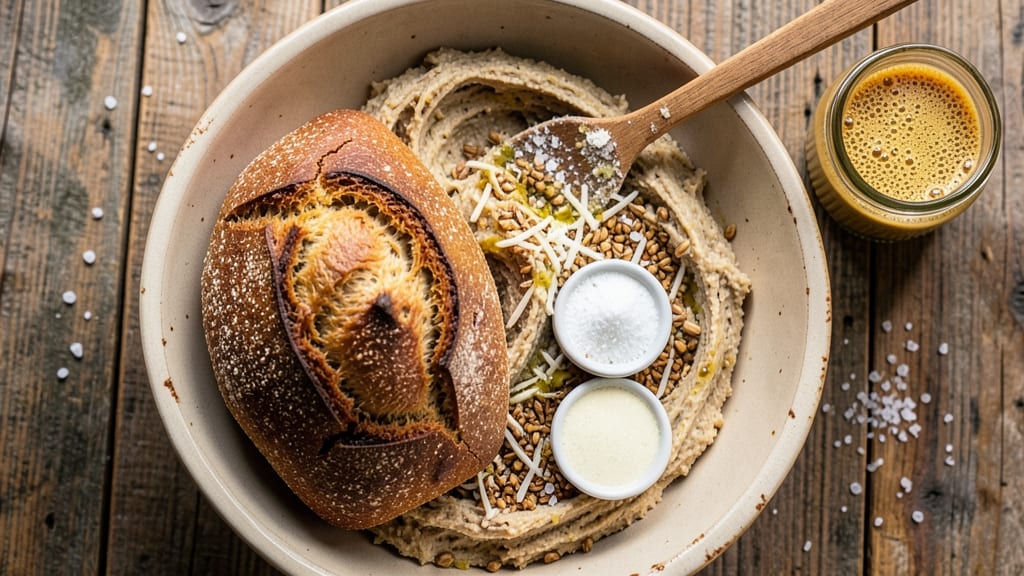
This artisan whole wheat sourdough bread recipe delivers the perfect balance of tangy depth and nutty crunch—transforming simple ingredients into a loaf that rivals artisan bakeries. The secret lies in a well-fed sourdough starter and careful hydration adjustments to handle the whole wheat flour's density.
I've perfected this method over years of baking, ensuring every slice offers that satisfying chew and complex flavor profile.
Unlike quick breads, this recipe demands patience—fermenting the dough for 12-16 hours develops robust flavor and an open crumb structure. The whole wheat flour requires precise hydration (about 75% water) to prevent a gummy texture, while the sourdough starter adds that signature tang.
Each step, from bulk fermentation to scoring, contributes to a loaf that's both rustic and refined.
What you'll achieve is a beautifully domed loaf with a crisp crust and tender interior, where the whole wheat flavor shines without overpowering. The tangy notes from fermentation complement the nutty wheat, creating a bread that's hearty enough for sandwiches but delicate enough to enjoy on its own.
This is bread that builds character with every bite.
The best part? Once you master the technique, you can customize with seeds, herbs, or even a touch of honey—while maintaining that authentic sourdough soul. Let's get started on creating your perfect loaf.
Ingredients for artisan whole wheat sourdough bread
Transform these 11 ingredients into a loaf that rivals artisan bakeries—tangy, nutty, and perfect every time.
| Ingredient | Amount | Notes |
|---|---|---|
| Unbleached All-Purpose Flour 🌾 | 1 ½ cups | For structure and lightness |
| Whole Wheat Flour 🌾 | 2 ½ cups | King Arthur preferred for texture |
| Active Dry Yeast 🍞 | ¼ tsp | Fresh yeast if available |
| Sourdough Starter 🍞 | 1 cup | Well-fed, bubbly starter |
| Granulated Sugar 🍚 | ½ tsp | Feeds yeast for fermentation |
| Diamond Crystal Kosher Salt 🧂 | 1 ½ tsp | Fine grain preferred |
| Extra-Virgin Olive Oil 🫒 | ½ cup | For dough elasticity |
| Warm Water 💧 | 2 ½ cups | 90-95°F for yeast activation |
| Flaxseed Meal 🌾 | ¼ cup | For crust development |
| Sesame Seeds 🌱 | 2 tbsp | Optional topping |
| Cornmeal 🌽 | ½ cup | For dusting baking surface |
The whole wheat flour is non-negotiable here—King Arthur brand handles hydration best, preventing that gummy texture. Bulk bins at Whole Foods or Bob's Red Mill offer the freshest options, but any whole wheat flour will work if stored properly. The sourdough starter needs to be well-fed and bubbly—feed it daily for 24 hours before baking. For the yeast, Fleischmann's Active Dry is reliable, but fresh yeast from a specialty shop adds extra punch. The flaxseed meal? Bob's Red Mill has the best quality—it's worth the investment for that crisp crust.
No whole wheat flour? Substitute with spelt flour at a 1:1 ratio, though texture will differ slightly. Running short on time? Instant yeast at double the amount speeds up fermentation, but you'll lose some depth. The sesame seeds can be swapped for poppy seeds or sunflower seeds—whatever you've got on hand. For the olive oil, avoid light or refined oils—extra-virgin has the flavor and body you need. If your starter isn't ready, store-bought poolish (pre-fermented dough) from a trusted bakery works in a pinch, though it won't be as tangy.
The whole wheat dough keeps best in the fridge for 3-4 days—wrap tightly in plastic and let it ferment slowly for even more flavor. For longer storage, freeze the shaped loaf (unbaked) for up to 3 months. Thaw overnight in the fridge before baking. The sesame seeds? Toast them lightly in a dry pan for 2-3 minutes before sprinkling—they'll add extra crunch. And if you're feeling ambitious, save the scraps for croutons or breadcrumbs; nothing goes to waste in this kitchen.
Why You'll Love This Recipe
- No-Knead Magic: I’ll admit, I was skeptical about whole wheat sourdough—until I tried this. The sourdough starter does all the heavy lifting while you sleep, and the mix of whole wheat and unbleached flour keeps it tender without gummy texture. Honestly? It’s the closest I’ve gotten to a bakery loaf without a PhD in kneading.
- Nutty, Tangy Crunch: Between us, the whole wheat flour gives this bread a deep, toasty flavor that’s way more interesting than basic white bread. The sourdough starter adds that signature tang, and a sprinkle of sugar in the dough? It caramelizes just enough to make every bite feel like a little reward. (Yes, even on a Tuesday night.)
- Weeknight Workhorse: This bread is my secret weapon for lazy dinners—toss it with olive oil and balsamic for a quick charcuterie, or use it to soak up soup like a sponge. It freezes beautifully too, so I bake two loaves and stash one for when I forget to meal prep. (We’ve all been there.)
- Budget-Friendly Staple: Whole wheat flour is cheaper than buying artisanal bread at the store, and this recipe stretches far. A single batch feeds my family for days—sandwiches, toast, even croutons for salads. I’ll be real: it’s the kind of bread that makes you feel fancy without breaking the bank.
Step-by-step instructions for artisan whole wheat sourdough bread
Transform simple ingredients into a loaf with irresistible tang and nutty depth—here's how.
Prepare the Dough Foundation
In a large mixing bowl, whisk together the 1 cup sourdough starter, 0.5 tsp granulated sugar, and 2.5 cups warm water (between 90-95°F) until the sugar dissolves completely. The starter should be fully hydrated and slightly bubbly—this indicates it's active and ready to work. I like to let this mixture sit for 5 minutes while I prepare the dry ingredients, giving the yeast a head start.
In a separate bowl, combine the 1.5 cups unbleached all-purpose flour, 2.5 cups whole wheat flour, 1.5 tsp diamond crystal kosher salt, and 0.25 cup flaxseed meal. The whole wheat flour will have a slightly coarse texture—this is perfect for our rustic bread. Whisk these dry ingredients thoroughly to eliminate any lumps, especially in the flaxseed meal which can clump when dry.
Develop the Dough with Olive Oil
Pour the wet starter mixture into the dry ingredients and stir with a wooden spoon until just combined. The dough will be shaggy and sticky at this stage—this is completely normal with whole wheat flour's higher hydration needs. Add the 0.5 cup extra-virgin olive oil and mix until it's fully incorporated and the dough begins to come together.
Transfer the dough to a lightly oiled surface and knead for 8-10 minutes until it becomes smooth and elastic. You'll notice the dough is denser than white bread dough—this is expected with the whole wheat content. The flaxseed meal will help develop a better gluten structure, but don't worry if it never becomes perfectly smooth. Shape the dough into a loose round and place it in a lightly oiled bowl.
First Fermentation with Tangy Development
Cover the bowl with a damp kitchen towel and let the dough ferment at room temperature for 4-6 hours, or until it has nearly doubled in size. The whole wheat flour will make this dough rise more slowly than white flour, but the sourdough starter's acidity will create that signature tang we're after. You'll see bubbles forming on the surface and throughout the dough—this is your sign that fermentation is active.
I recommend doing this fermentation at a slightly cooler temperature (around 70°F) for better flavor development. If your kitchen is warmer, extend the fermentation time to 8 hours. The longer it ferments, the more complex the flavor will become—just don't let it overproof or the structure will collapse during baking.
Shape and Final Proof
Turn the dough out onto a lightly floured surface and gently reshape it into a tight round loaf. The whole wheat flour makes this dough stickier, so I like to use a bench scraper to help contain it. Place the shaped dough seam-side up in a well-floured banneton or bowl, then cover with the damp towel again. Let it proof for another 2-4 hours until it springs back slowly when gently pressed with a fingertip.
For a more rustic look, you can shape the dough into a batard (oval) or boule (round) instead of a traditional loaf. The sesame seeds we'll add later will stick beautifully to these shapes. The final proof is complete when the dough has risen about 50-75% and shows good volume. If you're baking immediately, preheat your oven to 450°F while the dough proofs.
Bake for Crisp Crust and Open Crumb
When ready to bake, turn the dough out onto a piece of parchment paper dusted with 0.5 cup cornmeal. Score the top with a sharp razor blade in a decorative pattern—this helps control the oven spring and creates that beautiful crust. Sprinkle the 2 tbsp sesame seeds evenly over the top while the dough is still in its raw state for maximum adhesion.
Transfer the dough with the parchment to a preheated baking stone or inverted baking sheet in your oven. Bake for 30 minutes at 450°F, then reduce heat to 375°F and continue baking for another 25-30 minutes until the internal temperature reaches 205-210°F and the crust is deep golden brown. The bread should sound hollow when tapped on the bottom.
Remove from the oven and let cool on a wire rack for at least 1 hour before slicing. This resting period allows the gluten to relax and prevents a gummy crumb. The result should be a loaf with a crisp, nutty crust, an open crumb structure, and that perfect balance of tangy sourdough flavor with whole wheat's earthy notes.
Pro Tips For Making Artisan Whole Wheat Sourdough Bread
- WEIGH YOUR FLOURS: Whole wheat flour absorbs moisture differently than all-purpose, so use a kitchen scale—no eyeballing. I learned this after my first batch turned out dense; 10% more hydration is often needed for whole wheat, so adjust your water by grams, not cups.
- REFRIGERATE THE DOUGH: Let the dough rest overnight in the fridge—this slows fermentation and develops flavor. I used to rush it, and the bread tasted flat; cold fermentation also makes shaping easier the next day.
- SKIP THE EXTRA YEAST: Your sourdough starter is alive—don’t double the yeast thinking it’ll speed things up. Too much yeast can overpower the sourdough’s tang and make the crust gummy. Trust the starter’s strength.
- STEAM THE OVEN: Place a metal tray on the oven rack before preheating, then pour in boiling water when loading the bread. This creates steam for a crispy crust without burning the outside. I tried it after my first loaf turned out sad and dry—game-changer.
Perfect pairings for artisan whole wheat sourdough bread
Morning Pairings
Start your day with this bread's nutty crunch by pairing it with avocado toast—mash 1 ripe avocado with 1 tbsp lime juice, salt, and black pepper, then spread on thick slices.
The whole wheat's earthiness balances the creamy avocado perfectly. For extra protein, add 2 scrambled eggs with a sprinkle of fresh chives. ☀️
Cheese Board Magic
This bread shines on a cheese board with its tangy depth. Pair it with aged cheddar, brie, and blue cheese crumbles—the crust's crunch contrasts beautifully with creamy brie.
Add fig jam or honey for sweetness, and walnuts for texture. The sourdough's acidity cuts through rich cheeses like a dream. 🧀
Soup Companion
Ladle roasted tomato soup or lentil soup into bowls and serve with warm slices of this bread. The crust's crispness soaks up broth perfectly, while the whole wheat adds heartiness.
For a lighter option, try minestrone—the bread's nutty flavor complements the vegetable medley. I often drizzle a little balsamic glaze on top for extra depth. 🍲
Sweet Treats
Dip slices into whipped honey butter (mix ½ cup softened butter with 2 tbsp honey and a pinch of salt) for a sweet breakfast. Or, spread with ricotta cheese, top with sliced strawberries, and a sprinkle of toasted almonds.
The bread's rustic texture holds up beautifully to sweet pairings. 🍯
Sandwich Perfection
Build grilled cheese sandwiches with sharp Gruyère and caramelized onions—the whole wheat adds substance while the sourdough tang elevates the flavor. For a hearty lunch, layer with turkey, avocado, and spinach, then toast until golden. The crust's crunch makes every bite satisfying. 🥪
Beverage Pairings
Sip chilled sparkling water with lemon to cleanse your palate between bites—its effervescence contrasts the bread's density. For coffee lovers, a strong black coffee or chai latte enhances the bread's nutty notes. Red wine drinkers should try a Pinot Noir—its earthy undertones complement the whole wheat beautifully. ☕
Nutrition facts
Frequently asked questions
Why does my whole wheat sourdough dough feel so sticky?
Whole wheat flour absorbs more water than all-purpose flour, making the dough naturally stickier. The recipe uses 75% hydration to balance texture—expect a shaggy, tacky dough that becomes more manageable after 8-10 minutes of kneading. Olive oil helps lubricate the gluten, but don't add extra water unless the dough is completely dry.
Can I substitute whole wheat flour with white flour?
While possible, you'll lose the nutty depth and heartiness. For a lighter texture, replace 50% of the whole wheat flour with all-purpose flour, but expect less flavor complexity. The flaxseed meal and longer fermentation help mimic whole wheat's structure, but the crust will be less robust.
How do I know when my sourdough starter is ready?
Your starter should be bubbly, doubled in size within 4-6 hours after feeding, and have a slightly tangy aroma. Test by dropping a spoonful in water—if it floats, it's active. For this recipe, feed it daily for 24 hours before using to ensure maximum tang and rise.
Why did my bread turn out dense instead of light?
Overproofing or insufficient kneading are common culprits. Ensure your dough ferments for 4-6 hours (not overnight) and kneads until elastic. Whole wheat flour needs extra care—try adding 1 extra tablespoon of flaxseed meal to improve structure. Also, check your oven temperature—450°F is critical for proper oven spring.
Can I make this bread in a home oven without a baking stone?
Place your dough on parchment paper on the middle rack. For extra crispness, invert a baking sheet over the dough for the first 10 minutes to create steam. A dark metal pan also works—just rotate the bread halfway through baking. The key is maintaining 450°F for the initial burst of heat.