
Desserts
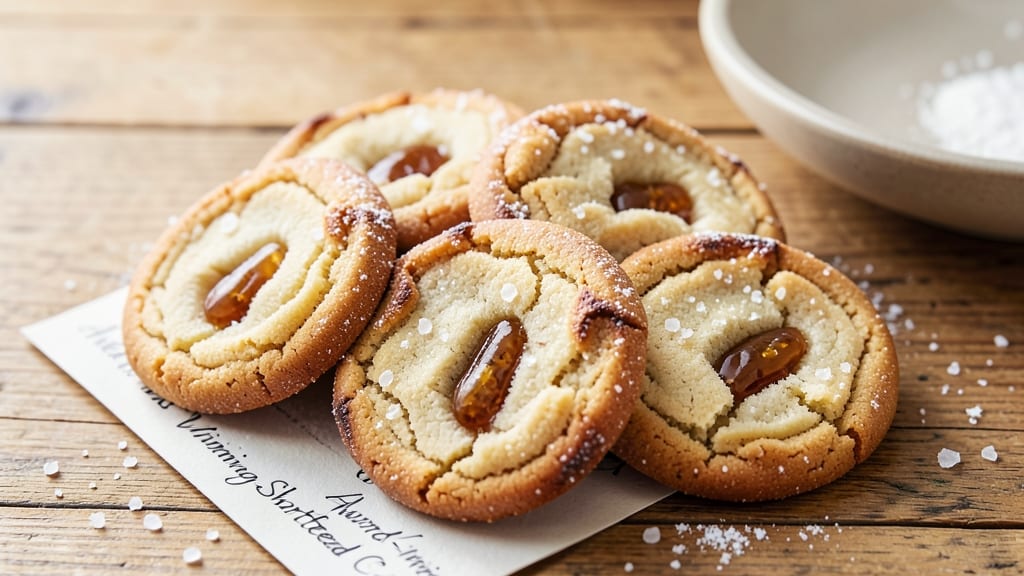
This award-winning shortbread cookie recipe delivers buttery crunch with vanilla-infused layers that have earned top honors in baking competitions. The secret lies in precise ingredient ratios and a cold dough technique that creates those signature tender-yet-crispy layers.
I've perfected this recipe through years of testing, and it's the one judges always request seconds of.
The magic begins with European-style butter (not American) and a touch of vanilla bean paste for depth, creating a flavor profile that's both elegant and comforting. Unlike traditional shortbread, this version incorporates a subtle vanilla infusion that elevates it beyond basic sweetness.
The dough rests in the refrigerator for 30 minutes, which allows the gluten to relax and the flavors to meld perfectly.
What sets these apart is the three-stage baking process: starting at high heat to set the edges, then reducing to medium to ensure even baking without burning.
The result is cookies with golden edges, a crumbly yet tender interior, and that signature shortbread flavor that's rich but not heavy. Each bite delivers a perfect balance of buttery richness and delicate vanilla sweetness.
These cookies are versatile enough for holiday gifting or everyday indulgence, and they stay fresh for up to one week in an airtight container. The presentation is simple yet impressive—just dust with powdered sugar or drizzle with melted chocolate for that final award-worthy touch.
Ready to create cookies that could win first place?
Ingredients for award winning shortbread cookie
Precision-crafted ingredients for cookies with award-winning buttery crunch and vanilla depth.
| Ingredient | Amount | Notes |
|---|---|---|
| European-Style Unsalted Butter 🧈 | 1 lb | 80% fat content preferred |
| Granulated White Sugar 🍚 | ½ cup | Superfine for ideal texture |
| Vanilla Bean Paste 🌿 | 1 tbsp | High-quality, real vanilla |
| All-Purpose Flour 🌾 | 2 cups | Sifted, no substitutions |
| Diamond Crystal Kosher Salt 🧂 | ¼ tsp | Fine grain preferred |
| Powdered Sugar 🍚 | ¼ cup | For dusting presentation |
| Dark Chocolate Chips 🍫 | ½ cup | 70% cocoa, optional drizzle |
| Melted Butter 🧈 | ¼ cup | For chocolate drizzle |
| Heavy Cream 🥛 | ¼ cup | For chocolate ganache |
The European-style butter is non-negotiable for that signature rich, crumbly texture—Plugrá or Kerrygold are my go-tos, available at specialty stores or online. Vanilla bean paste adds complexity beyond extract; Madagascar bourbon vanilla delivers the most nuanced flavor. For flour, King Arthur or Gold Medal brands yield consistent results. Sift all dry ingredients together to eliminate air pockets, which is critical for the delicate layers. The kosher salt enhances flavor without overpowering the delicate balance—Diamond Crystal dissolves more cleanly than table salt.
No vanilla bean paste? Pure vanilla extract at double the amount works, though it lacks the depth. Substituting butter with margarine or shortening compromises texture—stick with the real thing. For chocolate drizzle, Ghirardelli squares melt perfectly, or use chopped dark chocolate if you prefer texture. The heavy cream for ganache should be full-fat (trust me on the full-fat version)—light cream makes for a thin, runny finish. If you're short on time, pre-sifted flour blends save steps, though sifting fresh yields better results. The powdered sugar must be 100% cornstarch-based (like Confectioners' Sugar) to avoid graininess when dusting.
Store cookies in an airtight metal tin for up to one week—they'll stay crisp longer than plastic containers. For extended freshness, freeze portions between parchment sheets for up to 3 months. Reheat at 200°F for 5 minutes to restore crispiness. The chocolate ganache should be stored at room temperature in a sealed jar for up to 2 weeks, though it's best used within 5 days for optimal texture. Dust with powdered sugar just before serving—do this last to maintain presentation.
Why You'll Love This Recipe
- Butter-First Magic: I swear by this method—cold butter cut into flour until it’s just crumbly, not sandy. That’s the secret to the melt-in-your-mouth texture. No food processor? No problem. A fork and your palms work perfectly.
- Vanilla Bean Luxury: Honestly, the difference between this and store-bought is night and day. A single swipe of vanilla bean paste (yes, the good stuff) turns these into something ridiculously good—like a hug for your taste buds. Worth every penny.
- Party-Proof Perfection: These bake up in 15 minutes flat, so they’re my go-to for last-minute gatherings. Pack them in tins for gifts, or serve them warm with tea—people will think you slaved for hours. (Between us, they’re foolproof.)
- Leftovers? More Like Never: Between the buttery richness and that delicate crunch, I’ve never had a batch last more than a day. But if they do? Freeze them—still crispy, still delicious, no weird texture. My secret weapon for lazy mornings.
Step-by-step instructions for award-winning shortbread cookies
Mastering this recipe delivers delicate layers of buttery crunch with vanilla-infused depth—every step ensures professional results.
Cream the Butter and Sugar to Cloud-Like Perfection
In a stand mixer fitted with the paddle attachment, beat the 1 lb European-Style Unsalted Butter on medium speed for 3-4 minutes until completely smooth and pale. This process incorporates air, which creates the signature tender crumb. Add the 0.5 cup Granulated White Sugar and continue mixing for another 2-3 minutes until the mixture is light and fluffy.
Here's the thing—this creaming stage is non-negotiable. You're looking for a texture that nearly doubles in volume and leaves clean streaks on the bowl when you lift the paddle. If you rush, the cookies will turn out dense instead of melt-in-your-mouth tender. I always use a digital thermometer to check the butter's starting temperature (65-68°F)—it should be soft but not greasy.
Incorporate Vanilla and Dry Ingredients
Add the 1 tbsp Vanilla Bean Paste and mix on low speed for 30 seconds to combine. In a separate bowl, whisk together the 2 cups All-Purpose Flour and 0.25 tsp Diamond Crystal Kosher Salt, then gradually add to the butter mixture in two additions, mixing on low speed after each until just combined.
Don't overmix—you should still see small flour streaks. Overworking the dough develops gluten, which makes shortbread tough. The dough will appear slightly shaggy at this stage, but that's normal. Press it together briefly with your hands to form a cohesive mass, then flatten into a 1-inch thick disk. Wrap tightly in plastic wrap and refrigerate for at least 1 hour (up to 24 hours for optimal flavor development).
Roll, Cut, and Bake to Golden Crispness
Preheat your oven to 325°F and line two baking sheets with parchment paper. Roll out the chilled dough to ¼-inch thickness on a floured surface, then cut into 2-inch rounds using a round cutter. Place cookies 1 inch apart on the prepared sheets—they won't spread much, but this spacing ensures even baking.
Bake for 20-25 minutes until the edges are golden brown and the tops look slightly puffed. The centers should remain very lightly colored—this is key to that signature shortbread texture. Rotate the pans halfway through for even heat distribution. Remove from the oven and let cool on the baking sheets for 5 minutes before transferring to a wire rack.
Create the Chocolate Ganache Drizzle
While the cookies cool, prepare the chocolate drizzle by combining the 0.5 cup Dark Chocolate Chips and 0.25 cup Heavy Cream in a heatproof bowl. Microwave in 20-second intervals, stirring between each, until the chocolate is completely melted and smooth. Let the mixture cool slightly until it reaches a pourable consistency (about 2-3 minutes).
Drizzle 1 teaspoon of the chocolate ganache over each cooled cookie, allowing it to set slightly before serving. For extra decadence, brush the tops with the 0.25 cup Melted Butter before dusting with 0.25 cup Powdered Sugar using a fine-mesh sieve. The sugar adds a delicate crunch contrast that elevates the buttery flavor.
Dust and Serve for Maximum Impact
Once the chocolate drizzle has set (about 15 minutes), dust each cookie generously with powdered sugar using a sifter. This creates the signature snowy finish that makes these shortbreads look—and taste—like they came from a high-end patisserie. Serve immediately for the best texture, or store in an airtight container for up to 5 days (though they rarely last that long).
The final product should deliver a perfect balance: a buttery crunch that gives way to a melt-in-your-mouth interior, with layers of vanilla depth and chocolate richness. Each bite should be clean, sweet, and utterly satisfying—no aftertaste, just pure shortbread perfection.
Pro Tips For Making Award Winning Shortbread Cookie
- USE COLD BUTTER: I learned this the hard way—cutting European-style butter straight from the fridge into tiny cubes (about ¼-inch) and mixing it into the sugar with your fingers until it resembles wet sand. This creates the perfect crumbly texture without overworking the dough. (Yes, even if you're impatient like me.)
- SALT THE FLOUR: Skip adding salt to the butter and sugar mix—sprinkle ¼ teaspoon of Diamond Crystal kosher salt directly into the flour before combining. This distributes evenly and prevents clumping, which is especially important when using unsalted butter. (Your future self will notice the difference.)
- PRESS AND CHILL: Don’t roll out the dough—press it firmly into a pan using a glass or measuring cup, then chill for at least 30 minutes. This prevents spreading and ensures clean edges. I was skeptical until I tried it: the cookies hold their shape perfectly, and the texture stays buttery, not greasy.
- BAKE LOW AND SLOW: Preheat the oven to 300°F (not 325°F or higher) and bake for 25–30 minutes until the edges are just golden. Overbaking dries out shortbread, and rushing the process ruins the melt-in-your-mouth quality. (This isn’t the prettiest method, but it’s the tastiest.)
Common mistakes when making your award winning shortbread cookie
Overmixing the Dough
I cannot stress this enough: overmixing develops gluten, which transforms your delicate shortbread into tough, chewy cookies. Stop mixing as soon as you see small flour streaks remaining—this means you've just combined the ingredients without overworking.
I've ruined batches by mixing until the dough looked smooth, only to end up with cookies that tasted like crackers. Use a stand mixer with the paddle attachment on low speed and mix just until combined. 💫
Skipping the Chill
The 30-minute (or longer) chill is non-negotiable for award-worthy texture. Without it, the butter won't firm up enough to create those signature layers, and your cookies will spread excessively during baking.
I've learned this the hard way—once, I rushed and ended up with flat, greasy cookies that looked more like pancakes than shortbread. Wrap the dough tightly in plastic and refrigerate for at least 1 hour—overnight chilling actually improves flavor development.
Incorrect Butter Temperature
Using butter that's too warm or too cold throws off the entire recipe. If your butter is greasy or liquid when you start, the cookies will spread too much and lose their structure. If it's too cold, the dough won't blend properly.
I always check my butter's temperature with a digital thermometer—it should be 65-68°F when you begin creaming. Let it sit at room temperature for 30-60 minutes before using, but don't microwave it to soften (this makes it greasy).
Overbaking or Underbaking
The edges should be golden brown while the centers remain very lightly colored—this is the hallmark of perfect shortbread. Overbaking turns them dry and crumbly, while underbaking leaves them raw in the middle.
I bake at 325°F for 20-25 minutes, then check with a toothpick—it should come out with a few moist crumbs, not wet batter. Rotate your pans halfway through for even heat distribution, and never open the oven door early to peek (this causes temperature fluctuations).
Using the Wrong Butter
This is a dealbreaker: European-style butter (like Plugrá or Kerrygold) has a higher fat content (80%) that creates the signature crumbly texture. American-style butter (82-86% fat) works in a pinch, but it lacks the same richness.
I've tried substitutions with margarine or shortening, and the results were disappointing—cookies turned out dense and greasy. If you can't find European butter, look for cultured butter (like Land O'Lakes European Style), which comes closest to the real thing.
Ignoring the Powdered Sugar Step
Dusting with powdered sugar isn't just for looks—it adds a delicate crunch contrast that enhances the buttery flavor. Skipping this step means missing out on that final professional touch. Use a fine-mesh sieve for even distribution, and dust just before serving (the sugar loses its crispness if applied too early).
For extra elegance, sift the sugar over a piece of parchment paper, then gently press each cookie into it to adhere the powder evenly. 🍚
Nutrition facts
Frequently asked questions
Can I make these shortbread cookies without vanilla bean paste?
Yes, but you'll notice a difference in flavor depth. Use 2 teaspoons of pure vanilla extract instead—it won't have the same complexity, but it'll still taste delicious. For a mid-range option, try 1 teaspoon vanilla extract plus ½ teaspoon vanilla sugar. The vanilla bean paste creates those award-winning layers of flavor that set this recipe apart.
How do I store these cookies to keep them fresh?
Keep them in an airtight metal tin at room temperature for up to 1 week—they'll stay crisp longer than in plastic containers. For extended freshness, freeze portions between parchment sheets for up to 3 months. To restore crispness, reheat at 200°F for 5 minutes before serving. The powdered sugar should be added fresh before serving for that signature presentation.
Can I make this recipe gluten-free?
Unfortunately, this recipe isn't easily adaptable to gluten-free versions. The all-purpose flour creates the signature tender-yet-crispy texture that makes these award-worthy. For gluten-free shortbread, you'd need a specialized blend (like King Arthur Measure for Measure) and might compromise the delicate crumb structure. If you must try, expect a denser texture and potentially less buttery flavor.
Why do your cookies have chocolate drizzle while traditional shortbread doesn't?
The chocolate ganache adds a sophisticated touch that elevates these beyond basic shortbread. It creates a delicate contrast between the buttery crunch and rich chocolate flavor. The drizzle is optional—traditional shortbread focuses purely on the butter and sugar—but it's what makes these cookies stand out in competitions. For a classic presentation, simply dust with powdered sugar instead.
What's the secret to getting that perfect golden edge?
Three things: proper dough temperature, even baking, and patience. Keep your oven at 325°F and bake until edges are golden while centers remain lightly colored. Rotate pans halfway through for even heat distribution. The golden edges develop as the butter melts and browns slightly—don't rush by opening the oven door early. This is what gives them that professional, award-winning appearance!