
Main Courses
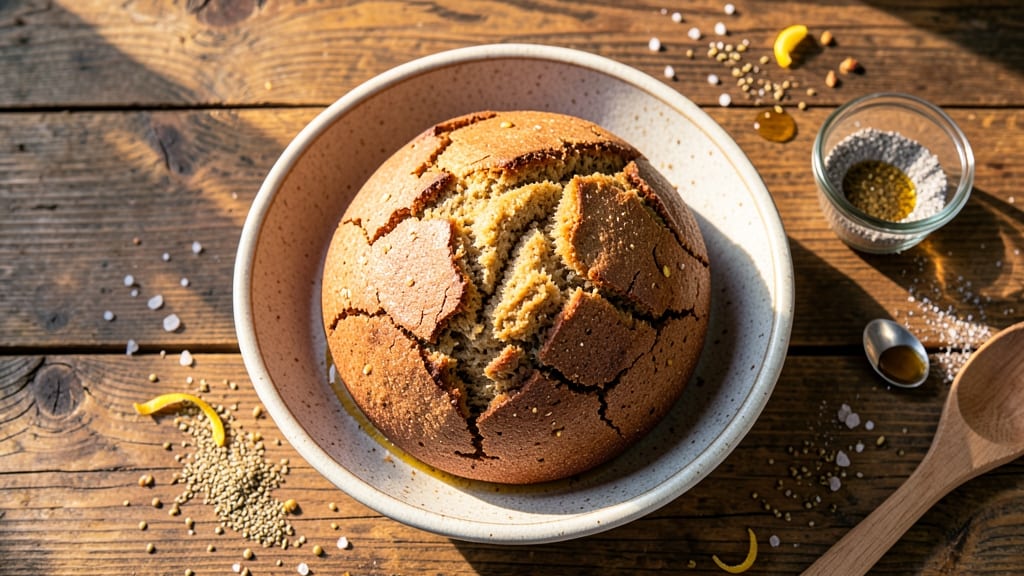
This almond flour bread recipe with psyllium husk delivers a crusty, light loaf that rivals traditional wheat bread—without gluten or grains. The psyllium husk acts as a natural binder, creating that perfect airy texture while keeping the bread tender and flavorful.
I developed this recipe after years of experimenting with gluten-free baking, and it’s finally the one that actually holds together and tastes like a real loaf.
The secret lies in proper hydration and mixing techniques—psyllium husk absorbs moisture differently than flour, so we’ll focus on achieving the right consistency before baking.
With just 5 simple ingredients and 30 minutes of active prep (plus baking time), you’ll have a warm, golden loaf that’s perfect for sandwiches, toast, or serving with soups. The result is surprisingly sturdy yet tender, with a crisp crust that shatters just enough to seal in freshness.
What makes this recipe stand out is its versatility—add seeds, herbs, or spices to customize the flavor while keeping the structure intact. The psyllium husk ensures the bread stays moist for days, making it ideal for meal prep.
Whether you’re baking for dietary needs or simply curious about gluten-free possibilities, this loaf proves you don’t need wheat to enjoy a satisfying, hearty bread.
Ready in about 1 hour (including baking), this recipe is perfect for beginners and experienced bakers alike. The key steps—proper mixing, proofing, and baking at the right temperature—are all explained in detail to ensure success. Let’s get started on creating your perfect gluten-free loaf.
Ingredients for almond flour bread recipe with psyllium husk
Five simple ingredients transform into a golden, crusty loaf without gluten or grains.
| Ingredient | Amount | Notes |
|---|---|---|
| Blanched Almond Flour 🌰 | 3 cups | Finely ground, unsweetened |
| Psyllium Husk Powder 🌾 | ¼ cup | Pure, unsweetened |
| Apple Cider Vinegar 🍎 | 1 tbsp | Raw, unfiltered preferred |
| Cold Water 💧 | 1 ¼ cups | Room temp after mixing |
| Sea Salt 🧂 | 1 ½ tsp | Fine grain preferred |
| Ground Flaxseed 🌾 | 1 tbsp | For extra binding |
| Sesame Seeds 🌱 | 1 tbsp | For topping (optional) |
| Olive Oil 🫒 | 1 tbsp | For greasing loaf pan |
The almond flour is the foundation—blanched almond flour (not almond meal) gives that signature light texture. Bob’s Red Mill or Anthony’s Goods are my go-tos for quality, but any finely ground, unsweetened almond flour works. Psyllium husk is non-negotiable here—it’s what makes this bread hold together like traditional loaves. Frontier Co-op sells pure psyllium husk powder in bulk, which is cost-effective for frequent baking. The apple cider vinegar activates the psyllium, creating that perfect elastic texture. If you can’t find raw vinegar, regular white vinegar works in a pinch (though it lacks the subtle tang).
No psyllium husk? Chia seeds soaked in water (1 tbsp chia + 3 tbsp water = 1 tbsp psyllium equivalent) can substitute, but texture won’t be identical. Swapping almond flour for sunflower seed flour (1:1 ratio) works well if you’re avoiding nuts, though flavor will differ. The flaxseed is optional but adds insurance against crumbling—think of it as the bread’s secret glue. For extra richness, toasted sesame seeds on top add crunch and a nutty depth. If you’re customizing, everything bagel seasoning or dried herbs blend beautifully into the dough before baking.
This dough is temperamental—mix it right by combining wet and dry ingredients separately before combining. The psyllium needs time to hydrate fully, so let it sit for 10 minutes before shaping. For a crispier crust, brush the top with olive oil before baking. The loaf keeps well for 4-5 days at room temperature (wrapped tightly) or up to 1 week in the fridge. For longer storage, freeze slices and toast directly from frozen. Reheat in a 350°F oven for 5 minutes to restore freshness—no microwave needed.
Why You'll Love This Recipe
- No-Fuss Mixing: I swear by the psyllium husk trick—just stir in cold water, let it sit, and boom. No kneading, no waiting for dough to rise. That apple cider vinegar gives it a subtle tang that balances the nutty almond flour perfectly.
- Nutty Crust, Soft Core: The toasted almond flavor shines through the crust while the psyllium keeps it tender inside. It’s the kind of bread that makes you pause mid-bite—like a cross between a baguette and a cookie, but better.
- Meal Prep MVP: Slices beautifully for sandwiches, but I mostly keep it plain for dipping in olive oil or pairing with cheese. It stays fresh for days, and honestly? I’ve had it for breakfast, lunch, and even as a side for dinner—no judgment here.
- Budget-Friendly Luxury: Almond flour is pricey, but a little goes a long way, and psyllium stretches it further. I make two loaves at once, freeze one, and never regret it. Fancy enough for company, but simple enough for a lazy Sunday.
Step-by-step instructions for almond flour bread with psyllium husk
This gluten-free loaf delivers bakery-style texture and lightness—no special equipment needed.
Mix the Wet Ingredients for Maximum Binding
In a medium bowl, whisk together the 1.25 cups cold water, 1 tbsp apple cider vinegar, and 1 tbsp ground flaxseed until completely dissolved. The flaxseed acts as a natural binder, while the vinegar helps activate the psyllium husk for better rise. Let this mixture sit for 5 minutes—you'll notice it thicken slightly as the psyllium begins to hydrate.
This step is crucial because psyllium husk absorbs water like a sponge. If you skip the waiting time, your dough will be too sticky to handle properly. The cold water also prevents the psyllium from activating too quickly, giving you better control during mixing.
Combine Dry Ingredients for Even Distribution
In a separate large bowl, sift together the 3 cups blanched almond flour and 0.25 cup psyllium husk powder. This prevents clumping and ensures even distribution of the psyllium, which is essential for that light, airy crumb. Add the 1.5 tsp sea salt and mix thoroughly with a whisk or rubber spatula.
I always sift the dry ingredients first—it makes a noticeable difference in texture. The psyllium husk powder should be completely incorporated without any visible streaks. If you notice any lumps, press them through a fine-mesh sieve to maintain that perfect crumb structure we're aiming for.
Hydrate the Dough to Perfect Consistency
Pour the hydrated flaxseed mixture into the dry ingredients and stir gently with a wooden spoon until just combined. The dough will be thick but workable—it should hold its shape when pressed but still be pliable. If it's too dry, add 1 teaspoon of cold water at a time until you reach the ideal consistency.
This is where many gluten-free breads fail—too much mixing develops gluten-like proteins that make the bread dense. Instead, we're creating a cohesive mass through the psyllium's natural gelling properties. The dough should cling slightly to your spoon but not be sticky enough to require flouring your hands.
Shape and Proof for Maximum Rise
Lightly grease a 9x5-inch loaf pan with 1 tbsp olive oil, then transfer the dough to the pan. Wet your hands slightly and press the dough evenly into the pan, creating a smooth top. Sprinkle the 1 tbsp sesame seeds (if using) over the top for texture and flavor. Cover loosely with plastic wrap and let proof at room temperature for 30 minutes.
During proofing, the psyllium will continue to absorb moisture and expand slightly. You'll see the dough rise about 10-15% in volume. This step develops that beautiful open crumb structure we're after. Don't overproof—if you let it go longer than 30 minutes, the psyllium can make the bread gummy rather than light.
Bake to Golden Perfection with Steam
Preheat your oven to 350°F and place a small baking dish filled with 1 cup hot water on the lower rack. This creates steam that helps develop that coveted crust. Bake the loaf for 50-55 minutes until the top is deep golden brown and an instant-read thermometer inserted into the center reads 205°F.
The steam is absolutely critical—it mimics commercial baking conditions and gives you that bakery-style crust. Tap the top lightly—it should sound hollow when done. If the top browns too quickly, tent loosely with foil after 30 minutes to prevent over-browning while allowing the interior to cook through completely.
Cool and Slice for Ideal Texture
Remove the bread from the oven and let it cool in the pan for 10 minutes, then transfer to a wire rack to cool completely. This resting period allows the psyllium to set properly and prevents crumbling when you slice. The bread will continue to firm up as it cools—this is normal and actually improves the texture.
Slice with a sharp serrated knife for clean cuts. The interior should reveal an even, open crumb with no dense pockets. Each slice should hold its shape when toasted, making it perfect for sandwiches or serving with soups. Store wrapped at room temperature for up to 3 days or freeze for longer storage.
Pro Tips For Making Almond Flour Bread Recipe With Psyllium Husk
- Mix the psyllium first: Let the psyllium husk powder and cold water sit for 5 minutes before adding anything else—it needs that time to fully hydrate and thicken. I used to skip this and ended up with a gummy, uneven batter that never rose properly.
- Use vinegar immediately: Add the apple cider vinegar to the wet mix right after combining psyllium and water—acidity triggers the psyllium’s binding magic faster. Waiting even 10 minutes means you’ll have to fight for proper texture later.
- Don’t overmix the dough: Stir just until the almond flour is barely incorporated—overworking it turns the dough dense and chewy. Think "damp flour clumps," not smooth batter. I learned this after making a brick instead of bread.
- Chill the dough overnight: Let the mixed batter rest in the fridge for at least 4 hours (or overnight)—this lets the psyllium fully activate and the flavors meld. Skipping this step means your bread will be dry and crumbly, no matter how well you bake it. Yes, it’s an extra step, but it’s worth it.
Make-ahead tips for leftovers
Prep Ahead Strategy
Mix the wet ingredients and psyllium husk powder separately up to 24 hours in advance. Store them in airtight containers in the fridge—this prevents the psyllium from absorbing excess moisture.
When ready to bake, simply combine them with the dry ingredients and proceed with shaping. The dough will be easier to handle when cold, reducing the risk of overmixing. 💡
Freezer-Friendly Loaves
Bake the bread as directed, then slice it into ½-inch thick pieces while still warm. Place the slices on a baking sheet lined with parchment paper, ensuring they don’t touch. Freeze for 1 hour before transferring to a ziplock freezer bag for up to 3 months.
Toast directly from frozen for crispy, fresh-tasting bread every time. This method preserves the crust’s texture perfectly.
Make-Ahead Dough
For a half-baked shortcut, prepare the dough up to 12 hours ahead and refrigerate it in an airtight container. When ready to bake, let it sit at room temperature for 20 minutes to soften slightly before shaping.
Preheat your oven to 350°F and bake as usual. The psyllium husk’s binding properties ensure the dough holds together beautifully even after chilling.
Batch Baking Tips
Double the recipe for two loaves—just ensure your oven has enough space to accommodate both pans. Place a second baking dish with 1 cup hot water on the lower rack for even steam distribution.
Bake both loaves simultaneously for 50-55 minutes, rotating the pans halfway through for even browning. This technique saves time and energy while yielding perfectly uniform results. ✨
Storage Hacks
Keep the bread fresh for 5-7 days by storing it in a bread box or paper bag at room temperature. The psyllium husk’s moisture-binding properties help maintain softness longer than traditional gluten-free breads.
For extra freshness, sprinkle the cut surfaces with a light dusting of almond flour before storing to prevent drying. Reheat slices in a toaster or oven for maximum crispiness.
Freezing for Later
For longer storage, wrap the entire loaf tightly in plastic wrap followed by aluminum foil to lock in moisture. Freeze for up to 2 months.
To serve, thaw at room temperature for 1 hour, then toast or reheat in a 350°F oven for 10 minutes with a splash of water to restore moisture. This method preserves the bread’s texture and flavor exceptionally well. 🌟
Nutrition facts
Frequently asked questions
Why does this recipe use psyllium husk instead of xanthan gum?
Psyllium husk creates a more authentic bread-like structure by forming a gel network that mimics gluten's elasticity. Unlike xanthan gum—which adds thickness—psyllium actually binds the dough together while improving moisture retention. This results in a loaf that's both sturdy and tender, with a proper crumb structure that xanthan gum can't replicate. The vinegar in the recipe activates the psyllium for even better binding.
Can I make this bread without almond flour?
Yes! Substitute with 3 cups sunflower seed flour or 2 cups coconut flour + 1 cup tapioca starch for a 1:1 ratio. However, the texture will differ—sunflower flour gives a denser crumb while coconut flour requires additional liquid. The psyllium husk will still work as the binder, but expect a slightly heavier loaf. For best results, use a blend of flours to maintain the airy quality.
How do I fix a dense or crumbly loaf?
Dense bread usually means overmixing or insufficient psyllium activation. For next time, stir the dough just until combined (no more than 10 strokes) and ensure the psyllium sits for 5 minutes before mixing. If your loaf is crumbly, try adding 1 extra tablespoon of ground flaxseed to the wet ingredients—it acts as a secondary binder. Also check your oven temperature with an oven thermometer (350°F is critical).
Can I add herbs or spices to this bread?
Try 1 tsp dried rosemary + ½ tsp garlic powder mixed into the dry ingredients, or 1 tbsp everything bagel seasoning sprinkled on top before baking. For savory loaves, add ½ cup finely chopped sun-dried tomatoes to the dough. The psyllium's binding properties ensure these additions won't disrupt the structure. Just reduce the almond flour by ¼ cup if adding wet ingredients like tomatoes.
Why does my bread taste bitter?
Bitterness usually comes from over-toasted almond flour or using too much psyllium husk. For this recipe, stick to 3 cups blanched almond flour (not toasted) and measure the psyllium precisely (¼ cup). If your flour has a nutty aftertaste, try sunflower seed flour instead. Also ensure you're using apple cider vinegar (not white vinegar)—its mild sweetness balances flavors. Bake at 350°F for the full 50-55 minutes to prevent undercooking, which can amplify bitterness.