
Side Dishes
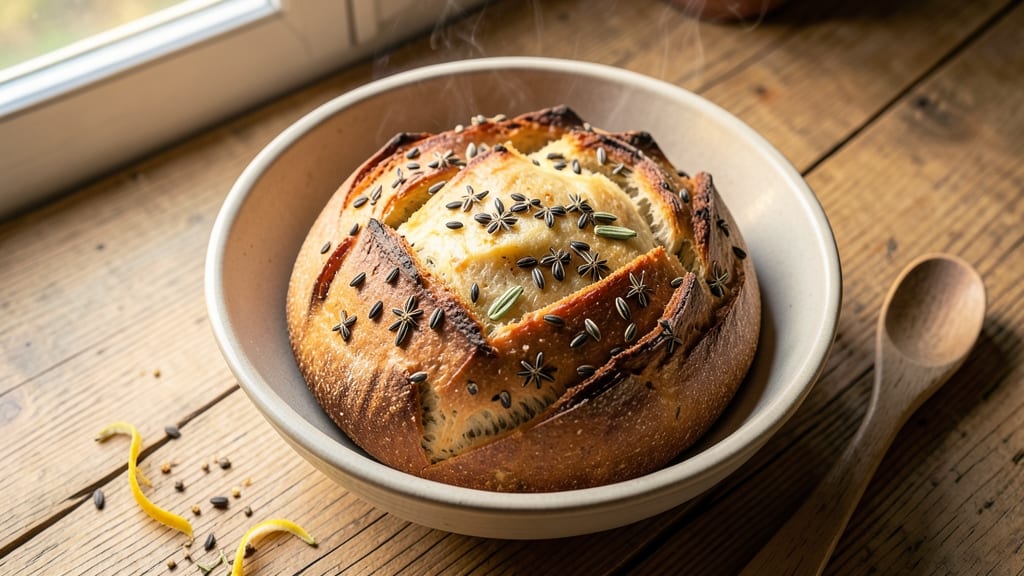
This aniseed bread recipe delivers a licorice-kissed crust with warm, aromatic spices that transform ordinary bread into something extraordinary. The secret lies in balancing sweet aniseed with traditional yeast dough, creating a loaf that's both comforting and complex.
I've baked this exact recipe for holiday tables, and it never fails to impress—whether served warm with butter or toasted for open-faced sandwiches.
The dough comes together with simple pantry staples: flour, yeast, water, and aniseed, but the magic happens during proofing and baking.
A light egg wash gives that golden, crackly crust we all crave, while the aniseed infuses every bite with subtle licorice notes that pair beautifully with sharp cheeses or sweet jams. The texture is tender yet sturdy, perfect for slicing thick or tearing for charcuterie boards.
Baking requires just 45 minutes at 375°F, with 10 minutes of steam for that signature oven spring. The aroma alone will have your kitchen smelling like a European bakery, and the crust develops a satisfying crunch while the interior stays soft.
This isn't just bread—it's a versatile centerpiece that elevates any meal from ordinary to memorable.
For extra depth, consider adding a pinch of cardamom or a sprinkle of poppy seeds before baking. The possibilities for toppings are endless, but the core recipe remains foolproof—ideal for both beginners and seasoned bakers. Let's get started on creating your perfect loaf.
Ingredients for aniseed bread
Simple pantry staples meet aromatic spices for a bread that smells like holiday mornings.
| Ingredient | Amount | Notes |
|---|---|---|
| All-Purpose Flour 🌾 | 4 ½ cups | Sifted for even texture |
| Active Dry Yeast 🍞 | 2 ¼ tsp | 1 packet or 2¼ tsp |
| Granulated Sugar 🍚 | 1 tbsp | Feeds yeast for activation |
| Anise Seeds 🌿 | 1 ½ tbsp | Whole, lightly toasted |
| Cardamom Pods 🌿 | 2 whole | Lightly crushed for aroma |
| Salt 🧂 | 1 ½ tsp | Diamond Crystal preferred |
| Warm Water 💧 | 1 ¼ cups | 110°F for yeast activation |
| Large Eggs 🥚 | 1 whole | Room temperature for wash |
| Unsalted Butter 🧈 | 2 tbsp | Melted for egg wash |
| Poppy Seeds 🌻 | 1 tsp | Optional for extra crunch |
| Coarse Sugar 🍚 | 1 tbsp | For sprinkling on crust |
| Cornmeal 🌾 | ¼ cup | For dusting baking sheet |
The anise seeds are the star here—look for whole seeds at specialty stores or bulk bins for maximum flavor. Whole Foods or Penzeys carry the best quality, but the regular grocery store works too. Toast them lightly in a dry pan for 30 seconds before adding to the dough—this deepens their licorice notes. Cardamom pods? Crush them gently—you want the aroma, not the texture. For yeast, always check the expiration date—old yeast won't activate properly, and you'll end up with flat bread. I keep mine in the freezer to preserve freshness for up to 6 months.
No anise seeds? Fennel seeds work in a pinch—same family, similar flavor. Running low on cardamom? A pinch of cinnamon adds warmth, though it won't match the complexity. The yeast packet is non-negotiable—instant yeast can be substituted at the same amount, but active dry is what I use for reliability. For the egg wash, room temperature eggs prevent cracking—just take them out 15 minutes before using. The butter should be unsalted for consistent flavor, but if that's all you've got, just reduce the added salt slightly.
This dough keeps beautifully—cover tightly and refrigerate for up to 2 days if you need to proof it slowly. For best results, bake within 8 hours of mixing. The anise seeds can be toasted ahead and stored in an airtight jar for up to 2 weeks—just add them fresh to the dough. Leftovers? Toast slices for 5 minutes to revive that bakery-fresh crunch. Freeze the whole loaf (sliced or unsliced) for up to 3 months—it reheats perfectly in a 350°F oven for 10 minutes.
Why You'll Love This Recipe
- No-Knead Magic: I swear by this—just mix the dough, let it rise, and bake. The yeast and anise seeds do all the work while you’re scrolling or sipping coffee. No stand mixer, no fuss.
- Warm Spice Hug: That first bite? Sweet, earthy, and faintly floral from the cardamom and anise—like a cozy hug in bread form. Honestly, the seeds make it taste way fancier than it is.
- Breakfast to Brunch: Toast it for breakfast with jam, pack slices for lunch, or serve it with dinner as a side. (Yes, even on a Tuesday night.) The cardamom’s warmth pairs with everything—cheese, honey, even just butter.
- Budget-Friendly Staple: Flour, yeast, sugar—you already have these. A single batch feeds my family for days, and the anise seeds? A tiny bag lasts months. My wallet and my freezer thank me.
Step-by-step instructions for aniseed bread with licorice-kissed crust
Here's how to craft this aromatic bread with layers of spice and a signature crunch.
Activate the Yeast and Toast the Spices
In a small bowl, combine the 1.25 cups warm water (about 110°F) with the 1 tbsp granulated sugar and 2.25 tsp active dry yeast. Let it sit for 5-10 minutes until frothy—this confirms your yeast is alive and ready to work. While waiting, lightly toast the 1.5 tbsp anise seeds and 2 whole cardamom pods in a dry skillet over medium heat for 1-2 minutes until fragrant. This step unlocks their full aromatic potential.
I crush the cardamom pods gently with the side of a spoon—just enough to release their essence without turning it into powder. The toasted spices will give the dough its distinctive licorice warmth and complexity. Let them cool completely before adding to your dough to prevent killing the yeast.
Mix the Dough and Develop the Gluten
In the bowl of a stand mixer fitted with the dough hook, combine the 4.5 cups all-purpose flour (sifted for even texture) with the 1.5 tsp salt and toasted spices. Mix on low speed for 30 seconds to distribute everything evenly. Add the yeast mixture and mix on low speed for 2 minutes until a shaggy dough forms.
Increase the speed to medium and knead for 8-10 minutes until the dough becomes smooth, elastic, and springs back when poked. You're building gluten—this gives your bread its structure and chew. If the dough sticks to the bowl, wet your hands slightly and help it climb the hook. The window between too wet and too dry is small, so keep an eye on it.
First Rise and Shaping
Lightly grease a large bowl with melted butter and place the dough inside. Cover with a damp towel and let it rise in a warm place for 1-2 hours or until doubled in size. I like to turn the dough over once halfway through to ensure even rising. The dough should feel light and airy when pressed gently with a finger.
Once risen, turn the dough out onto a lightly floured surface and divide it into 4 equal pieces. Shape each piece into a 12-inch round by pulling the edges toward the center while rotating the dough. The tension on the surface creates that beautiful, even rise we want. Place the shaped rounds on a baking sheet dusted with 0.25 cup cornmeal—this prevents sticking and adds a subtle crunch to the bottom crust.
Second Rise and Final Touches
Cover the shaped dough with a damp towel and let it rise for another 30-45 minutes until puffy. Preheat your oven to 375°F while the dough rises—this ensures a hot oven when you're ready to bake. In a small bowl, whisk together the 1 whole large egg and 2 tbsp melted unsalted butter for the egg wash. This will give your bread that golden, glossy finish.
Brush the risen dough with the egg wash, then sprinkle generously with 1 tbsp coarse sugar and 1 tsp poppy seeds. The sugar will caramelize beautifully in the oven, creating those coveted crispy spots. I like to make a few small slashes on the top with a sharp knife—this helps the bread expand and gives it that rustic look.
Bake to Perfection
Bake the bread for 25-30 minutes until golden brown and internal temperature reaches 190°F. You'll know it's done when it sounds hollow when tapped on the bottom. The crust should be crisp with those caramelized sugar spots, and the aniseed aroma should fill your kitchen.
Let the bread cool on a wire rack for at least 15 minutes before slicing—this allows the steam to escape and prevents a gummy interior. The warm spice notes will be most pronounced when served fresh from the oven. Store any leftovers wrapped in a clean towel to keep them soft and aromatic for days.
Pro Tips For Making Aniseed Bread
- CRUSH THE SEEDS: Anise and cardamom lose their punch when left whole—lightly crush them in a mortar or zip-top bag with a rolling pin before mixing. I learned this the hard way when my first batch tasted like it was missing something.
- USE WARM MILK: Skip the cold milk—yeast needs warmth to activate. Heat milk to about 110°F (43°C) before mixing it with yeast and sugar, or your dough will take forever to rise. (Yes, even if you’re impatient like me.)
- DON’T OVERKNEAD: This dough is delicate. Once it springs back when poked, stop kneading—overworking it makes the bread dense. I used to fight it, but now I just let the gluten do its thing.
- PROOF IN A COOLER: For a lighter crumb, proof the dough in the fridge overnight. The slow rise deepens the flavor and keeps the texture tender. (Your future self will thank you.)
Common mistakes when making great aniseed bread
Yeast Activation Failures
Skipping the 5-10 minute proofing test for yeast is a common mistake that leads to dense, flat bread. If your yeast doesn't foam after mixing with warm water and sugar, it's dead—replace it immediately.
I've ruined doughs by using expired yeast, so always check the package date. For extra reliability, store your yeast in the freezer where it stays fresh for up to 6 months. 💡
Over-Kneading the Dough
Kneading too long develops too much gluten, resulting in a tough, chewy bread instead of the tender texture we want. Aim for 8-10 minutes with a stand mixer or 12-15 minutes by hand until the dough springs back when poked.
If your dough feels resistant and doesn't bounce, you've overworked it. The key is smoothness with just enough structure to hold its shape.
Skipping the Steam Step
Many home bakers forget to add steam during baking, which prevents that perfect oven spring. For this recipe, place a metal bowl of boiling water on the oven rack 5 minutes before baking—this creates steam that helps the crust rise dramatically.
Without it, your bread will be dense and flat. I use this trick for all my artisan breads, and the difference is night and day. ✨
Incorrect Dough Temperature
Dough that's too cold rises slowly or not at all, while dough that's too warm activates yeast too quickly, leading to overproofing. The ideal dough temperature is 75-80°F. If your kitchen is cold, let the dough rise near a warm oven with the light on.
For hot kitchens, chill the dough for 30 minutes before final proofing. A kitchen thermometer is your best friend here.
Overloading the Spices
While aniseed is the star, adding too much can make your bread taste medicinal. Stick to the 1.5 tbsp anise seeds measurement—any more and the licorice flavor will dominate. The same goes for cardamom: 2 whole pods is plenty.
I've learned this the hard way—once I doubled the spices and ended up with bread that tasted like a pharmacy. Balance is key!
Baking Without Egg Wash
Skipping the egg wash might save you a few minutes, but it robs your bread of that beautiful golden crust. The 1 egg + 2 tbsp butter wash isn't just for looks—it creates a crisp, glossy surface that seals in moisture.
For a richer finish, add 1 tsp honey to the wash. Without it, your bread will have a dull, pale crust that lacks that bakery-fresh appeal. 🥚
Nutrition facts
Frequently asked questions
Can I substitute anise seeds with something else?
Yes! Fennel seeds make the best substitute—they're from the same botanical family and offer a similar licorice flavor. Use the same quantity (1.5 tbsp) and toast them lightly before adding. Star anise (the whole pods) works too, but use just 1/2 pod since it's much stronger. For a gentler spice, try a pinch of cinnamon or allspice, though the flavor will be milder.
How do I store aniseed bread to keep it fresh?
Wrap the cooled loaf tightly in a clean kitchen towel or beeswax wrap, then place in an airtight container at room temperature for 2-3 days. For longer storage, freeze individual slices wrapped in parchment paper—they'll stay fresh for up to 3 months. To revive, toast frozen slices in a 350°F oven for 5-7 minutes until crisp again.
Why does my aniseed bread taste bland?
Bland flavor usually means under-toasted spices or insufficient proofing. Always toast your anise seeds and cardamom until fragrant before adding to the dough. For proofing, ensure your dough doubles in size—if it's not rising enough, your kitchen may be too cold. Try placing the dough near a warm oven (with light on) to help it rise properly.
Can I make this bread without a stand mixer?
Just knead the dough by hand on a lightly floured surface for 12-15 minutes until smooth and elastic. Work in short bursts, resting your hands as needed—this prevents overheating the dough. The extra effort develops just as much gluten as a mixer would. For best results, use a dough scraper to help turn and fold the dough.
What's the best way to serve aniseed bread?
This versatile bread shines in so many ways! Serve warm with butter and honey for breakfast, or toast slices for open-faced sandwiches with sharp cheddar and fig jam. For a savory option, pair with prosciutto and arugula. The aniseed flavor also complements sweet applications—try it with ricotta and berries for a delicious dessert twist.