
Side Dishes
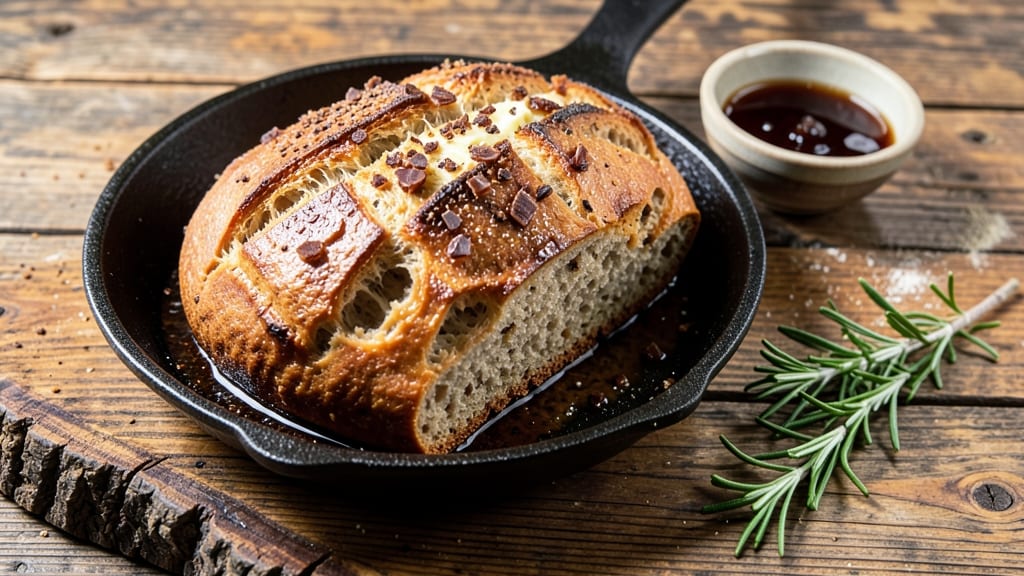
This authentic Jewish rye bread recipe brings the soul of Eastern European bakeries to your kitchen, where dense, slightly sweet crumb meets a dark, crackling crust. 🔥 The secret lies in a traditional sourdough starter—fermented for days—to capture that signature tang and depth that defines Jewish rye bread.
Unlike commercial versions, this loaf is built on generations of Shabbat and holiday traditions, where every bite carries history and warmth.
The process begins with a robust rye starter, enriched with molasses for that signature caramel sweetness, then layered with whole rye flour for texture and heartiness. What makes this recipe truly authentic is the slow fermentation—allowing flavors to develop over hours, not minutes—before shaping into a rustic loaf.
The result? A bread that’s dense yet tender, with a crust so crisp it shatters at the first bite, perfect for sandwiches or served alongside smoked fish.
What sets this recipe apart is its balance of tradition and technique—no shortcuts, just the time-honored methods that give Jewish rye its unmistakable character. The dough’s sticky, elastic texture transforms into a loaf with a deep, aromatic crust and a crumb so rich it practically melts in your mouth.
Whether you’re baking for Shabbat, a holiday feast, or simply craving the comfort of a classic, this loaf delivers restaurant-quality results at home.
Ready to master the art? This recipe includes step-by-step guidance for fermentation, shaping, and baking, plus tips to troubleshoot common pitfalls. The payoff? A loaf so authentic, it’ll taste like your bubbe’s kitchen—just with your own hands shaping the dough. Let’s get started.
Ingredients for authentic jewish rye bread
A traditional sourdough starter and whole rye flour create this iconic bread's signature tang and dense crumb.
| Ingredient | Amount | Notes |
|---|---|---|
| Active Sourdough Starter 🍞 | 1 ½ cups | 100% hydration, well-fed |
| Whole Rye Flour 🌾 | 3 ½ cups | Dark rye for authentic color |
| All-Purpose Flour 🌾 | 1 ½ cups | For structure and lift |
| Unsalted Butter 🧈 | ½ cup | Cold, cubed for flavor |
| Dark Brown Sugar 🍚 | ¼ cup | Packed, for caramel depth |
| Molasses 🍯 | ¼ cup | Unsulfured, for rich tang |
| Active Dry Yeast 🍞 | 2 tsps | Or 1 packet instant yeast |
| Warm Water 💧 | 1 ½ cups | 105-110°F for activation |
| Sea Salt 🧂 | 1 ½ tsps | Fine grain, for balance |
| Honey 🍯 | 1 tbsp | For fermentation boost |
| Sesame Seeds 🌻 | 1 tbsp | Optional, for traditional topping |
| Poppy Seeds 🌻 | 1 tbsp | Optional, for texture contrast |
| Cornmeal 🌽 | ¼ cup | For dusting baking sheet |
The sourdough starter is non-negotiable—this is what delivers the signature tang. Look for dark rye flour at specialty stores like King Arthur Flour or Bob's Red Mill for that authentic, hearty texture. The molasses should be unsulfured, available at health food sections or online—Anthony's Goods is a reliable brand. If you're using a new starter, feed it daily for at least 5 days before baking to ensure robust fermentation. The butter should be cold and cubed to create pockets of richness throughout the loaf—Plugrá or Land O'Lakes work well for this purpose. For the yeast, Saf-Instant is a great choice as it doesn't require activation in warm water.
No dark rye flour? Substitute with a mix of whole wheat and all-purpose flour—use 2 cups whole wheat plus 1.5 cups all-purpose to mimic the texture. Running short on molasses? Maple syrup at half the amount works in a pinch, though it won't have the same depth of flavor. If you're avoiding honey, agave nectar is a suitable substitute, though it may slightly alter the fermentation process. The sesame and poppy seeds are optional but traditional—Trader Joe's carries affordable bulk bins if you want to add them. For the yeast, if you only have active dry yeast, proof it in warm water with a pinch of sugar first before adding to the dough.
This dough needs time—at least 8 hours of cold fermentation for optimal flavor development. Store the starter in an airtight container at room temperature, feeding it daily if you're not using it immediately. The finished loaf keeps well wrapped at room temperature for 3 days, or you can slice and freeze portions for up to 3 months. For best results, bake immediately after shaping—this bread doesn't reheat well, so enjoy it fresh from the oven. The crust will continue to crisp up as it cools, so let it rest for at least 10 minutes before slicing.
Why You'll Love This Recipe
- No-Knead Magic: That sourdough starter does all the work—just mix, rest, and bake. Honestly, the dough comes together in 10 minutes, and the slow rise means I can set it and forget it while I prep dinner.
- Sweet-Savory Crunch: The dark brown sugar adds a subtle caramel depth that balances the earthy rye, while the butter keeps it rich but never heavy. That crispy crust with a tender crumb? It’s the kind of bread you’ll fight over at the table.
- Weeknight Workhorse: Slice it for toast in the morning, pack it for lunch, or serve it warm with schmear. Between us, it’s my go-to for sandwiches, French toast, or even crumbled over salads—no one will guess it’s just rye and a little butter.
- Budget-Friendly Staple: Whole rye flour is cheaper than fancy bread mixes, and a single loaf lasts me nearly a week. Freeze slices for quick toast later, or use day-old bread for croutons—minimal waste, maximum flavor.
Step-by-step instructions for authentic Jewish rye bread
This method delivers the deep molasses flavor and dense crumb of traditional Jewish rye bread.
👨🍳 Step 1: Mix the Wet Ingredients and Activate the Starter
In a large mixing bowl, combine the 1.5 cups Active Sourdough Starter, 1.5 cups Warm Water, 2 tsps Active Dry Yeast, 1 tbsp Honey, and 0.25 cup Molasses. Stir until the yeast dissolves completely and the mixture becomes slightly bubbly. The honey helps activate the yeast quickly, while the molasses adds that signature deep flavor. Let this mixture sit for 10-15 minutes until you see small bubbles forming on the surface—this indicates the yeast is active and ready.
I like to place the bowl in a warm spot (like a turned-off oven with the light on) during this time. The warmth helps speed up fermentation, which is especially important with rye flour that can be dense and slow to rise. If the mixture smells yeasty and slightly sweet, you're on the right track.
👨🍳 Step 2: Combine Dry Ingredients and Form the Dough
In a separate bowl, whisk together the 3.5 cups Whole Rye Flour, 1.5 cups All-Purpose Flour, 0.25 cup Dark Brown Sugar, and 1.5 tsps Sea Salt. The rye flour gives the bread its characteristic dark color and hearty texture, while the all-purpose flour adds structure. Gradually add this dry mixture to the wet ingredients while stirring with a wooden spoon or dough whisk. You'll notice the dough will be sticky—this is normal with rye bread.
Once combined, add the 0.5 cup Unsalted Butter, cut into small cubes. Work the butter into the dough until it's fully incorporated and the mixture becomes slightly elastic. The butter adds richness and helps create that beautiful crust. If the dough feels too stiff, add 1-2 tablespoons of warm water to bring it together. The dough should be soft but manageable—don't overwork it or the gluten will develop too much, making the bread dense rather than tender.
🥘 Step 3: Knead and Bulk Ferment for Depth of Flavor
Turn the dough onto a lightly floured surface and knead for 5-7 minutes until smooth and slightly tacky. Rye dough doesn't need extensive kneading—just enough to develop some structure without overworking it. Shape the dough into a loose ball and place it back in the mixing bowl. Cover the bowl with a damp towel or plastic wrap and let it ferment at room temperature for 2-3 hours, or until it has nearly doubled in size.
This bulk fermentation is where the magic happens. The sourdough starter and yeast work together to create air pockets and develop flavor. You'll see bubbles forming on the surface and the dough will feel light when pressed gently. If your kitchen is cool, extend the fermentation time to 4 hours—the longer it ferments, the more complex the flavor will be. The dough should smell slightly tangy and sweet, with hints of molasses and caramel.
🔥 Step 4: Shape and Final Proof Before Baking
Lightly dust a clean surface with 0.25 cup Cornmeal to prevent sticking. Turn the dough out and gently shape it into a round loaf, about 8 inches in diameter. The cornmeal helps create a crispy crust and prevents the dough from sticking to the surface. Place the shaped dough on a parchment-lined baking sheet and cover it loosely with plastic wrap. Let it proof for 1-2 hours until it has risen noticeably and feels springy to the touch when pressed gently.
For an extra touch of authenticity, sprinkle 1 tbsp Sesame Seeds and 1 tbsp Poppy Seeds on top of the dough before baking. These seeds add texture and a traditional Jewish rye bread finish. The seeds should stick lightly to the dough—if they don't, press them in gently with your fingers. This is the moment where the bread starts to take its final form, so handle it with care.
🔥 Step 5: Bake to a Deep Golden Brown
Preheat your oven to 375°F and place a baking stone or inverted baking sheet on the middle rack. This helps create steam during baking, which is crucial for a crispy crust and open crumb. Once the oven is fully preheated, bake the loaf for 40-45 minutes until the crust is deep golden brown and sounds hollow when tapped on the bottom. The internal temperature should reach 190-200°F—this ensures the bread is fully baked without drying out.
Here's the thing—rye bread can be dense, so don't be tempted to overbake it. The moment the crust turns a rich, dark brown and the bread pulls away slightly from the edges of the parchment, it's done. If you're unsure, check the internal temperature with an instant-read thermometer. Let the bread cool on a wire rack for at least 30 minutes before slicing—this allows the crumb to set and makes it easier to slice without falling apart.
Pro Tips For Making Authentic Jewish Rye Bread
- WEIGH YOUR RYE FLOUR: Rye flour is dense—don’t eyeball it. Use a kitchen scale for precision, especially since whole rye absorbs moisture differently than white flour. I learned this after my first loaf turned into a brick because I guessed the weight.
- STEAM THE OVEN FIRST: Jewish rye bread needs a crisp crust and an open crumb. Place a Dutch oven with boiling water on the bottom rack for 10 minutes before baking—this creates steam that prevents a tough top. (Yes, even if you’re impatient like me.)
- DON’T OVER-KNEAD THE DOUGH: Rye is heavy and sticky; overworking it will make the bread dense. Mix just until the ingredients combine, then let the sourdough starter do the work during bulk fermentation. I used to punch it down like all-purpose dough—big mistake.
- USE COLD BUTTER: Cut the unsalted butter into small cubes and let it sit in the fridge until the dough comes together. Cold butter creates pockets of flavor and texture that melted butter can’t match. (Trust me, your loaf will thank you.)
Creative variations of this dish
Eastern European Style
Inspired by Ashkenazi Jewish bakeries, this variation uses 100% whole rye flour and adds 1 tbsp caraway seeds to the dough for a distinct anise-like aroma. The crust should be extra dark, almost charred in spots, achieved by baking on a preheated cast-iron skillet for the last 10 minutes.
Serve with smoked salmon and cream cheese for a classic New York deli experience. 🌾
Sweet Molasses Twist
Double the molasses to ½ cup and add ½ cup chopped dates to the dough for a sweeter, fruit-infused loaf. This version works beautifully as a dessert bread, perfect for Challah Friday or holiday celebrations.
Brush the baked loaf with a simple egg wash> (1 egg + 1 tbsp water) for extra shine. Store in an airtight container for up to 5 days.
Savory Herb Addition
Stir in 1 tbsp fresh dill and 1 tsp dried marjoram during the bulk fermentation stage for a herbed variation that pairs perfectly with chicken soup or matzo ball soup.
The herbs brighten the molasses flavor while keeping the bread's signature density. For extra depth, sprinkle everything bagel seasoning on top before baking.
Gluten-Free Adaptation
Replace 50% of the all-purpose flour with gluten-free 1:1 baking flour> (like King Arthur Measure for Measure) and add 1 tbsp psyllium husk powder to improve texture. The dough will be stickier, so wet your hands when handling.
Expect a slightly denser crumb but still authentic in flavor. Bake at 350°F for 50-55 minutes to prevent over-browning.
Holiday Spice Version
Add 1 tsp cinnamon, ½ tsp nutmeg, and ½ tsp cloves during the dry ingredient stage for a festive twist. This variation tastes like holiday morning—perfect for Hanukkah or Christmas brunch.
Top with coarse sugar crystals> before baking for a sparkling crust. The spices complement the molasses beautifully, creating a warm, aromatic loaf. 🎄
Quick Overnight Proof
For busy schedules, shape the dough in the evening and refrigerate for 12-16 hours before baking. The cold slows fermentation, intensifying flavors. Let it come to room temperature for 1 hour before baking.
This method yields a loaf with deeper molasses notes and a crispier crust—ideal for Shabbat morning when time is limited. 🕒
Nutrition facts
Frequently asked questions about authentic Jewish rye bread
Why does traditional Jewish rye bread need a sourdough starter?
That tangy flavor comes from the wild yeast and lactic acid bacteria in the starter! The starter ferments over days, creating complex flavors that commercial yeast can't replicate. It also improves digestion and gives the bread its signature dense yet tender crumb. Without it, you'll miss that authentic depth that makes this bread special for Shabbat and holidays.
Can I make this bread without molasses?
You can substitute with maple syrup or dark brown sugar, but molasses is key for that classic caramel sweetness. If you omit it, your bread will taste more like standard rye—less rich and slightly less authentic. For a sweeter version, try adding ½ cup chopped dates instead.
How do I know when the dough is properly fermented?
Look for doubled size and a slightly jiggly surface when pressed gently. The dough should also smell yeasty and sweet with hints of molasses. If it's still flat after 4 hours at room temperature, try a warmer spot (like near your oven with the light on) to speed up fermentation.
Why did my crust turn out pale instead of dark and crispy?
Rye bread needs steam and high heat for a dark crust. Preheat your oven with a baking stone or inverted baking sheet, then bake at 375°F for 40-45 minutes. For extra color, try baking on a preheated cast-iron skillet for the last 10 minutes—this creates those beautiful charred spots!
How long can I store this bread, and can I freeze it?
Wrap the cooled loaf in plastic wrap and store at room temperature for 3-4 days. For longer storage, slice and freeze portions for up to 3 months. To reheat, warm slices in a dry skillet over medium heat for 1-2 minutes per side until crispy again.