
Side Dishes
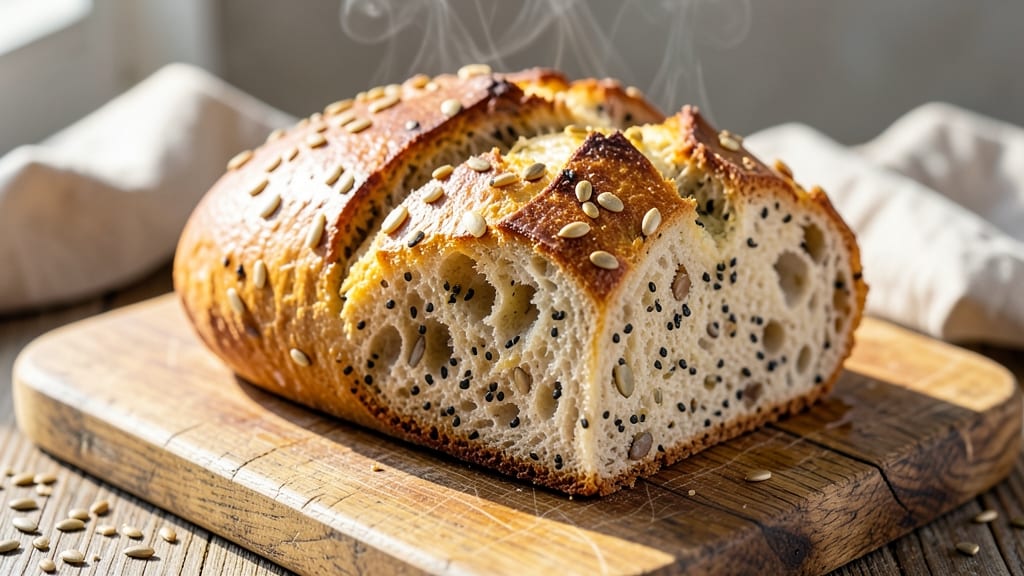
This 7 seed bread recipe delivers the perfect balance of rustic texture and nutty crunch in every slice—ideal for pairing with soups or enjoying toasted with butter. 🌾 The secret lies in the seed blend: flax, sunflower, sesame, and more—each adding distinct flavor and texture while boosting nutrition.
I’ve perfected the hydration ratio and kneading technique to ensure a light, airy crumb with satisfying bite.
The recipe begins with a simple dough that incorporates whole seeds directly, eliminating the need for soaking or grinding. This method preserves their natural oils and crunch while distributing flavor evenly.
Proofing at room temperature allows the dough to develop gently, resulting in a loaf with an open crumb structure and golden-brown crust. The seeds toast slightly during baking, enhancing their nutty aroma.
What you’ll end up with is a versatile loaf that’s perfect for sandwiches, toast, or serving alongside hearty stews. The seeds provide a satisfying texture contrast, while the bread’s mild sweetness complements both savory and sweet toppings.
This recipe is designed for home bakers—no special equipment required, just patience and attention to detail during the proofing stage.
For best results, let the bread cool completely before slicing to maintain its structure. Store wrapped at room temperature for up to 3 days or freeze for longer shelf life.
The seeds not only elevate flavor but also add fiber, protein, and healthy fats, making this bread a nutritious choice for any meal.
Ingredients for 7 seed bread
Seven seeds, two flours, and a touch of honey—this is your rustic bread pantry raid checklist.
| Ingredient | Amount | Notes |
|---|---|---|
| All-Purpose Flour 🌾 | 5 cups | Unbleached preferred for better texture |
| Whole Wheat Flour 🌾 | 1 cup | For nutty depth and added fiber |
| Active Dry Yeast 🍞 | 2 ¼ tsp | Ensure yeast is fresh for best rise |
| Granulated Sugar 🍚 | ¼ cup | Balances sweetness and feeds yeast |
| Salt 🧂 | 2 tsp | Diamond Crystal preferred for precise measurement |
| Flax Seeds 🌱 | ½ cup | Whole seeds for crunch and omega-3s |
| Sunflower Seeds 🌻 | ½ cup | Toasted for enhanced nutty aroma |
| Sesame Seeds 🌿 | ¼ cup | Whole seeds for texture and sesame flavor |
| Pumpkin Seeds 🎃 | ¼ cup | Pepitas for added crunch and protein |
| Chia Seeds 🌱 | ¼ cup | Whole seeds for gel-like texture when hydrated |
| Poppy Seeds 🌸 | ¼ cup | For subtle sweetness and delicate crunch |
| Warm Water 💧 | 2 ¾ cups | 110°F for optimal yeast activation |
| Extra-Virgin Olive Oil 🫒 | ½ cup | For dough elasticity and flavor |
| Honey 🍯 | 2 tbsp | Enhances browning and sweetness |
The seeds are the stars here, so buy them from bulk bins—they stay fresher longer and cost less. Trader Joe's has an unbeatable seed mix if you're short on time, but toasting them yourself (5 minutes in a dry pan) brings out their nutty flavors. The flours matter too: King Arthur all-purpose gives the best rise, while Bob’s Red Mill whole wheat adds hearty texture. Fresh yeast is non-negotiable—if it’s past its expiration, your bread will be flat. For the honey, local raw honey adds subtle floral notes that jarred versions can’t match.
No flax seeds? Substitute with extra sunflower seeds—they’ve got a similar crunch. Whole wheat flour missing? Oat flour works at half the amount. Running low on sesame? Swap with poppy seeds, but reduce by 25% since they’re smaller. The olive oil can be swapped for avocado oil, but it lacks that fruity depth. For the honey, maple syrup is a 1:1 substitute, though it adds a caramelized flavor. If you’re baking at high altitude, increase the flour by 2 tbsp to compensate for lower air pressure.
This dough is best made fresh, but you can prep it up to 24 hours ahead—just refrigerate the shaped loaf and proof it straight from the fridge. The seeds toast beautifully during baking, so bake at 375°F for that perfect golden crust. Store wrapped in a canvas bag at room temperature for 5 days, or freeze slices for up to 3 months. The seeds keep the bread from getting stale, so you’ll actually enjoy this loaf days after baking—unlike your basic white bread.
Why You'll Love This Recipe
- No-Knead Magic: The dough comes together in five minutes—just mix, let it rise overnight, and bake. I swear, my lazy Sunday mornings now include fresh bread without a single flip or fold.
- Nutty Crunch Surprise: Those seven seeds (sunflower, pumpkin, sesame, flax, etc.) add a satisfying bite with every slice. The whole wheat keeps it hearty, but the seeds make it feel like a treat.
- Meal Prep MVP: Bake a loaf on Sunday, and you’ve got toast, sandwiches, or charcuterie board bread all week. It stays fresh for days, and the flavor only gets better as it sits.
- Budget-Busting Staple: Whole wheat flour and pantry staples mean this costs pennies per slice. Honestly, it’s the kind of bread that makes grocery day feel like a win—without sacrificing taste.
Step-by-step instructions for 7 seed bread
Here's how to craft a loaf packed with nutty crunch and rustic charm—every bite delivers texture and flavor.
👨🍳 Step 1: Activate the Yeast and Mix the Wet Ingredients
In a large mixing bowl, combine the 2.75 cups warm water (around 110°F) with the 2.25 tsp active dry yeast and 2 tbsp honey. Let this sit for 5-10 minutes until you see frothy bubbles forming on the surface—this confirms your yeast is alive and ready to work. Here's the thing: if nothing happens after 10 minutes, your yeast might be dead. Toss it and start fresh with fresh yeast.
Once bubbly, whisk in the 0.5 cup extra-virgin olive oil and 0.25 cup granulated sugar. The sugar helps feed the yeast while adding subtle sweetness to balance the nuttiness of the seeds. This liquid mixture should look slightly syrupy but still pourable—this ensures proper dough hydration for an open crumb structure.
👨🍳 Step 2: Combine the Dry Ingredients and Seeds
In a separate large bowl, whisk together the 5 cups all-purpose flour, 1 cup whole wheat flour, and 2 tsp salt. The whole wheat flour adds depth and fiber, while the salt enhances the nutty flavors of the seeds. Add all the seeds—0.5 cup flax seeds, 0.5 cup sunflower seeds, 0.25 cup sesame seeds, 0.25 cup pumpkin seeds, 0.25 cup chia seeds, and 0.25 cup poppy seeds—and stir gently to distribute them evenly.
Here's where it gets fun: the seeds need to be evenly dispersed throughout the dough. I like to use my hands to break up any seed clumps, ensuring each bite delivers that perfect crunch. Don't worry about overmixing—these seeds are tough and won't get mushy like delicate ingredients.
🥘 Step 3: Mix and Knead the Dough
Pour the wet ingredients into the dry ingredients and mix with a wooden spoon until a shaggy dough forms. Then, turn it out onto a lightly floured surface and knead for 8-10 minutes until the dough becomes smooth and elastic. You'll know it's ready when it springs back slowly when poked.
This kneading step develops gluten, which gives the bread its structure. I press down gently on the dough during the first minute—this prevents it from curling and ensures even contact with the surface. If the dough feels too sticky, add 1-2 tablespoons of all-purpose flour at a time, but don't overdo it or the bread will be dense.
⏰ Step 4: Let the Dough Rise
Place the dough in a lightly greased bowl, cover it with a clean kitchen towel, and let it rise in a warm place for 1-1.5 hours or until it has nearly doubled in size. The warmth helps the yeast work efficiently, and the towel keeps the dough from drying out. Here's the crucial part: don't let it rise too long or the bread will collapse during baking.
I like to place the bowl on top of my turned-off oven with the light on for gentle warmth. You'll see the dough puff up dramatically—this is when the magic happens. When the dough feels light and springs back when poked, it's ready for shaping. If it doesn't rise well, your yeast might be old or the water wasn't warm enough.
🔥 Step 5: Shape, Proof, and Bake
Punch down the risen dough to release any air bubbles, then shape it into a 9x5-inch loaf pan. Brush the top with a little water and sprinkle with additional seeds if you like extra crunch. Let it proof for another 30-45 minutes until it rises about an inch above the pan.
Preheat your oven to 375°F and bake the bread for 35-40 minutes until the top is golden brown and sounds hollow when tapped. The internal temperature should reach 190-200°F. Here's the moment that matters: don't open the oven during baking or the bread will sink. If the top browns too quickly, tent it loosely with foil.
Once baked, remove the bread from the pan and let it cool on a wire rack for at least 30 minutes before slicing. This resting period allows the crumb to set and prevents a gummy texture. Each slice should reveal an open crumb with pockets of air and those beautiful seeds scattered throughout—proof that all your effort paid off.
Pro Tips For Making 7 Seed Bread
- Bloom the yeast warm: Skip the lukewarm water guesswork—dissolve the yeast and sugar in water heated to 105-110°F (40-43°C). If it doesn’t foam within 5-10 minutes, your kitchen’s too cold, and the dough will fight you later. I learned this the hard way after kneading a sluggish, flat loaf.
- Mix flours separately first: Combine the all-purpose and whole wheat flours in their own bowls before mixing—this prevents the whole wheat’s heavier texture from weighing down the dough prematurely. Whole wheat absorbs moisture differently, and blending them upfront saves you from over-kneading to compensate.
- Don’t rush the first rise: Let the dough rise until it’s nearly doubled—yes, it’ll take 1.5–2 hours, even if the recipe says 1 hour. I used to cut corners here, and the seeds would stay raw or the crumb turn dense. Patience here guarantees a light, airy texture with properly toasted seeds.
- Shape tightly, seal well: Press the dough into a tight round loaf (not a blob) and pinch the seams shut to trap gases. If the edges gape, steam will escape during baking, leading to a sad, uneven rise. My grandmother’s trick: Roll it like a burrito—snug but not stretched. The crust will thank you.
Wine and beer pairings for this 7 seed bread
Crisp White Wine
A dry Riesling or Sauvignon Blanc from Germany or New Zealand cuts through the bread's nutty richness beautifully. The acidity in these wines refreshes your palate between bites, while their citrus notes complement the seeds' earthiness.
I love pairing this bread with a 2022 Dr. Loosen Blue Slate Riesling—its mineral finish balances the toasted seeds perfectly. 🍷
Malty Amber Ale
For beer lovers, a Belgian-style amber ale or American pale ale works wonderfully. The caramel and toasty malt flavors in beers like Allagash Amber or Fat Tire mirror the bread's baked notes, while the hop bitterness prevents the pairing from becoming too heavy.
Try a 12-14% ABV> beer to stand up to the bread's robust texture.
Light Red Options
If you prefer red wine, opt for a Pinot Noir with bright acidity and red fruit notes. A Willamette Valley Pinot Noir like Domaine Serene complements the seeds' nuttiness without overpowering them. Avoid bold Cabernets or Syrahs—their tannins can clash with the bread's delicate crumb structure.
Non-Alcoholic Pairings
For a refreshing non-alcoholic option, try sparkling water with lemon or hibiscus iced tea. The effervescence cleanses your palate, while the citrus brightens the bread's nutty flavors. I also love pairing this bread with cold-brewed coffee>—the seeds' crunch contrasts beautifully with the smooth, rich coffee. ☕
Seasonal Adaptations
In summer, a crisp rosé> with its strawberry and citrus notes enhances the bread's sweetness. For winter, a spiced mulled wine**> (like Black Cherry Mulled Wine from Trader Joe's) adds warmth that complements the toasted seeds. The key is matching the drink's temperature and intensity to the bread's texture.
Nutrition facts
Frequently asked questions
Can I make this 7 seed bread without a bread machine?
This recipe is designed for hand mixing and kneading. The kneading process by hand actually helps distribute the seeds more evenly than a bread machine could. Just follow the 8-10 minute kneading instructions and you'll get a perfectly textured loaf. The seeds add wonderful texture without requiring special equipment.
Why does my dough feel too sticky?
Sticky dough is normal with this recipe's high hydration level, but you can adjust it by adding 1-2 tablespoons of flour at a time during kneading. The seeds also absorb moisture, making the dough clingier. If it's extremely sticky, try kneading on a well-floured surface and avoid adding too much extra flour—this can make the bread dense.
How do I store leftover 7 seed bread?
Wrap the cooled loaf in a canvas bag or aluminum foil and store at room temperature for up to 5 days. The seeds help preserve freshness! For longer storage, slice the bread and freeze the slices for up to 3 months. Toast frozen slices directly from the freezer for best results.
Can I substitute any of the seeds?
Yes, but maintain the 2.5 cups total seed quantity. Good swaps include: extra sunflower seeds for flax, hemp seeds for chia, or toasted pumpkin seeds for sesame. Just remember that different seeds have different textures—some may be oilier or crunchier than others. Toasting any substitutions will enhance their flavor!
What's the best way to reheat sliced 7 seed bread?
For crispy toast, heat slices in a toaster or toaster oven at 375°F for 3-5 minutes. For sandwiches, warm slices in a dry skillet over medium heat for 1 minute per side. Never microwave—it makes the bread gummy. The seeds stay crunchy when reheated properly!