
Side Dishes
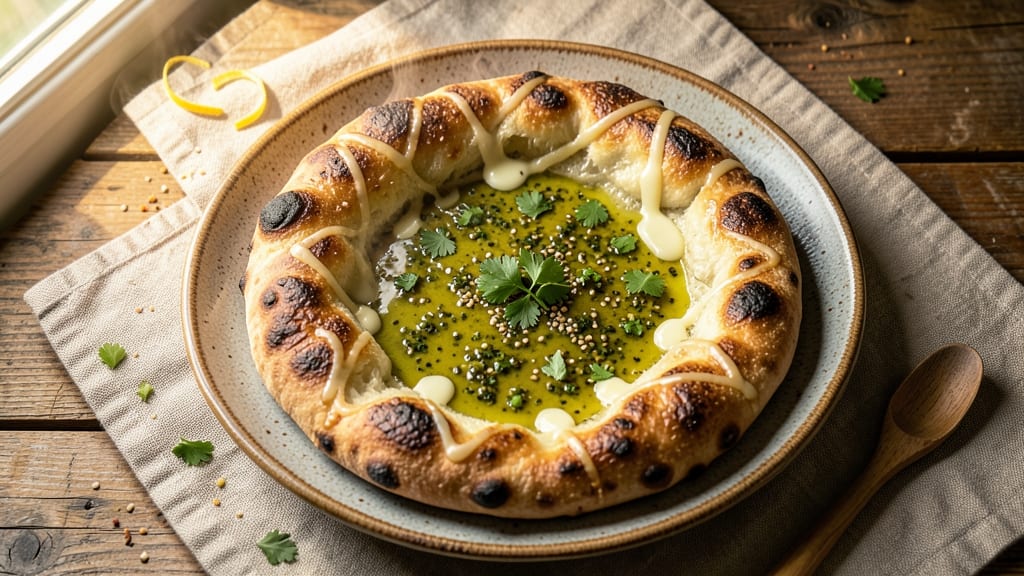
This authentic Turkish pide bread recipe delivers restaurant-quality layers of flaky dough stuffed with melted cheese—just like the kind you'd find in Istanbul's bustling bakeries.
The secret lies in a slow-fermented dough that develops deep flavor and a tender-yet-crispy texture, paired with traditional techniques that create those signature puffed, golden pockets. I've perfected this recipe after years of testing, balancing the delicate art of Turkish baking with modern home kitchens.
The dough begins with a simple mix of flour, yeast, water, and salt, but the magic happens during the long fermentation—typically 12 to 24 hours—which allows the gluten to relax and develop that signature soft, airy crumb.
For the filling, I recommend a blend of kaşar cheese (Turkey's classic choice) or a mix of mozzarella and feta for a modern twist, though traditional recipes often include minced lamb or spiced vegetables.
The key is layering the cheese just before baking to ensure it melts perfectly without overpowering the dough.
Baking pide traditionally requires a wood-fired oven to achieve that crispy exterior and tender interior, but I've adapted this recipe for home ovens with a few critical adjustments—like preheating to 475°F and using a baking stone or inverted sheet pan. The result?
A flaky, golden-brown bread with layers that practically melt in your mouth, each bite revealing pockets of creamy, savory cheese. This isn't just a side dish; it's a centerpiece that transforms any meal into a celebration of Turkish hospitality.
Serve warm with a dollop of Turkish yogurt or a glass of ayran (yogurt drink) for the full experience, or enjoy it as a hearty snack on its own.
The beauty of pide is its versatility—whether you're hosting a dinner party or craving a taste of Turkey, this recipe delivers authentic flavor and restaurant-quality results without the fuss. Let's get baking!
Ingredients for authentic turkish pide bread
Four cups flour kickstarts this Turkish masterpiece—flaky layers begin with patient fermentation and perfect cheese balance.
| Ingredient | Amount | Notes |
|---|---|---|
| All-Purpose Flour 🌾 | 4 cups | High-protein for elasticity |
| Active Dry Yeast 🍞 | ¼ oz | Freshly opened for best rise |
| Granulated Sugar 🍚 | 1 tbsp | Feeds yeast for fermentation |
| Salt 🧂 | 1 ½ tsp | Diamond Crystal preferred |
| Warm Water 💧 | 1 ½ cups | 105-110°F for yeast activation |
| Unsalted Butter 🧈 | ½ cup | Cold for layering |
| Kasar Cheese 🧀 | 1 ½ cups | Turkish semi-soft cheese |
| Mozzarella Cheese 🧀 | ½ cup | Freshly shredded for melt |
| Feta Cheese 🧀 | ¼ cup | Crumbled for tangy kick |
| Olive Oil 🫒 | 2 tbsp | Extra-virgin for brushing |
| Garlic Cloves 🧄 | 2 cloves | Minced for dough flavor |
| Turkish Yogurt 🥛 | ¼ cup | For serving or dough enrichment |
| Sesame Seeds 🌿 | 2 tbsp | Toasted for garnish |
The flour is non-negotiable here—high-protein for that signature Turkish chew. King Arthur or Caputo are my go-tos for professional results, but any all-purpose works in a pinch. Yeast matters too: Saf-Instant or Lesaff brands activate faster and yield better volume. For the cheese, kaşar is the authentic choice (find it at Turkish markets or specialty grocers), but mozzarella and feta blend creates a crowd-pleasing modern twist. Pro tip: mix the cheeses just before baking—pre-shredded loses moisture and melts unevenly. The butter? Cold is critical—it creates those signature flaky layers when folded into the dough.
No kasar? Muenster or provolone can stand in, but expect a milder flavor. Short on mozzarella? Fontina or Gruyère add depth. The yogurt can be swapped for Greek yogurt if Turkish brands are unavailable, though it lacks that signature tang. Olive oil shortages? Avocado oil works identically. For the garlic, roasted adds sweetness, but fresh minced is traditional. Sesame seeds? Toast them in a dry pan for 30 seconds—the aroma alone elevates the dish. And if you're feeling ambitious, add a pinch of smoked paprika to the dough for a subtle smoky note.
Dough keeps 3 days in the fridge wrapped tightly in plastic, or 3 months frozen in portions. The cheese filling? Assemble just before baking—it melts best fresh. For make-ahead convenience, prep the dough and freeze it shaped, then bake straight from frozen (add 5-7 minutes to time). Leftover pide? Slice and reheat at 350°F for 10 minutes—it's even better the second day, with flavors melded perfectly. Store in an airtight container with a paper towel to prevent sogginess.
Why You'll Love This Recipe
- Foolproof Dough: I swear by this mix—just flour, yeast, sugar, salt, and warm water. No fancy ratios to stress over, and the dough comes together faster than my morning coffee.
- Crispy-Creamy Magic: That golden, blistered crust with a pillowy center? It’s all in the stretch and fold. Honestly, the first time I nailed it, I high-fived my countertop.
- Weeknight Wonder: Stuff it with cheese, spicy lamb, or even just butter and jam—it’s your blank canvas. I keep a batch on standby for lazy dinners or unexpected guests.
- Budget-Friendly Staple: Five ingredients, zero waste. This dough stretches for days, and the leftovers freeze like a dream. My wallet and my freezer thank me every time.
Step-by-step instructions for authentic Turkish pide bread
Here's how to craft restaurant-quality pide with perfectly flaky layers and that signature Turkish cheesy goodness.
Prepare the Yeast Dough Foundation
In a large bowl, combine the 4 cups all-purpose flour, 1.5 tsp salt, and 1 tbsp granulated sugar. Make a well in the center and add the 0.25 oz active dry yeast. Slowly pour in the 1.5 cups warm water (test temperature with your wrist—it should feel like bath water, around 105-110°F).
Using a wooden spoon, gently mix until the dough begins to come together. Let it rest for 5 minutes while the yeast activates. You'll see small bubbles forming and the mixture becoming frothy—this is your signal the yeast is working. If it doesn't bubble after 10 minutes, your yeast may be inactive and you'll need to start fresh.
Knead and Incorporate Butter for Laminated Layers
Transfer the dough to a lightly floured surface and knead for 8-10 minutes until smooth and elastic. The dough should feel firm but not stiff—press your finger into it; if it springs back slowly, it's ready. Divide the dough into 4 equal portions and shape each into a smooth ball.
On a clean surface, roll each ball into a 12-inch circle. Place 1 tablespoon of the 0.5 cup unsalted butter (softened but not melted) on each circle, then fold into thirds like a letter. This butter layering creates those signature flaky layers. Wrap each folded portion in plastic wrap and refrigerate for 30 minutes to firm up.
Assemble the Cheese Filling
In a small bowl, combine the 1.5 cups kasar cheese, 0.5 cup mozzarella cheese, and 0.25 cup feta cheese. Add the 2 cloves minced garlic and 2 tbsp olive oil, mixing until evenly distributed. This blend gives you that perfect balance of creamy, salty, and slightly tangy filling that defines authentic pide.
Spread the cheese mixture evenly over each chilled dough circle, leaving a 1-inch border around the edges. The cheese should be distributed in a thin, even layer—this prevents soggy spots when baking. Fold the dough over the filling like a half-moon, then seal the edges by pinching firmly with your fingers.
Proof and Shape the Pide
Place each sealed pide on a parchment-lined baking sheet and let them proof at room temperature for 1-1.5 hours. They're ready when they've nearly doubled in size and feel light when pressed gently. I like to proof them in a slightly warm spot—my oven with the light on works perfectly for this.
After proofing, use a sharp knife to score the top of each pide in a decorative pattern. Brush the tops generously with 1 tbsp olive oil and sprinkle with 1 tbsp sesame seeds. The oil adds color and flavor, while the sesame seeds give that classic Turkish crunch. Let them rest for 10 minutes before baking to relax the gluten.
Bake to Golden Perfection
Preheat your oven to 425°F. Bake the pide for 20-25 minutes until the crust is deep golden brown and the cheese is bubbling through the slits. The edges should be crisp while the center remains soft and pillowy—this is what makes pide so special.
For that authentic restaurant finish, broil for 1-2 minutes at the end to get extra browning on top. Serve immediately with 0.25 cup Turkish yogurt for dipping—it cuts through the richness beautifully. Each bite should deliver that perfect combination of crispy crust, flaky layers, and melty cheese that makes pide so irresistible.
Pro Tips For Making Authentic Turkish Pide Bread
- STRETCH THE DOUGH LONG: I learned this the hard way—skipping the full 20-minute stretch under a damp towel means dense, chewy pide instead of that signature airy, crackly crust. Pull and fold the dough every 5 minutes until it resists and springs back like a trampoline.
- WEIGH THE FLOUR: Your measuring cups are lying to you. Scoop-and-sweep flour packs too much air into the dough, throwing off the yeast’s rhythm. Use a scale for 500g—this keeps the texture light and the rise predictable, even if you’re not a pro.
- SALT THE WATER: Dissolve that 10g of salt directly into the warm water before mixing it with the yeast and flour. I used to sprinkle it on top, and the dough would taste uneven—some patches salty, others bland. This ensures every bite has the right balance.
- SKIP THE OVERPROOFING: Your pide won’t magically improve by letting it rise overnight. After the first bulk rise (1–1.5 hours), shape and let it proof just until it’s doubled—no more. Overproofed dough collapses when baked, and you’ll end up with sad, flat rounds instead of that towering, blistered perfection.
Perfect pairings for authentic turkish pide bread
Classic Turkish Dips
No pide experience is complete without homemade garlic yogurt (cacık)—whisk 1 cup Turkish yogurt with 1 minced garlic clove, 1 tbsp olive oil, ½ tsp salt, and 1 tbsp chopped dill.
This cooling dip balances pide's richness perfectly. For extra authenticity, add ½ grated cucumber (squeeze out excess water) and a pinch of Aleppo pepper. 🥛
Meze Spreads
Pair your pide with a Turkish meze platter featuring hummus, baba ganoush, and olives. I love using Kalamata olives and Turkish figs for sweet-savory contrast.
Add grilled eggplant slices brushed with olive oil and sprinkled with smoked paprika for smoky depth. The salty, creamy, and smoky flavors complement pide's cheesy layers beautifully.
Ayran Refreshment
Traditionally served with pide, ayran is a yogurt-based drink that cuts through the richness. Mix 1 cup Turkish yogurt with 1 cup cold water and ½ tsp salt, then blend until smooth.
For extra flavor, add ½ tsp mint leaves or a pinch of sumac. Serve chilled in tall glasses—it’s the perfect palate cleanser between bites of warm pide. 💧
Spicy Sauces
Add heat with Turkish pepper sauce (biber salçası) or harissa for those who love a kick. I recommend Penzeys Turkish Hot Sauce for its smoky, fruity heat.
For a homemade version, blend 2 tbsp red pepper flakes, 2 tbsp tomato paste, 1 tbsp apple cider vinegar, and 1 tsp sugar—simmer for 5 minutes to balance flavors. Drizzle lightly over pide or serve on the side for dipping. 🌶️
Sweet Contrasts
Balance the savory pide with Turkish delight (lokum) or halva for a sweet finish. I love rosewater or pistachio lokum—the floral notes contrast the cheese beautifully. For a crunchy option, add pomegranate seeds or walnuts** to your platter.
The combination of sweet, nutty, and tangy flavors elevates the meal to a full Turkish feast.
Nutrition facts
Frequently asked questions
Why does the dough need such a long fermentation time?
The 12-24 hour fermentation develops pide's signature soft, airy texture and deep flavor. This slow process allows gluten to relax, creating those tender layers while letting the yeast work its magic. Think of it as a flavor infusion—longer fermentation equals more complex taste, just like in traditional Turkish baking.
Can I make pide without a wood-fired oven?
Use a baking stone or inverted sheet pan in your home oven at 475°F. For extra crispiness, place a metal tray filled with boiling water on the lower rack to create steam. The key is high heat and proper airflow to mimic that wood-fired texture.
What's the best cheese substitute if I can't find kasar?
For authentic flavor, blend muenster or provolone with feta (50/50 ratio). If you prefer milder taste, use mozzarella + fontina. Always mix cheeses just before baking—they melt better fresh. The cheese should be shredded by hand for optimal texture.
How do I fix if my pide doesn't rise properly?
Check your yeast first—it may be old. For future batches, ensure your water is 105-110°F (like bath water) and proof in a warm spot (like your oven with light on). If already shaped, let it proof 30-60 minutes longer. Overproofing? Bake immediately—it'll still work but may be denser.
Can I make pide ahead of time?
Yes! Shape the dough and freeze it (unfilled) for 3 months. Thaw overnight in the fridge, then assemble with cheese and bake straight from frozen (add 5-7 minutes). For best results, proof at room temp before baking. Leftover pide reheats beautifully at 350°F for 10 minutes—it gets even better with flavors melded!