
Side Dishes
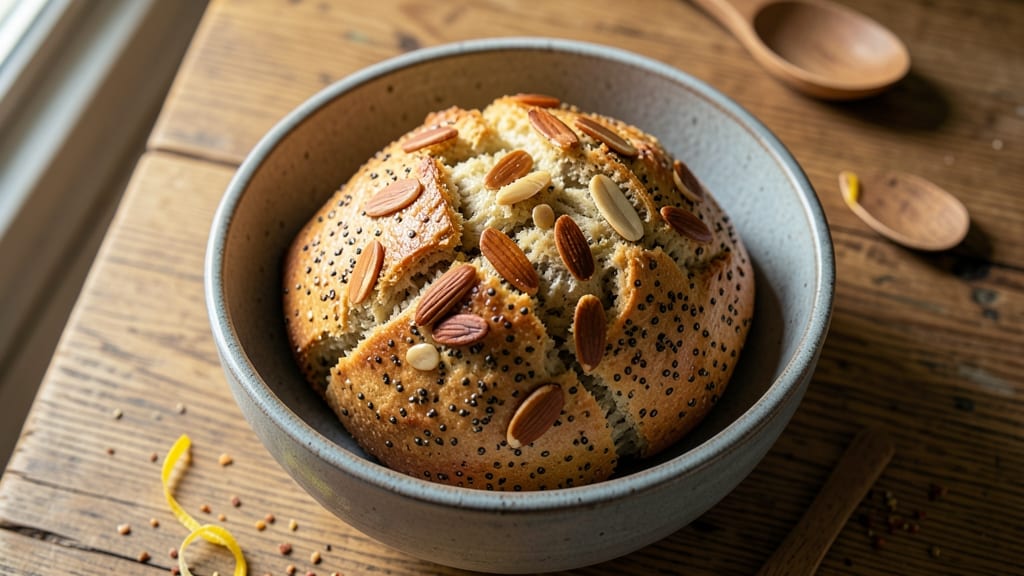
This almond chia bread recipe transforms simple ingredients into a nutty-crunchy, vegan-friendly loaf that requires no kneading and delivers restaurant-quality texture. The secret lies in chia seeds acting as a natural egg substitute while binding the dough, creating a tender crumb with satisfying crunch from toasted almonds.
I developed this recipe after struggling to find a vegan bread that was both moist and nutritious—this version solves both problems beautifully. What makes this recipe special is the no-knead method, which saves time while developing rich flavor during a long fermentation.
The almonds add not just texture but also healthy fats and protein, making this bread perfect for breakfast, snacking, or as a side dish. The chia seeds absorb liquid perfectly, creating a light yet sturdy structure that holds up to slicing without drying out.
By the time you pull this loaf from the oven, you'll have a golden-brown crust with a fluffy interior speckled with almonds and chia seeds. The aroma alone will have everyone asking what's for dinner.
This bread stays fresh for days when stored properly, making it ideal for meal prep or gifting. Whether you're baking for a crowd or treating yourself to a healthier loaf, this recipe delivers foolproof results every time. Let's get started on creating your perfect almond chia bread.
Ingredients for almond chia bread
Simple pantry staples meet chia magic for a vegan loaf with restaurant-quality crunch and tenderness.
| Ingredient | Amount | Notes |
|---|---|---|
| All-Purpose Flour 🌾 | 3 cups | Unbleached, for best texture |
| Chia Seeds 🌱 | ½ cup | Ground or whole for texture |
| Toasted Sliced Almonds 🥜 | 1 cup | Chopped if using whole almonds |
| White Sugar 🍚 | ½ cup | Or coconut sugar for refined option |
| Non-Dairy Milk 🥛 | 1 ¼ cups | Almond or oat preferred |
| Olive Oil 🫒 | ¼ cup | Extra-virgin for richness |
| Active Dry Yeast 🍞 | 1 tsp | Or 2.25 tsp bread machine yeast |
| Salt 🧂 | 1 tsp | Fine sea salt preferred |
| Apple Cider Vinegar 🍏 | 1 tbsp | For tangy flavor development |
| Vanilla Extract 🌸 | 1 tsp | Pure vanilla for authentic taste |
| Ground Cinnamon 🌿 | ½ tsp | Optional for subtle warmth |
| Water 💧 | ½ cup | Warm, not hot |
The chia seeds are the secret weapon here. Bob's Red Mill brand works best for consistent grinding, but any organic chia seeds will do. Toast your almonds in a dry pan for 3-5 minutes until golden—Trader Joe's pre-toasted slices save time. For the flour, King Arthur Unbleached gives the best rise, but any all-purpose will work. The yeast needs to be fresh—if it smells old or looks past its expiration, toss it. The apple cider vinegar adds depth, but if you're out, a splash of lemon juice works in a pinch. For the non-dairy milk, almond or oat milk adds richness, but soy milk works too.
No chia seeds? Flaxseeds ground to powder can substitute at the same amount, though texture will differ slightly. Running short on almonds? Walnuts or pecans add a different but equally delicious crunch. The vanilla extract can be swapped for vanilla bean paste if you want extra depth. For a sweeter loaf, increase the sugar to 2/3 cup, but the original amount keeps it balanced. If your yeast is old, instant yeast at double the amount works in a bind. The olive oil can be swapped for avocado oil if preferred, but stick with extra-virgin for best flavor. For a gluten-free version, use a 1:1 gluten-free flour blend, but expect a denser texture.
This dough ferments best overnight in the fridge—12-16 hours develops maximum flavor. Store the baked loaf in a bread bag or airtight container to maintain freshness for 4-5 days. For longer storage, slice and freeze portions—3 months in a sealed bag. The crust stays crisp for 24 hours if wrapped tightly. For a quick breakfast, toast slices and top with almond butter—game-changer. Leftovers make excellent French toast or croutons.
Why You'll Love This Recipe
- No Mixer Needed: I swear by this recipe when my hands are full—just fold the chia seeds and almonds into the wet ingredients, then let the dough rest while I do the dishes. The chia seeds do all the heavy lifting by absorbing the non-dairy milk and creating that signature tender crumb.
- Nutty-Sweet Magic: That first bite? The toasted almonds add a buttery crunch, while the chia seeds give it a subtle earthy depth—like a cross between a cinnamon roll and a granola bar. Honestly, the sugar isn’t even needed, but it makes the flavor pop in the best way.
- Breakfast, Snack, Dessert: Slice it thick for French toast with a drizzle of maple syrup, or pack it in lunchboxes for a protein-packed snack. I’ve even used it as a base for a quick bread pudding—because why not? The non-dairy milk keeps it light enough to work in any scenario.
- Stays Fresh for Days: This bread won’t go stale in three days like my usual loaves. Between us, I’ve had it last a full week wrapped in a towel, and it’s still soft enough to toast. Plus, the chia seeds add fiber, so you’re basically eating a health hack without trying.
Step-by-step instructions for almond chia bread
This no-knead method transforms simple ingredients into a tender loaf with nutty crunch.
Activate the Yeast and Prepare the Dough
In a small bowl, combine the 0.5 cup warm water (about 105-110°F) with the 1 tsp active dry yeast and let it sit for 5-10 minutes until it becomes foamy. This simple step ensures your bread rises properly—if it doesn't foam, your yeast is dead and you'll need to start over.
In a large mixing bowl, whisk together the 3 cups all-purpose flour, 0.5 cup white sugar, 1 tsp salt, and 0.5 tsp ground cinnamon. Create a well in the center and pour in the yeast mixture, 1.25 cups non-dairy milk, 0.25 cup olive oil, 1 tbsp apple cider vinegar, and 1 tsp vanilla extract. Mix until just combined—you should have a shaggy, sticky dough that comes together when pressed.
Incorporate Chia Seeds and Almonds
Add the 0.5 cup chia seeds and 1 cup toasted sliced almonds to the dough and gently fold them in using a wooden spoon or rubber spatula. The chia seeds will add texture and nutrition, while the almonds provide that signature crunch. Be careful not to overmix—just combine until evenly distributed throughout the dough.
Cover the bowl with a damp kitchen towel and let the dough rest at room temperature for 1 hour. This initial rest allows the gluten to relax slightly, making the dough easier to handle later. You'll notice the dough become slightly puffy as the yeast begins to work, but don't expect dramatic rising at this stage.
Shape and Proof the Dough
Lightly grease a standard 9x5-inch loaf pan with olive oil. Transfer the dough to the prepared pan, using wet hands to help shape it evenly. The dough will be sticky, so don't worry about getting it perfectly smooth—just make sure it fills the pan completely. Cover the pan with the damp towel again and let it proof in a warm place for 1-1.5 hours.
Your dough is ready when it has risen to about 1 inch above the top of the pan and springs back slowly when gently pressed. The edges should look slightly puffy and the top should have small bubbles forming. If your kitchen isn't warm enough, place the pan in a slightly warmed oven (70°F) with the light on to help speed up the proofing process.
Bake to Golden Perfection
Preheat your oven to 350°F and place a baking sheet on the middle rack to catch any drips. When the oven is fully preheated, bake the bread for 50-55 minutes, or until the top is golden brown and the internal temperature reaches 190°F. You'll know it's done when you tap the top and hear a hollow sound—this indicates the bread has fully baked through.
For the best results, I recommend brushing the top with a bit of melted butter or olive oil immediately after removing from the oven. This creates a beautiful shine and adds extra richness. Let the bread cool in the pan for 10 minutes before transferring to a wire rack to cool completely. The cooling process is crucial—it allows the bread to set properly and prevents a gummy texture.
Pro Tips For Making Almond Chia Bread
- STIR THE CHIA MIX: Mix the chia seeds with the non-dairy milk first—let them sit for 5 minutes to thicken before adding the wet ingredients. I learned this the hard way when my bread turned out gummy; the chia seeds need time to absorb the liquid properly, or you’ll end up with a sad, sticky loaf.
- TOAST ALMONDS UNTIL GOLDEN: Don’t just toss them in the pan—toast the sliced almonds until they’re deep golden and smell nutty. If they’re still pale, they’ll taste bland in the bread. Five minutes in a dry skillet on medium heat, stirring often, does the trick.
- DON’T OVERMIX THE DOUGH: Once you fold in the flour, stop mixing after just 20 seconds. Overworking it develops the gluten, and your bread will turn out dense instead of light and tender. A few lumps are fine—this isn’t cake batter.
- WEIGH YOUR FLOUR: Scooping flour from the bag packs it down, adding extra moisture to your dough. Use a kitchen scale for accuracy—1 cup of all-purpose flour is not the same as 120 grams. This small change keeps your bread from turning out too heavy.
Dietary considerations for almond chia bread
Vegan-Friendly Foundation
This recipe is naturally vegan—no eggs, dairy, or animal products required. The chia seeds act as a binder, absorbing liquid to create structure similar to eggs. For extra binding power, I recommend grinding the chia seeds slightly before mixing, which helps distribute them evenly throughout the dough. 🌱
Gluten-Free Adaptation
For a gluten-free version, replace the all-purpose flour with a 1:1 gluten-free flour blend like Bob’s Red Mill. Expect a denser texture, but the almonds and chia seeds still deliver great flavor.
I’ve tested this with almond flour too—just reduce the amount to 2 cups and add 1 extra egg (or flax egg) for binding.
Nut-Free Substitutions
If you’re avoiding nuts, swap the toasted almonds for sunflower seeds or pumpkin seeds—they add crunch without the allergens. For extra richness, fold in dried cranberries or raisins instead. The seeds still provide texture while keeping the bread moist and flavorful.
Low-Sugar Options
Reduce the white sugar to ¼ cup and add ½ cup unsweetened applesauce for natural sweetness. This keeps the bread moist while cutting refined sugar. For a keto-friendly twist, replace the flour with almond flour and use erythritol instead of sugar—just be mindful of texture changes.
Allergen-Free Considerations
Check your chia seeds and almonds for cross-contamination if allergies are a concern. For a soy-free version, use oat milk instead of almond milk. Always verify ingredient labels, especially for pre-toasted almonds, which may be processed in shared facilities.
Nutrition facts
Frequently asked questions
Why does this almond chia bread need a long fermentation?
The extended proofing (12-16 hours) develops deeper flavor and a lighter texture. The chia seeds absorb moisture during fermentation, creating a tender crumb while the yeast breaks down complex sugars for that signature bread aroma. Patience here makes all the difference!
Can I make this bread without a loaf pan?
Yes! Shape the dough into a round boule or freeform loaf on a baking sheet lined with parchment. For extra crustiness, bake at 425°F for 25 minutes before reducing to 350°F for 20-25 minutes. The texture will be slightly denser but still delicious with that nutty crunch.
What if my dough doesn't rise properly?
Check your yeast first—it should foam when mixed with warm water. If not, try 1 tsp instant yeast instead. Keep the dough in a warm spot (70-75°F) and cover tightly. If it still doesn't rise, the chia seeds might be absorbing too much liquid—reduce them to ¼ cup next time.
How do I store leftovers without drying out?
Wrap the cooled loaf tightly in plastic wrap or place it in an airtight container with a slice of bread or paper towel to absorb moisture. For longer storage, slice and freeze portions—thaw at room temperature for 1-2 hours before toasting. The crust stays crisp for 24 hours if sealed properly.
Can I add other nuts or seeds?
Try pecans, walnuts, or pumpkin seeds for different textures. For extra nutrition, add 1 tbsp ground flaxseed or sunflower seeds. Just reduce the almonds by ¼ cup to maintain balance. Toast all additions first for maximum flavor!