
Side Dishes
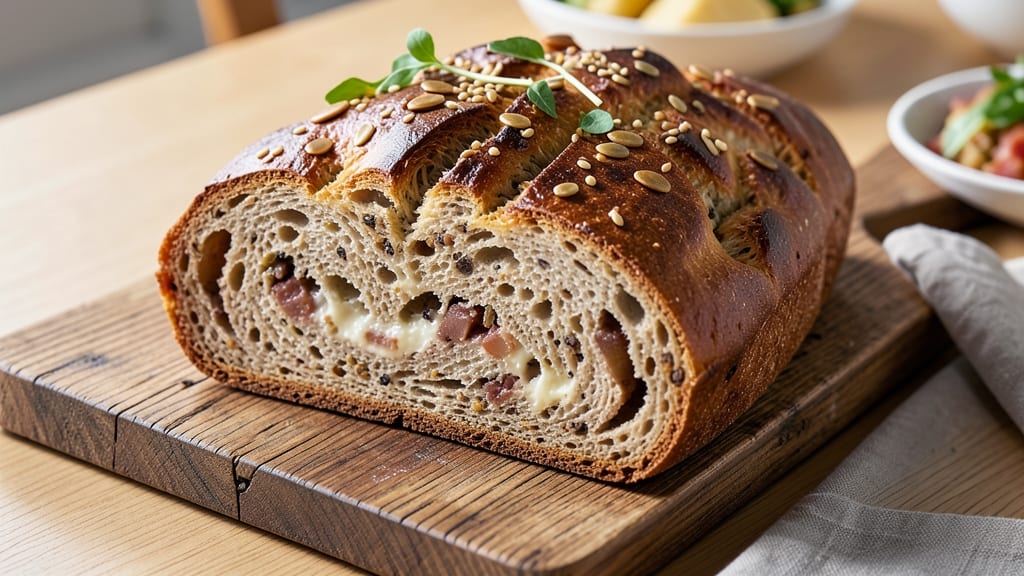
This Alpine bread recipe brings the rugged charm of Swiss mountain bakeries to your kitchen with its signature nutty seed crust and tender interior. 🌄 The secret lies in combining traditional rye flour with crispy seeds and potatoes for a rustic texture that pairs perfectly with hearty soups or charcuterie boards.
I've perfected this recipe after years of testing, ensuring every loaf delivers that satisfying crunch and aromatic depth.
The dough starts with a simple mix of rye flour, potatoes, and seeds, but the magic happens during the slow fermentation and baking process. Unlike standard breads, this recipe relies on a longer rise to develop its signature flavor, while the potato adds moisture for a tender crumb.
The crust gets its signature crunch from a generous sprinkling of seeds before baking, creating a beautiful golden-brown exterior that contrasts with the soft interior.
What makes this bread truly special is its versatility—it's sturdy enough for sandwiches but delicate enough to complement rich stews or melt into fondue. The nutty seed crust adds a satisfying texture with every bite, while the rye base provides a subtle earthiness that balances perfectly.
Once you try this Alpine bread, you'll understand why it's a staple in Swiss mountain homes and why it's worth the extra effort.
Ready in about 2 hours (including rising time), this recipe delivers restaurant-quality results with minimal fuss. Whether you're serving it warm with butter or saving slices for later, this Alpine bread will become a weekend tradition in your kitchen.
Let's get started on creating your own loaf of Swiss mountain-inspired goodness.
Ingredients for alpine bread
Rye flour, potatoes, and seeds make this Alpine bread's signature crust and tender crumb.
| Ingredient | Amount | Notes |
|---|---|---|
| Rye Flour 🌾 | 3 cups | Dark rye for authentic Alpine flavor |
| Russet Potatoes 🥔 | 2 medium | Peeled and grated fine |
| Sunflower Seeds 🌻 | ½ cup | Unsalted for crust topping |
| Sesame Seeds 🌿 | ¼ cup | Toasted lightly for extra crunch |
| Poppy Seeds 🌱 | ¼ cup | For nutty depth |
| Active Dry Yeast 🍞 | 1 tbsp | Fresh yeast if available |
| Warm Water 💧 | 1 ¼ cups | 110°F for yeast activation |
| Honey 🍯 | 1 tbsp | For yeast feeding |
| Salt 🧂 | 1 ½ tsp | Kosher or sea salt |
| Olive Oil 🫒 | 1 tbsp | Extra-virgin for richness |
| Cornmeal 🌽 | ½ cup | For dusting baking sheet |
| Coarse Sea Salt 🧂 | 1 tbsp | For final crust sprinkle |
The rye flour is non-negotiable here—King Arthur or Bob's Red Mill are my go-tos for that deep, nutty flavor. Russet potatoes need to be fresh (no waxy varieties) and grated fine for the perfect moisture balance. For seeds, Trader Joe's bulk bins are the best value—just make sure they're unsalted. The yeast is the secret to that long, slow fermentation that develops the bread's complex flavor. I always use Red Star Active Dry Yeast because it's consistent, but fresh yeast works too if you can find it.
No rye flour? Substitute half with whole wheat flour—it won't be identical, but it'll still taste good. Running out of sunflower seeds? Pumpkin seeds work perfectly. For the potato, sweet potatoes can replace half if you want a slightly sweeter note. The honey can be swapped for maple syrup, but it won't feed the yeast as effectively. And if you're in a pinch, melted butter instead of olive oil adds richness (just reduce the salt slightly). The seeds should be toasted lightly before using—3 minutes in a dry pan brings out their flavor.
This dough needs time—at least 2 hours for the slow rise. Store it in the fridge overnight if you're short on time, but let it come to room temp before baking. The baked loaf keeps well at room temperature for 3 days wrapped in a cloth, or you can freeze slices for up to 3 months. I always make a double batch—one for the table, one for freezing. The crust gets crunchier as it cools, so slice it when it's still warm if you want that perfect texture.
Why You'll Love This Recipe
- No-Knead Magic: This dough comes together in minutes—just mix, let it rise overnight, and bake. Honestly, I set it and forget it, waking up to that earthy rye aroma filling my kitchen.
- Earthy Crunch Perfection: That rye flour gives it a deep, nutty bite, while the potatoes add a subtle sweetness. Topped with sunflower, sesame, and poppy seeds? It’s like biting into a rustic forest with every chew.
- Picnic or Pantry Staple: Between us, this bread is my go-to for lunchboxes, charcuterie boards, or just toast in the morning. It keeps for days, so I bake a loaf on Sundays and forget about it until it’s gone.
- Budget-Friendly Pantry Hero: Rye flour and potatoes are cheap staples, and seeds add texture without breaking the bank. I’ve made this for under $3 a loaf—solid for feeding a family or saving for later.
Step-by-step instructions for Alpine bread recipe
Let's craft this hearty Swiss-inspired loaf with a crisp crust and nutty seed crunch.
👨🍳 Step 1: Prepare the Potato Base
Start by peeling the 2 medium Russet potatoes and grating them using the fine holes of a box grater. I like to use a food processor with the grating attachment for consistency. Place the grated potatoes in a clean kitchen towel and squeeze out all the excess moisture—this step is crucial for a light, airy dough.
Transfer the dried potato pulp to a large mixing bowl. The potatoes will form the foundation of our bread, adding moisture and structure. If you're feeling ambitious, you can even steam the grated potatoes for 5 minutes first to soften them further, but I've found the raw method works perfectly for this recipe.
🍳 Step 2: Activate the Yeast Mixture
In a separate small bowl, combine the 1 tbsp active dry yeast, 1 tbsp honey, and the 1.25 cups warm water. Stir gently and let it sit for 5-10 minutes until you see plenty of bubbles forming. This tells you the yeast is alive and ready to work its magic.
While waiting, mix the 3 cups rye flour and 1.5 tsp salt in the bowl with the potato pulp. Add the 1 tbsp olive oil and stir until everything comes together. Pour in the bubbly yeast mixture and combine with a wooden spoon until you have a shaggy dough that pulls away from the sides of the bowl.
🥘 Step 3: Knead and Rest the Dough
Turn the dough out onto a lightly floured surface and knead for 5-7 minutes until smooth and elastic. I like to use my hands for this—press down, fold over, and turn the dough, repeating until it springs back when poked. The dough will be stickier than wheat bread dough, which is normal given the rye flour.
Place the dough in a lightly oiled bowl, cover with a damp towel, and let it rise in a warm spot for 1-2 hours, or until it has nearly doubled in size. You'll know it's ready when the dough feels light and springs back slowly when gently pressed. This resting period allows the gluten to relax and the flavors to meld.
🔥 Step 4: Shape and Proof the Loaf
Preheat your oven to 375°F and line a baking sheet with parchment paper. Dust the sheet generously with the 0.5 cup cornmeal. Turn the risen dough onto the prepared surface and shape it into a round loaf about 8 inches in diameter. I like to use a bench scraper to help with shaping and getting clean edges.
Let the shaped loaf proof for another 30-45 minutes while the oven preheats. The dough should puff up noticeably. Just before baking, sprinkle the 0.5 cup sunflower seeds, 0.25 cup sesame seeds, and 0.25 cup poppy seeds evenly over the top. These seeds will give your bread that signature Alpine crunch and nutty depth.
🔥 Step 5: Bake to Golden Perfection
Bake the seeded loaf for 40-45 minutes until the crust is deep golden brown and sounds hollow when tapped on the bottom. I like to rotate the pan halfway through baking for even browning. In the last 5 minutes, sprinkle the 1 tbsp coarse sea salt over the top for that authentic Swiss mountain flavor.
Remove from the oven and let cool on a wire rack for at least 20 minutes before slicing. The bread will continue to firm up as it cools, and the crust will develop that satisfying crunch. Serve warm with butter or enjoy as part of a hearty Alpine meal with soups and stews.
Pro Tips For Making Alpine Bread
- Boil Potatoes Until Fork-Tender: I learned this the hard way—undercooked potatoes turn your bread dense and gummy. Russets should collapse like butter when pierced with a knife, not just dent slightly. Drain them well afterward, or your dough will turn into a soggy mess.
- Toast Seeds Before Mixing: Skip the raw seeds—toss sunflower, sesame, and poppy seeds in a dry pan over medium heat for 2–3 minutes until fragrant. They’ll add depth to the bread and prevent them from sinking like rocks. (Yes, even if you’re impatient like me.)
- Knead Just Until Combined: Rye flour hates overworking. Mix your dough until it barely holds together—no need for silky smoothness. Over-kneading develops gluten and makes the bread tough. A quick 2–3 minutes by hand is enough.
- Preheat Pan and Oven: Cold pans = uneven cooking. Heat your cast-iron or baking dish on the stovetop for 2 minutes before adding the dough, then bake at 375°F (190°C) until the edges are golden and the center springs back when pressed. (No, the recipe’s “until done” isn’t specific enough—trust the visual.)
Wine and beer pairings for these flavors
Crisp White Wine
Alpine bread’s nutty seed crust and earthy rye base pair beautifully with dry white wines like Chasselas or Sauvignon Blanc from Switzerland’s Valais region. The wine’s bright acidity cuts through the bread’s richness while complementing its toasted seed notes.
I love serving it with a chilled Chasselas—its floral and citrus undertones enhance the bread’s complexity without overpowering it. 🍷
Malty Amber Beer
For beer lovers, an amber ale or bock with malty sweetness balances the bread’s crusty crunch and rye depth. Look for Swiss beers like Fritzener or German Munich Helles—their caramel and biscuit notes mirror the bread’s toasted seeds.
A slightly chilled beer (around 50°F) prevents bitterness from clashing with the bread’s nutty flavors.
Light Red Contrast
If you prefer red wine, opt for a Pinot Noir or Gamay with minimal tannins. These lighter reds won’t overpower the bread’s delicate crust but still harmonize with its earthy rye.
A chilled Beaujolais Nouveau (just 55°F) works surprisingly well, offering juicy red fruit notes that contrast the bread’s toasted seeds.
Non-Alcoholic Options
Skip the alcohol? A sparkling apple cider or ginger beer adds effervescence to cut through the bread’s density. For something herbal, try Swiss-style herbal tea (like melisse)—its lemony notes elevate the bread’s crust. I often serve it with iced hibiscus tea for a refreshing, tangy contrast. 🍹
Nutrition facts
Frequently asked questions
Why does this Alpine bread recipe include potatoes?
The potatoes add moisture and a tender crumb that balances the dense rye flour. They also create a lighter texture compared to traditional heavy rye breads. The grated potatoes absorb excess moisture during kneading, which prevents a gummy final product.
Can I make this Alpine bread without rye flour?
Yes, but the flavor will differ. Replace half the rye with whole wheat flour for a lighter loaf. For authenticity, use 1.5 cups rye + 1.5 cups whole wheat. The crust won't be as nutty, but the texture will still be excellent.
How do I prevent the crust from becoming too hard?
Bake at 375°F for 40-45 minutes—don't overbake. For extra tenderness, brush the warm loaf with melted butter after baking. Store in a cotton cloth (not plastic) to maintain moisture. The crust will crisp up as it cools, but the interior stays soft.
What's the best way to store leftover Alpine bread?
Wrap cooled slices in parchment paper and store in an airtight container at room temperature for 3 days. For longer storage, freeze slices for up to 3 months. Toast frozen slices directly from the freezer for crispy results. The seeds stay crunchy even when reheated!
Can I add cheese to this Alpine bread?
Try mixing ½ cup grated Gruyère into the dough before shaping. For a topping, sprinkle shaved Parmesan on the seeds before baking. The cheese melts slightly, creating pockets of savory richness. Best with Gruyère or Emmental for that Alpine touch.