
Side Dishes
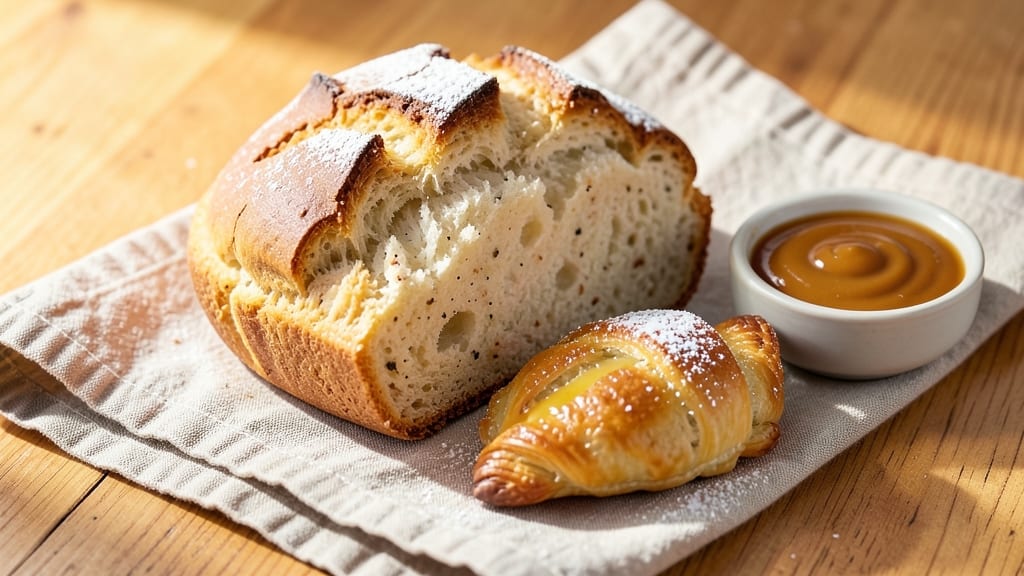
This Argentinian sweet bread recipe delivers the perfect balance of flaky crust and soft, pillowy interior—just like the ones you’d find in Buenos Aires cafés. ✨ The secret lies in using lard for richness and a touch of anise for that signature warmth, creating a dough that’s both tender and slightly crisp at the edges.
I’ve perfected this version over years of baking, ensuring every bite is buttery, slightly sweet, and irresistibly golden.
The process is straightforward but requires patience—kneading the dough until silky smooth, letting it rise slowly, and shaping those iconic crescent medialunas (or round vigilantes) with precision.
The key to a perfect crust is brushing the tops with a mix of melted butter and honey before baking, which caramelizes into a glossy, crackly finish. This recipe makes about 12 pieces, perfect for sharing with coffee or tea.
What sets this apart is the authentic Argentinian touch: a hint of citrus zest (lemon or orange) brightens the dough, while a sprinkle of coarse sugar on top adds a delicate crunch. The result? A bread that’s soft inside, crisp outside, and sweet enough to satisfy any craving.
Whether you’re serving them warm from the oven or storing them for later, these will disappear faster than you can say ¡qué rico!
For a twist, try adding orange blossom water to the dough for vigilantes, or swap honey for a light dusting of powdered sugar. The possibilities are endless, but the foundation—rich, flaky, and undeniably comforting—stays the same. Let’s get baking!
Ingredients for argentinian sweet bread
Twelve pieces of golden, honey-drizzled sweetness—just like Buenos Aires cafés serve.
| Ingredient | Amount | Notes |
|---|---|---|
| All-Purpose Flour 🌾 | 4 cups | Sifted for light texture |
| Granulated Sugar 🍚 | ½ cup | Plus extra for sprinkling |
| Active Dry Yeast 🍞 | 2 ¼ tsp | One packet preferred |
| Whole Milk 🥛 | 1 cup | Warm to 110°F |
| Unsalted Butter 🧈 | ½ cup | Cold, cubed for dough |
| Lard 🧈 | ½ cup | For authentic flakiness |
| Large Eggs 🥚 | 1 whole | Room temperature |
| Orange Zest 🍊 | 1 tbsp | Brightens the dough |
| Ground Anise Seeds 🌿 | ½ tsp | Signature Argentinian flavor |
| Salt 🧂 | ½ tsp | Fine sea salt |
| Honey 🍯 | ¼ cup | For brushing tops |
| Coarse Sugar 🍚 | 2 tbsp | For final sprinkle |
The lard and butter combo is non-negotiable for that signature flaky crust. La Salette or Hormel lard works best—it's what Argentinian bakeries use. If you can't find lard, extra butter (0.75 cup total) plus 1 tbsp vegetable shortening gets you close, but it won't be quite the same. The flour should be King Arthur or AP brand—lower protein for tender crumb. I always buy my anise seeds from Penzeys; they're fresh and potent. The orange zest? Use a fine grater—you want just the outer layer, no bitter pith. And for the love of medialunas, don't skip the honey brushing—it's what turns good into restaurant-quality.
No lard? Substitute with 0.75 cup butter plus 1 tbsp shortening—it's what I do when I'm in a pinch. Running low on orange zest? Lemon zest works perfectly, just use the same amount. The honey can be swapped for maple syrup or agave, but honey's floral notes are traditional. For the yeast, if it's past its expiration date, test it first in warm milk—it should foam within 5-10 minutes. The dough gets sticky, so use a stand mixer with a dough hook or go old-school with your hands. And if you're feeling fancy, add 1 tsp orange blossom water for vigilantes—trust me, it's worth it.
These keep beautifully—3 days at room temperature wrapped in a clean kitchen towel, or 1 week refrigerated in an airtight container. For longer storage, freeze shaped dough balls before baking; they'll keep for 3 months. To reheat, wrap in foil and warm at 300°F for 10 minutes. Pro tip: Brush with melted butter before serving—it's like eating liquid gold. And if anyone asks, these are not just sweet bread—they're a taste of Argentina
Why You'll Love This Recipe
- No-Knead Magic: I swear by this dough—just mix, let it rise, and bake. The yeast and warm milk do all the heavy lifting while you sip your coffee.
- Buttery Sweet Payoff: That rich, caramelized crust from the sugar and butter? It’s the kind of golden-brown goodness that makes you want to eat it straight from the pan.
- Breakfast or Dessert Hero: Serve it warm with jam for a lazy Sunday morning or dust it with powdered sugar for an after-dinner treat. One loaf covers both bases.
- Budget-Friendly Staple: Flour, sugar, and butter are pantry basics, and a single batch feeds the whole family. Leftovers? Toast them for a quick snack—no waste, all flavor.
Step-by-step instructions for Argentinian sweet bread
Get ready to create a tender, honey-kissed loaf with a golden crown—this is where the magic happens!
👨🍳 Step 1: Activate the Yeast and Mix Wet Ingredients
In a small bowl, whisk together the warm whole milk (it should feel like bathwater, around 110°F) with the granulated sugar and active dry yeast. Let it sit for 5-10 minutes until it becomes frothy—this tells you the yeast is alive and ready to work its magic. If it doesn't bubble, your yeast might be dead, and you'll need to start over.
In a large bowl, combine the cold unsalted butter and lard (yes, lard—that's what gives this bread its legendary flakiness). Use a fork or your fingers to cut them into the butter until the mixture resembles coarse crumbs. This cold fat will create those beautiful layers later. Add the orange zest, ground anise seeds, and salt, then mix until evenly distributed.
👨🍳 Step 2: Build the Dough with Flour and Knead Like a Pro
Gradually add the sifted all-purpose flour to the wet ingredients, mixing with a wooden spoon until a shaggy dough forms. Once the flour is incorporated, turn the dough onto a lightly floured surface and knead for 8-10 minutes until smooth and elastic. You're looking for a dough that springs back when poked—this means the gluten has developed properly.
Here's the thing—this dough is going to be slightly sticky, but that's normal. If it feels too wet, add 1 tablespoon of flour at a time until it comes together without sticking to your hands. Shape it into a smooth ball, place it back in the bowl, and cover with a damp towel. Let it rise in a warm place for 1-2 hours or until it doubles in size. A good test is to poke it gently—if the indentation stays, it's ready.
🔥 Step 3: Shape and Proof for the Perfect Rise
Once the dough has risen, punch it down to release the air, then divide it into 12 equal portions (about 2 ounces each). Roll each portion into a smooth ball and place them on a parchment-lined baking sheet, leaving 2 inches of space between them. Cover loosely with the damp towel and let them proof for another 30-45 minutes until they've puffed up noticeably.
This is where the magic of the crusty crown begins. Just before baking, brush the tops of each dough ball with honey using the back of a spoon. Then sprinkle generously with coarse sugar—this will caramelize beautifully in the oven, creating that signature crunchy top. The honey also adds a subtle sweetness that pairs perfectly with the anise flavor.
🔥 Step 4: Bake to Golden Perfection
Preheat your oven to 375°F. Bake the bread for 20-25 minutes until the tops are deep golden brown and the internal temperature reaches 190°F. You'll know they're done when they sound hollow when tapped on the bottom. If the tops brown too quickly, tent them loosely with foil to prevent burning.
Real talk: Don't walk away during the last 5 minutes of baking. That's when the sugar starts caramelizing, and you want to catch it at just the right moment. The bread should pull away from the parchment easily, with a crispy crown and a soft, pillowy interior. Let them cool on a wire rack for 10 minutes before serving—this prevents the honey-glazed tops from getting soggy.
⏰ Step 5: Serve Warm for Maximum Joy
Slice into this beauty while it's still warm, and you'll be rewarded with layers of flaky, buttery goodness infused with orange and anise. The contrast of the crispy sugar crown with the soft, tender crumb is what makes this bread so special. Serve with a cup of coffee or tea, and you've got yourself an authentic Argentinian treat that's perfect for breakfast, dessert, or just because.
Pro Tips For Making Argentinian Sweet Bread
- Warm the Milk First: Dump cold milk straight into the yeast? That’s a one-way ticket to a sad, sluggish dough. Heat the milk to about 110°F (43°C)—just warm enough to melt the butter without cooking it—before mixing with yeast. I learned this the hard way when my first batch took three hours to rise because the yeast was basically hibernating.
- Knead Until Silky: This dough isn’t forgiving if you skimp on kneading. Aim for 8–10 minutes by hand (or 5–6 on a stand mixer with a dough hook) until it’s smooth, elastic, and springs back when poked. The sugar makes it stickier, so resist the urge to add extra flour—just keep folding and pressing. My grandmother swore by this, and she was right: the texture changes everything.
- Don’t Overproof the Dough: The dough is ready when it’s almost doubled in size—usually 1–1.5 hours at room temp. Leaving it too long makes the bread dense and chewy, not fluffy. Poke it gently: if it springs back slowly, it’s good to go. I was skeptical until I tried it—overproofed batches taste like a sad, gummy disappointment.
- Brush with Melted Butter: Skip the water or egg wash—this bread needs a buttery finish. Brush the baked loaves with melted unsalted butter (same kind you used in the dough) while still warm. It’s the thing that matters most for that classic Argentinian sweetness. Yes, even if you’re impatient like me, wait 5 minutes after baking before brushing.
Regional styles of this dish
Buenos Aires Cafés
In Buenos Aires, these sweet breads are known as medialunas, and they’re a staple in every café. Locals often enjoy them with strong Italian coffee or mate tea for breakfast.
The key difference here is the use of lard—many traditional bakeries in Buenos Aires still use it for that signature flaky texture.
I remember my first time trying them in a tiny bakery in Palermo—warm, still sticky from the honey, and so tender they nearly melted in my mouth. 🥖
Vigilantes Style
For a more festive variation, try making vigilantes, which are often shaped into half-moons instead of rounds. These are traditionally flavored with orange blossom water (about 1 tsp) instead of just zest.
The floral note adds a delicate perfume that pairs beautifully with the anise. In Argentina, these are popular during holidays and celebrations—think of them as the sweet equivalent of a festive centerpiece. 🌸
Southern Patagonia Twist
In the cooler regions of Patagonia, bakers often add a pinch of cinnamon (about ½ tsp) to the dough for warmth. The combination of anise and cinnamon creates a cozy, spiced flavor that’s perfect for chilly mornings.
I’ve also seen versions with a splash of rum (about 1 tbsp) in the dough—it adds depth and a subtle boozy note. These are less common but absolutely worth trying if you love bold flavors. ❄️
Cordoba’s Anise Focus
Cordoba, in the heart of Argentina, is famous for its strong anise flavor. Here, the dough often includes an extra ¼ tsp of ground anise seeds for a more pronounced licorice-like taste.
The bread is also sometimes brushed with a mix of honey and anise-infused syrup after baking for an extra layer of flavor. If you’re feeling adventurous, try toasting the anise seeds lightly before adding them to the dough—it intensifies their aroma. 🌿
Modern Argentine Fusion
Today’s bakers are putting their own spin on this classic. Some add dark chocolate chunks (about ½ cup) to the dough for a sweet-and-salty twist, while others incorporate cardamom (about ½ tsp) for a Nordic-Argentinian fusion.
I’ve even seen versions with a drizzle of dulce de leche instead of honey—it’s richer and caramel-like, perfect for those who love that creamy sweetness. The possibilities are endless, but the foundation of flaky, buttery dough remains the same. 💫
Nutrition facts
Frequently asked questions
Can I make this Argentinian sweet bread without lard?
Yes, but the texture will differ slightly. Replace the ½ cup lard with ¾ cup unsalted butter plus 1 tablespoon vegetable shortening for a closer approximation. The butter adds richness while the shortening helps mimic lard's flakiness. For best results, keep the butter cold when mixing with the flour.
How do I store these sweet breads to keep them fresh?
Store them at room temperature in an airtight container for 3 days, or refrigerate for up to 1 week. For longer storage, freeze shaped dough balls (unbaked) for 3 months. To reheat, wrap in foil and warm at 300°F for 10 minutes. Pro tip: Brush with melted butter before serving for extra freshness.
What's the difference between medialunas and vigilantes?
Medialunas are the classic crescent-shaped sweet breads (like croissants), while vigilantes are round and often flavored with orange blossom water instead of zest. Vigilantes also tend to have a slightly denser texture. For vigilantes, add 1 teaspoon orange blossom water to the dough and shape into balls rather than crescents.
Why did my bread turn out dense instead of flaky?
Dense bread usually means the dough wasn't kneaded enough or the fat (lard/butter) wasn't cold enough when mixed. Knead for 8-10 minutes until elastic, and ensure your butter/lard is cold but workable. Also, don't overproof the dough—it should double in size in 1-2 hours. If the oven was too hot, the steam needed for flakiness escapes too quickly.
Can I make this recipe with a stand mixer?
Use the dough hook attachment and mix on low speed until the dough comes together (about 3-5 minutes). Switch to medium speed and knead for 5-7 minutes until smooth and elastic. The stand mixer saves your arms but requires close attention—don't walk away! The dough should pull away from the bowl and spring back when poked.