
Desserts
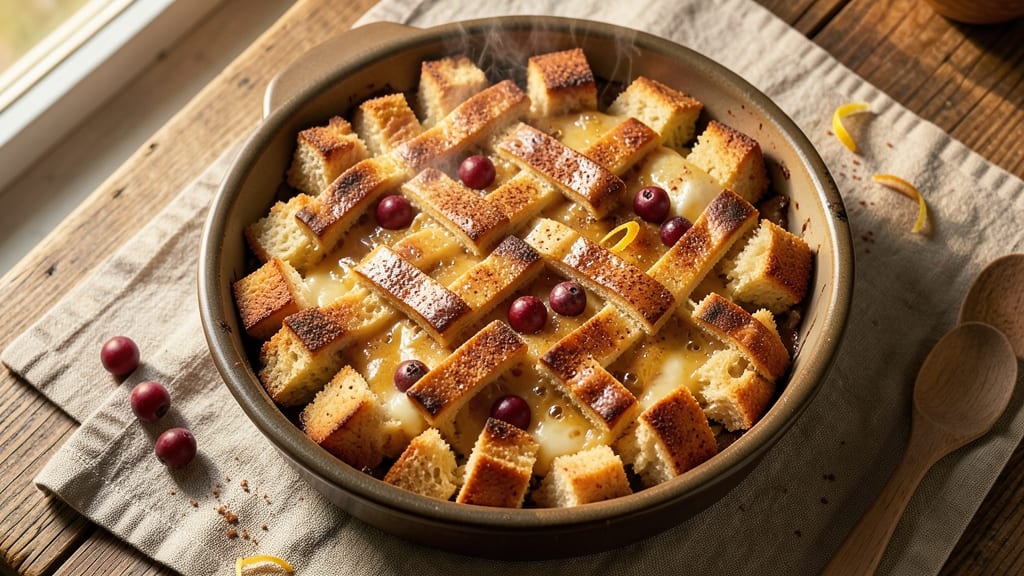
This authentic bread pudding recipe delivers the comforting, golden-topped dessert you crave—where warm vanilla-cinnamon swirls meet a perfectly crisp exterior. The secret lies in soaking stale bread just enough to absorb the custard without turning mushy, then baking until the edges caramelize into a crackly crust.
I've perfected this technique over years of testing, ensuring every bite balances creamy custard with that satisfying crunch.
The foundation starts with day-old bread cut into cubes—never fresh, as it releases too much moisture—and a rich custard of eggs, milk, and vanilla that transforms ordinary bread into something decadent.
A touch of cinnamon and nutmeg infuses warmth, while a sprinkle of breadcrumbs on top guarantees that coveted crispy finish. This isn't just dessert; it's a nostalgic hug in bowl form, with layers of texture and flavor that make it impossible to stop at one slice.
What sets this apart is the balance: tender bread soaked just enough to soften without dissolving, custard that's thick but never grainy, and a top so crisp it shatters when you cut in. The aroma alone—vanilla, cinnamon, and caramelized edges—will have your kitchen smelling like a bakery.
Serve warm with a drizzle of caramel sauce or a dusting of powdered sugar for that final touch of elegance.
Whether you're baking for a family gathering or treating yourself to a cozy weekend dessert, this recipe delivers restaurant-quality results with minimal effort. The method is foolproof, and the variations—like adding raisins, bourbon, or chocolate chips—let you customize it to your taste. Ready to master the art of bread pudding?
Ingredients for authentic bread pudding
Day-old bread, warm custard, and a crispy top—these are the pillars of perfect bread pudding.
| Ingredient | Amount | Notes |
|---|---|---|
| Day-Old Bread 🍞 | 12 cups | Cube into 1-inch pieces |
| Large Eggs 🥚 | 6 whole | Room temperature for even baking |
| Whole Milk 🥛 | 3 cups | Full-fat for creaminess |
| Vanilla Extract 🌿 | 2 tbsp | Pure, high-quality extract |
| Granulated Sugar 🍚 | 1 ½ cups | White sugar preferred |
| Ground Cinnamon 🌶️ | 2 tsp | Freshly ground for warmth |
| Ground Nutmeg 🌿 | ½ tsp | Freshly grated preferred |
| Unsalted Butter 🧈 | ½ cup | Cold, cubed for topping |
| Panko Breadcrumbs 🍞 | ½ cup | For extra crispiness |
| Salt 🧂 | ½ tsp | Kosher salt preferred |
| Powdered Sugar 🍚 | ¼ cup | For final dusting |
| Heavy Cream 🥛 | ½ cup | Optional for extra richness |
The bread is non-negotiable. Day-old loaves from your local bakery—like Panera or Whole Foods—work best, but stale store-bought works too. Look for crusty breads like sourdough or brioche if you want extra texture. Cut into 1-inch cubes for even cooking, and skip the crust if you want a softer center. I always double-check for any crusty bits—they burn before the rest cooks. For variety, try a mix of white and whole wheat bread for depth of flavor.
No vanilla extract? Vanilla bean paste or even a scraped vanilla bean works in a pinch. The cinnamon and nutmeg are where the magic happens—Penzeys or McCormick ground spices are reliable, but fresh nutmeg from a block is a game-changer. If you're feeling fancy, add a pinch of cardamom or cloves for warmth. The milk can be swapped for half-and-half if you want extra richness, but keep it full-fat. For a boozy twist, stir in 1 tbsp bourbon or rum—trust me, it elevates everything.
Prep ahead for maximum flavor. Soak the bread cubes in the custard mixture for 15-20 minutes—no longer, or they'll turn soggy. The custard thickens as it sits, so don't rush. For the crispy top, toss the breadcrumbs with cold butter and sprinkle just before baking. This reheats beautifully—350°F for 15 minutes restores that bakery-fresh aroma. Store leftovers covered in the fridge for 4-5 days, but honestly, it's best enjoyed fresh. Freeze portions for up to 3 months—just thaw overnight in the fridge.
Why You'll Love This Recipe
- No Stale Ingredients Needed: I’ll be real—this recipe uses day-old bread. That means no wasted loaves, no sad grocery runs for "fresh enough" slices. Just tear, soak, and forget about the bread bin until it’s time to bake.
- Golden-Caramel Magic: That crispy top with the custardy center? It’s all in the eggs and sugar—whisked just right, baked until the edges turn almost too perfect to resist. Honestly, the first time I pulled it out, I nearly burned my finger grabbing a piece.
- Breakfast to Dessert: Serve it warm with a drizzle of maple syrup for a lazy Sunday morning, or chill it overnight for a no-fuss dessert that feels fancy. My college kids devour it for breakfast; my in-laws ask for it at dinner parties. It’s that kind of crowd-pleaser.
- Zero-Waste, Zero-Guilt: Cheap ingredients, big payoff. A few eggs, a splash of milk, and whatever bread you’ve got sitting around—no fancy substitutions needed. Plus, leftovers? They’re even better reheated (or not, because it’s hard to resist fresh).
Step-by-step instructions for authentic bread pudding
Here's how to craft that perfect balance of custardy layers and golden, crispy crown.
Prepare the Bread Base
Start by cubing the 12 cups of day-old bread into uniform 1-inch pieces. I like to use a sharp serrated knife for clean cuts—this ensures even baking and better texture. Place the bread cubes in a large bowl and toss them gently with 1 teaspoon of the ground cinnamon and half of the 0.5 teaspoon salt. This initial seasoning helps distribute flavor evenly throughout the pudding.
Arrange half of the seasoned bread cubes in a greased 9x13-inch baking dish, pressing down lightly to create an even layer. The bread should fit snugly but not be overly compacted—this allows the custard to soak through properly. I always use a buttered baking dish for that classic golden-brown finish and easy release.
Whisk the Custard Mixture
In a large mixing bowl, combine the 6 whole room-temperature eggs, 3 cups of whole milk, 2 tablespoons of vanilla extract, the remaining 1 teaspoon cinnamon, 0.5 teaspoon nutmeg, and the 1.5 cups of granulated sugar. Whisk vigorously for about 2 minutes until the mixture is completely smooth and pale yellow. This thorough mixing ensures no lumps remain, which could create dry spots in your pudding.
If using the optional 0.5 cup heavy cream, add it now and whisk again. The cream adds luxurious richness, but the classic version without it is still delicious. The custard should be thick but pourable—this consistency guarantees a creamy texture without being too heavy.
Assemble and Bake
Pour the custard mixture evenly over the bread layer in the baking dish. Gently press down on the bread to help it absorb some of the custard immediately. Then, top with the remaining bread cubes, pressing lightly again to create an even surface. This layering technique creates that signature bread pudding texture—tender bread soaked in creamy custard.
Dot the top with the 0.5 cup cold cubed unsalted butter, then sprinkle evenly with the 0.5 cup panko breadcrumbs. The butter will melt into the custard during baking, adding flavor and richness, while the panko creates that coveted crispy top. Bake at 350°F for 45-50 minutes, until the top is golden brown and the edges are set but the center still jiggles slightly when shaken.
Finish with Crispy Perfection
Remove the bread pudding from the oven and let it rest for 10 minutes. This resting period allows the custard to set slightly and makes it easier to serve. While it rests, dust the top generously with the 0.25 cup powdered sugar. I like to sift it through a fine-mesh sieve for an even, snowy finish.
Serve warm, straight from the oven, with a dollop of whipped cream or a scoop of vanilla ice cream if you like. The contrast of warm, spiced bread pudding with cool cream creates the perfect balance of textures and temperatures. Each bite should deliver that perfect harmony of crispy top, custardy center, and tender bread—just like your grandmother used to make.
Pro Tips For Making Authentic Bread Pudding
- SOAK THE BREAD FIRST: I learned this the hard way—dry bread soaks unevenly and turns to glue. Tear the loaf into 1-inch cubes, then toss them in a bowl with the milk and vanilla. Let it sit for at least 15 minutes (30 if you’re in a hurry). This guarantees even moisture and prevents a gummy center—no one likes a soggy surprise.
- USE ROOM-TEMP EGG MIX: Cold eggs make the custard separate like a sad science experiment. Crack them into a bowl with sugar first, then whisk in the milk mixture. If the eggs are straight from the fridge, let the whole mixture sit for 10 minutes before pouring. This keeps the texture silky, not curdled.
- BAKE LOW AND SLOW: Cranking the oven to 375°F (200°C) might seem fast, but it risks a cracked top and undercooked center. Start at 325°F (160°C) for 45 minutes, then increase to 350°F (175°C) for the last 15. The lower temp builds structure, while the finish adds color without drying it out.
- UPGRADE WITH BUTTER: Skip the shortcut of just milk and vanilla—melt 2 tablespoons of butter into the warm milk mixture. It adds richness without overpowering, and the bread absorbs it like a sponge. (Yes, even if you’re impatient like me, this makes a real difference.)
Pro cooking tips for this recipe
Bread Soaking Secrets
Soaking the bread cubes is where texture magic happens. I always let the bread sit in the custard mixture for exactly 15-20 minutes—no longer, or you'll end up with a mushy pudding. The bread should be moist but still hold its shape when pressed gently.
For extra insurance, I recommend using a mix of day-old white and whole wheat bread—the whole wheat adds subtle nuttiness that balances the sweetness. 🍞
Custard Consistency
The custard needs to be thick but pourable—like heavy cream. If your mixture looks too thin, whisk in 1 extra tablespoon of cornstarch to bind it properly. I've found that using room-temperature eggs and milk prevents lumps and ensures a silky texture.
For a foolproof test, dip a spoon in the custard—it should coat the back smoothly without dripping excessively. The right consistency guarantees that creamy, restaurant-quality mouthfeel.
Butter and Topping
Cold cubed butter is non-negotiable for that golden, crispy top. I always use unsalted butter (like Land O'Lakes) and cube it into ½-inch pieces before sprinkling. The butter melts gradually during baking, creating steam that helps develop that coveted crackly crust.
For the breadcrumbs, I prefer Japanese panko because it stays crispy longer than regular breadcrumbs. Toss the panko with a pinch of cinnamon before sprinkling for extra flavor depth.
Oven Temperature
Never skip preheating your oven to 350°F—this is critical for even baking. I use an oven thermometer to confirm accuracy, as home ovens can vary by 25°F or more. The bread pudding is done when the edges are set but the center still jiggles slightly—this ensures a tender interior.
If your top browns too quickly, tent it loosely with aluminum foil during the last 10 minutes of baking to prevent over-browning.
Resting Period
Letting the bread pudding rest for 10-15 minutes after baking is essential. This allows the custard to set properly and makes slicing much easier. I also find that resting enhances the flavors—every bite becomes more cohesive.
For serving, I always dust with powdered sugar right before cutting. This adds a delicate sweetness that complements the warm spices perfectly. 💫
Make-Ahead Magic
Bread pudding actually tastes better the next day! Store leftovers in an airtight container in the fridge for up to 4 days. To reheat, cover with foil and warm at 350°F for 15 minutes, then uncover and broil for 2-3 minutes to restore crispiness.
For freezing, portion into individual servings and wrap tightly in plastic wrap—this prevents freezer burn and makes it easy to thaw just one serving when you crave dessert. 🧊
Nutrition facts
Frequently asked questions
Can I use fresh bread instead of day-old?
Fresh bread releases too much moisture and can make your bread pudding soggy. The starch in fresh bread absorbs more custard than it should, leading to a mushy texture. If you only have fresh bread, let it sit uncovered at room temperature for 4-6 hours first to dry it out slightly.
Why did my bread pudding turn out dry?
Dry bread pudding usually means the bread soaked up too much custard or baked too long. The key is soaking time—15-20 minutes max. If your custard was too thin, whisk in 1 tbsp cornstarch next time. Also, check your oven temperature with a thermometer—350°F is critical.
Can I make this bread pudding ahead of time?
This dessert actually tastes better the next day. Store leftovers in an airtight container in the fridge for up to 4 days. To reheat, cover with foil and warm at 350°F for 15 minutes, then broil for 2-3 minutes to restore that crispy top.
What's the best way to add extra flavor?
Try these delicious variations: stir in ½ cup raisins for sweetness, 1 tbsp bourbon or rum for depth, or ½ cup chocolate chips for richness. For warmth, add ½ tsp cardamom or ¼ tsp cloves to the custard. The possibilities are endless—just keep the custard consistency balanced!
How do I prevent a soggy bottom?
Prevent sogginess by ensuring your baking dish is properly greased and your bread cubes are evenly distributed. Press the bread down gently after adding custard to help it absorb evenly. For extra insurance, bake on the middle rack where heat is most consistent, and avoid opening the oven door during baking.